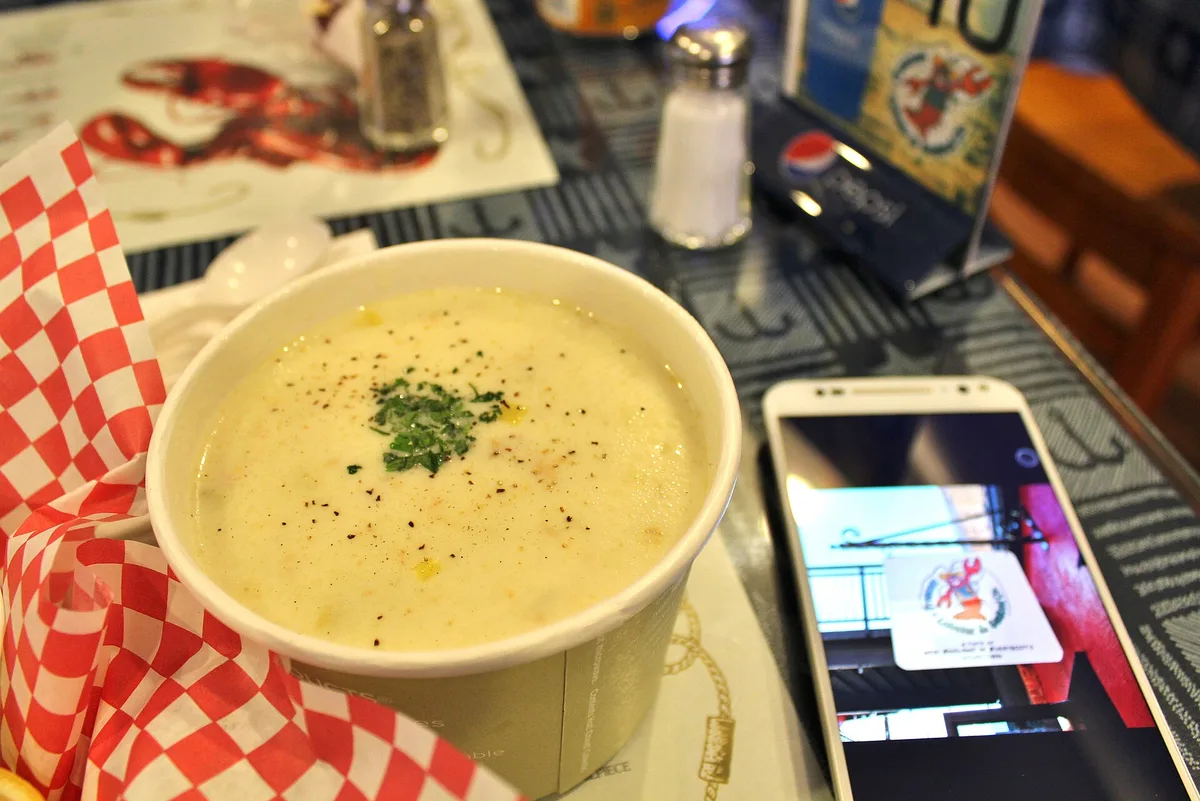
Order clam chowder in Boston and you get a creamy white bowl. Order it in Manhattan and the soup arrives red. Both are correct, and the story behind each style is a small tour of the East Coast.
Clam chowder began in the Northeastern United States, according to Wikipedia, and restaurants across the country now serve it. This guide walks through the main styles, so you know exactly what is in the bowl before you order.
The Base Every Chowder Shares
Every chowder starts with clams. Most recipes then add diced potatoes, salt pork, and onions. Crackers on the side are the classic partner, either thin saltines or small hexagonal oyster crackers.
The dish grew out of fishing communities, where a big pot could feed a crowd. Wikipedia notes that clams were likely used because of the relative ease of harvesting them, which made the soup a natural fit for the coast.
The real dividing line is the liquid. Milk, tomatoes, or neither. That single choice separates the famous styles, and early cooks even crushed crackers or stale bread into the pot to thicken the soup.
New England: The White Standard
New England clam chowder, sometimes called Boston style, is the thick and creamy one. It blends milk or cream with butter, potatoes, salt pork, onion, and clams. Flour, or once crushed hardtack, tightens the texture further.
Serve it the coastal way. Crackers crushed over the top, a spoon that stands in the bowl for a moment, and a kitchen that keeps the pot hot to the last drop. For related coverage, see The Comté Route: How to Eat Your Way Through the Jura's Cheese Country.
The result should coat the spoon. If your bowl arrives pale but thin, it is drifting toward another style. Wikipedia notes that oyster crackers remain the usual finish, crumbled on top or stirred in as extra body.
Manhattan and Rhode Island: The Rivals
Manhattan chowder swaps cream for a clear tomato base. Celery and carrots join the pot, and thyme often seasons the broth. Many sources trace the recipe to the Portuguese fishing communities of Rhode Island, who carried their tomato stews to the fish markets of New York in the mid-1800s, according to Wikipedia.
Rhode Island keeps a stricter version of its own. Its chowder runs clear, with no milk, butter, or tomatoes at all. Locals call it South County style, and it rules the tables from southeastern Rhode Island through eastern Connecticut. We covered a connected angle in Cassoulet Country: Eating Through the Southwest of France in Winter.
The tomato style found a home in New York, and the Manhattan name showed up in print by 1934. Wikipedia records an earlier printed recipe from before 1919, plus an 1893 menu calling the same dish Coney Island style. New England fans have long treated the whole tomato question as an insult, and the debate still runs hot in coastal towns.
Smaller Styles Worth a Detour
- Long Island chowder blends the white and red styles into a pink bowl, and it is popular across Suffolk County, New York.
- Hatteras chowder, from the Outer Banks of North Carolina, is a clear broth with bacon, potatoes, onions, and plenty of black pepper.
- Minorcan chowder, found around Saint Augustine, Florida, uses a tomato base and a fiery datil pepper with heat near a habanero.
If a menu offers two styles, order both and compare. The contrast teaches more than any description, and it turns one lunch into a small tasting of the coast.
These versions prove how far one soup can travel. Each keeps the clams and potatoes and changes only the liquid and the seasoning. Once you know that pattern, every regional menu makes sense.
Conclusion
Chowder styles are simple once you learn the code. White means cream, red means tomato, and clear means broth. Order with confidence, crush a few crackers on top, and taste your way up the coast, one bowl at a time.