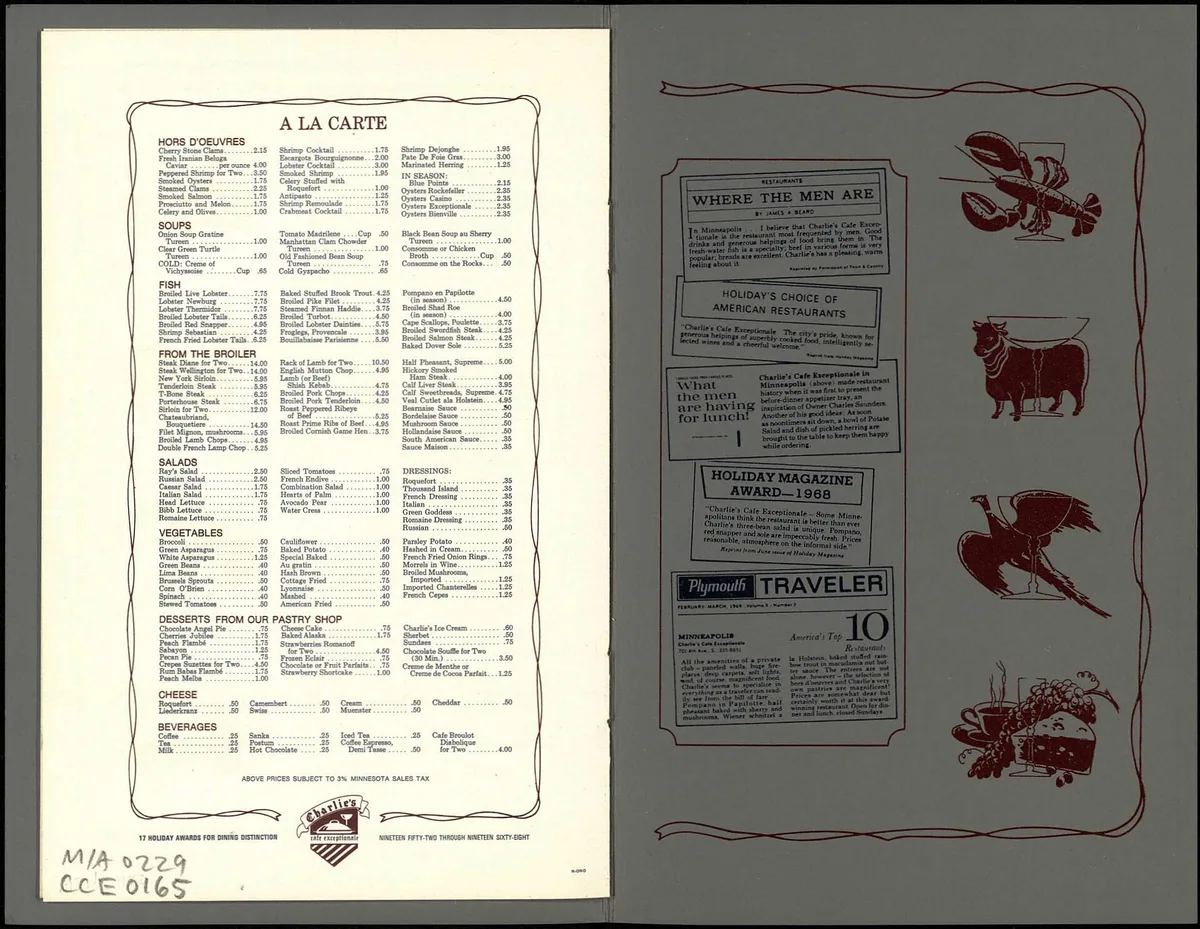
Reading a menu like a chef means treating it as a document written to make money, not a neutral list of what the kitchen does well. The prices, the placement, and the adjectives all follow patterns — and once you know the patterns, you can order for taste and value instead of by accident. The good news: none of it requires insider contacts, only a little attention.
The word itself is doing honest work here. To read, as the Cambridge Dictionary defines it, is to obtain meaning from written words — and a menu has considerably more meaning in it than the dishes it names. What follows is a plain-language decoding of that meaning: where the profit hides, which dishes deserve your money, and which wording should make you pause.
Where is the money on a menu?
Every menu has items the kitchen makes cheaply and sells confidently, and items that exist to make other things look reasonable. Chefs and industry writers have discussed menu engineering for decades, and the broad logic is consistent: a restaurant's profit does not come evenly from every dish. Some dishes are there to be ordered a lot; some are there to be barely ordered at all.
The classic tells are structural. A very expensive item near the top of a list makes everything beneath it look moderate — that is anchoring, and it is not unique to restaurants. A dish described in loving detail, positioned first in its section, is usually the dish the house most wants you to have. None of this means the highlighted dish is bad. It means it is convenient, and convenience is a cost someone is paying — usually you.
Our analysis, as a value exercise rather than a dining one: read the whole section before choosing. The dish nobody bothered to describe is often the one the kitchen actually knows how to cook, because it does not need selling.
What do the adjectives actually tell you?
Menu language sorts into three rough piles, and it is worth sorting them in your head as you go. The first pile is information: «slow-cooked», «wood-fired», «hand-cut», a named farm or region. These are checkable claims, and good restaurants make them checkable because they are proud of them. The second pile is atmosphere: «delightful», «classic», «beloved». These tell you about the writer, not the food. The third pile is inflation: long strings of provenance and technique stacked onto a modest dish, the verbal equivalent of a price sticker that has been pre-justified.
Watch especially for provenance used as decoration. A dish is not automatically better because three suppliers are name-checked in its description. Genuine sourcing usually appears once, precisely, where it matters — the same discipline you would apply to any claim about where a thing comes from. When a menu says a cheese comes from a specific protected origin, that is a real, verifiable guarantee; when it says the cheese is «artisanal», it is telling you a mood. Readers following this should also see Reading the Rind: What Emilia-Romagna's Origin Marks Actually Guarantee.
Which dishes should you actually order?
Without knowing the kitchen, a few durable principles hold across most menus. Dishes built around an ingredient the region is famous for are usually a safer bet than dishes trying to impress with range — a kitchen that works with an ingredient every day generally handles it better than one that treats it as a special occasion. This is why a plate of fresh noodles in Kagawa or a mole in Oaxaca tends to outperform the same dish attempted anywhere it is an exotic import; we have covered that logic in our Sanuki udon guide and our Oaxaca food guide. We covered a connected angle in Sanuki Udon Country: Eating the Noodles of Kagawa, Japan's Smallest Prefecture.
Be warier of dishes that require the kitchen to be good at many things at once. A menu that runs long in every direction is a menu where some of those directions are reheated. Shorter menus, and menus with a clear centre of gravity, usually mean the kitchen has chosen its battles.
Specials deserve a split verdict. A genuine daily special reflects what arrived that morning, and it is often the best thing on the list. A permanent «special» — one that appears every visit — is a regular menu item wearing a costume. If it has been a special for two years, ask yourself why it never graduated.
How do prices and sides work against you?
Menu pricing has its own quiet habits. Prices printed without a currency symbol feel less expensive than the same numbers with one — a small piece of formatting psychology that has been discussed in pricing research for years. Rounded numbers read as quality; precise numbers read as calculation. Neither is dishonest, but both are choices made on your behalf.
The sides are where the real margin often lives. A modest main price with drinks, sides, and service charges added afterwards can land far from the number you ordered against. Before you sit down, it is worth a moment's arithmetic on what a table for two actually costs once the extras are counted — the same cost-per-unit discipline that applies to any purchase, applied to a plate. And note what is missing: if the menu is vague about whether sides are included, that vagueness is itself information.
Wine and drink lists follow their own logic, but one rule of thumb travels well: the second-cheapest bottle exists largely for people too embarrassed to order the cheapest. If the cheapest bottle is from a producer you recognise or a region the list clearly cares about, ordering it is not a faux pas. It is often the sommelier's actual enthusiasm.
What this means for your next table
None of this turns dinner into an audit, and it should not. The point of knowing how a menu works is that you can stop resisting it and simply order what you want, with clear eyes about why you want it. If the lovingly described house dish is genuinely the kitchen's strength, order it happily — you are getting the thing the restaurant is best at, which is exactly what a traveller eating through a new city should be buying.
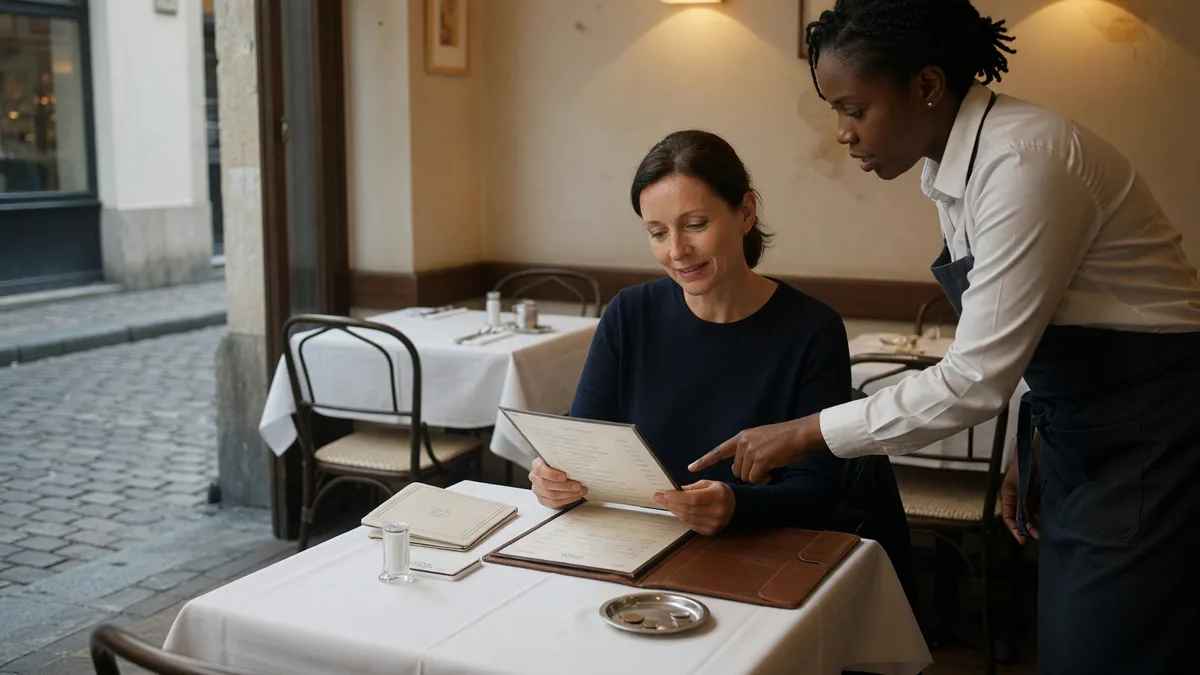
The practical sequence is short. Read the whole menu before deciding anything. Notice which dishes carry real, specific information and which carry mood words. Ask the server one direct question — what the kitchen is most pleased with tonight — and weigh the answer against what you can see for yourself. Do the arithmetic on the full cost, not the headline price. Then order, and enjoy it without a calculator in hand.
Menus are written by people who are very good at their job. Reading them well does not spoil the meal; it just means you chose it. For more on planning travel around what a place actually eats well and when, our food coverage and dining guides follow the same principle: specific, sourced, and sceptical of adjectives.