Boston eats well because people who arrived from somewhere else kept cooking. The city's dining identity was not handed down by its oldest institutions. It was built, plate by plate, in family kitchens from the North End to Dorchester, where recipes crossed an ocean or a border and found a new address. The best way to understand the city's food is to follow those kitchens, not the guidebook classics.
That is not to say the classics don't matter. A bowl of clam chowder or a lobster roll tells you where Boston sits on the map. But the neighborhoods tell you who lives there, and who has lived there. The question of why the city's food scene looks the way it does has a simple answer with a long story behind it. Even Merriam-Webster traces the word "why" back to Old English, a reminder that the question itself is older than any of the kitchens answering it.
How waves of arrival shaped the table
Boston's food history is a sequence of arrivals, each one leaving a mark on a distinct set of streets. Italian families settled the North End and turned a few compact blocks into one of the country's most recognizable Italian dining districts, with bakeries, salumerias, and red-sauce tables that have fed generations of visitors and locals alike. Chinatown grew around immigration from Guangdong and later from Southeast Asia, and it remains the most concentrated place in the city to eat well late into the evening.
Later arrivals reshaped neighborhoods farther out. Vietnamese cooks put pho shops and bánh mì counters along Dorchester's main corridors. Dominican and Puerto Rican kitchens anchor parts of Roxbury and Jamaica Plain, serving mofongo, pernil, and rice and beans that never needed a trend cycle to be excellent. Cape Verdean restaurants in and around the city carry a maritime New England cuisine most travelers have never heard of, built on fish, corn, and slow-simmered stews. This connects to our earlier piece, Oaxaca: The Seven Moles, the Mezcal, and a City That Cooks Everything Slowly.
The pattern repeats because the economics repeat. Newcomers often arrive with cooking skills, tight budgets, and a neighborhood where rents are possible. A home kitchen becomes a catering operation, then a storefront. The food is family food, priced for the people who live nearby. That is the engine behind Boston's dining identity, and it runs without much help from dining guides.
Where the neighborhoods actually eat
Each district has its own logic, and the smart move is to eat by neighborhood rather than by dish-hunting across town.
- The North End works as a walk: pastry first, a long Italian lunch second, espresso standing at a counter third. It is crowded and touristy in summer, and the locals know it, so go early or in the shoulder seasons.
- Chinatown rewards a flexible plan. Rather than one famous address, pick a busy room filled with families, order dim sum if it is midday, and expect a menu that assumes some fluency. Ask; the staff will steer you.
- Dorchester's Vietnamese corridors are where Boston's broth culture lives. Pho here is a weekday meal, not an event, and the surrounding blocks add Cambodian and Caribbean tables within a short walk.
- Jamaica Plain and Roxbury carry the city's Latin American cooking, from Dominican lunch plates to newer taquerias, often in rooms the size of a living room.
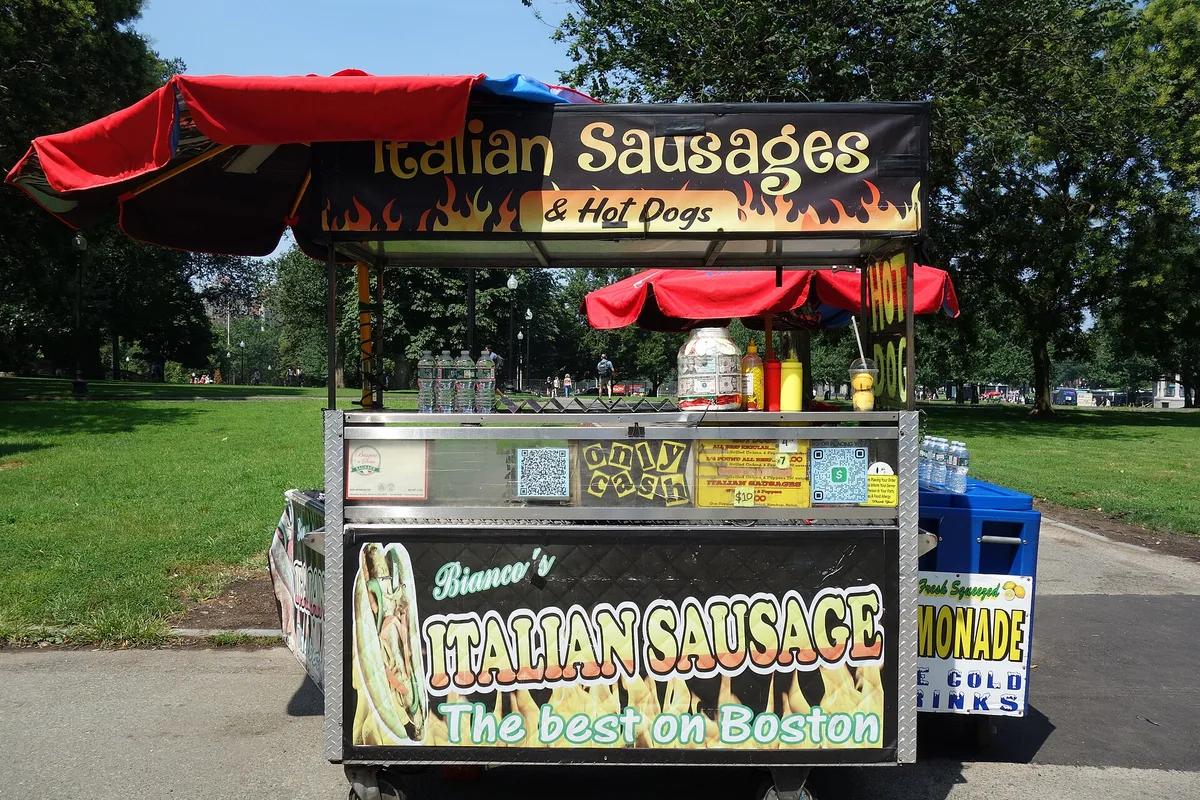
None of these districts require a reservation strategy the way the city's fine-dining rooms do. The immigrant kitchens that define Boston run on walk-ins, family tables, and cash-friendly counters. Plan accordingly and the city opens up.
What this means for the traveler
Practical steps follow from the structure of the scene itself. First, pick one or two neighborhoods per day and eat inside them. Crossing town for a single dish wastes the very thing that makes Boston's food interesting, which is density: bakeries, markets, and counters stacked within a few blocks. Second, shop where the cooks shop. The markets attached to these neighborhoods — a Chinese grocery in Chinatown, a Latin market in Jamaica Plain — are destinations in their own right and explain the restaurants around them.
Third, time your eating to the families, not the trends. A second-generation kitchen often serves its most honest food at the hours its community eats: midday, early evening, Sunday after church. A table at nine on a Friday tells you less than a counter at noon on a Saturday.
Our analysis, after reading the city through its neighborhoods, is this: Boston is best eaten as an argument about who belongs. Every generation of arrivals has had to prove it belongs, and the food was often the proof. The traveler who eats that way — neighborhood by neighborhood, family by family — gets a more honest city than any ranking can offer.
The recipes that carried the distance
Family recipes do the quiet work here. A dish that survives a move across the world is rarely the dish as it was served at home. Ingredients change, and so do the hours of the person cooking. What stays is the technique: the fold of a dumpling, the order in which a stew is built, the bread shaped for a lunchbox rather than a table. Those techniques are the real inheritance, and they explain why a plate in Dorchester can taste like a grandmother's kitchen in another hemisphere without pretending to be a museum piece.
Second-generation cooks complicate the picture in a good way. Many now cook the food of their parents with the training of the city around them, and the results are neither fusion for its own sake nor frozen tradition. They are the next stage of the same story. The reader planning a trip can see the same arc the network has covered elsewhere, from the Oaxaca: The Seven Moles, the Mezcal, and a City That Cooks Everything Slowly guide, where tradition and daily life share one pot, to the way Mexico City: Where the Mercado Still Sets the Table shows markets feeding a whole city's home cooks. Boston's version is smaller and colder, but the logic is identical.
What the evidence leaves open
The honest limits of this piece are worth stating. Specific restaurants open, close, and change hands faster than any evergreen guide can track, so this article names neighborhoods and patterns rather than individual addresses, and it invents no hours, prices, or openings. Anyone planning a visit should confirm current details before going, the same caution that applies to the city's famous seafood rooms as much as its family counters.
What the evidence does establish is durable. Boston's most distinctive eating is concentrated in neighborhoods built by immigration, priced for the people who live there, and carried by recipes that traveled. The clam shacks will still be there when you visit. The better story is one street over.