The best food trucks in any city are findable in about an hour of homework, and none of it requires a tour. The method is the same everywhere: read the reviews for patterns rather than scores, check the truck's own social feed for today's location and hours, and confirm with the one signal that never flatters itself — the lunch-hour queue. The key qualification: a truck's schedule is genuinely volatile, so verify the day's location the same morning you plan to eat.
This guide works whether you are searching "food places near me" in your own city or landing somewhere new with an empty stomach and a phone. It covers what reviews can and cannot tell you, how to read a truck's posting habits, why the queue length matters more than the star rating, and what a practical day-of checklist looks like. The tools are free; the only cost is a little patience.
What do reviews actually tell you about a food truck?
Reviews of trucks behave differently from reviews of restaurants, and it pays to know the difference before you sort by rating. A brick-and-mortar restaurant gets judged on the room, the service and the plate. A truck gets judged on the plate — and on whether the queue moved. So a three-star average with forty reviews that all mention a slow line at 12:30 is not a bad truck; it is a popular one with a bottleneck. Read the written reviews, not the average. Look for repetition: if five separate people praise the same specific dish, that dish is the reason to go. If the praise is generic — "great food," "nice people" — the review is telling you nothing usable.
Recency matters more for trucks than for restaurants, because menus and even owners change. A review from three years ago may describe a truck under different management. Sort for the newest reviews and discount anything that reads like a grievance about a one-off bad day. One person's cold fries is weather; ten people's cold fries is a kitchen problem.
There is a value angle here too, and it is the same arithmetic this publication applies to any purchase. A truck plate often costs less than a sit-down equivalent, but the real comparison is quality per unit of money, not money alone. A nine-dollar taco that is genuinely excellent beats a mediocre twenty-dollar restaurant lunch. The reviews that mention price alongside quality are the ones doing your work for you.
How do you find where a truck will actually be today?
This is the part that separates a planned lunch from a wild goose chase. Trucks move, permits restrict where they can park, and many work a rotating schedule of office districts, breweries and markets. The single most reliable source is the truck's own social feed. Most trucks post the day's location and hours each morning; many post the week's route on Sunday. A truck that posts regularly and answers questions in the comments is a truck that takes its customers seriously — that responsiveness is itself a quality marker, the way a shop's return policy is. We covered a connected angle in The Comté Route: How to Eat Your Way Through the Jura's Cheese Country.
Some cities aggregate this for you. A number of them have dedicated truck-tracking accounts or local food-truck associations that publish weekly lineups. Check whether your destination has one; it is the fastest shortcut in this whole guide. Festival and market calendars help too — a regular market with a rotating truck roster is a way to sample several kitchens in one stop, and this publication's month-by-month festival calendar is one way to plan a whole trip around that logic. For related coverage, see Why Boston's Food Scene Runs on Immigrant Kitchens.
Practical steps for the day-of check:
- Morning: check the truck's feed for today's location and hours. If it has not posted, check the city's tracker if one exists.
- Late morning: re-check. Trucks cancel for weather, equipment failure and permit issues, and a morning post does not survive a broken fryer.
- If you are coordinating with others, share your live location so the group converges on the same corner. Apple documents that its Find My app lets friends and family share location in real time, for an hour, a day, or indefinitely — according to Apple's Find My page — which is a mundane use of the feature that earns its keep on a food crawl.
Why does the lunch-hour crowd tell you more than the rating?
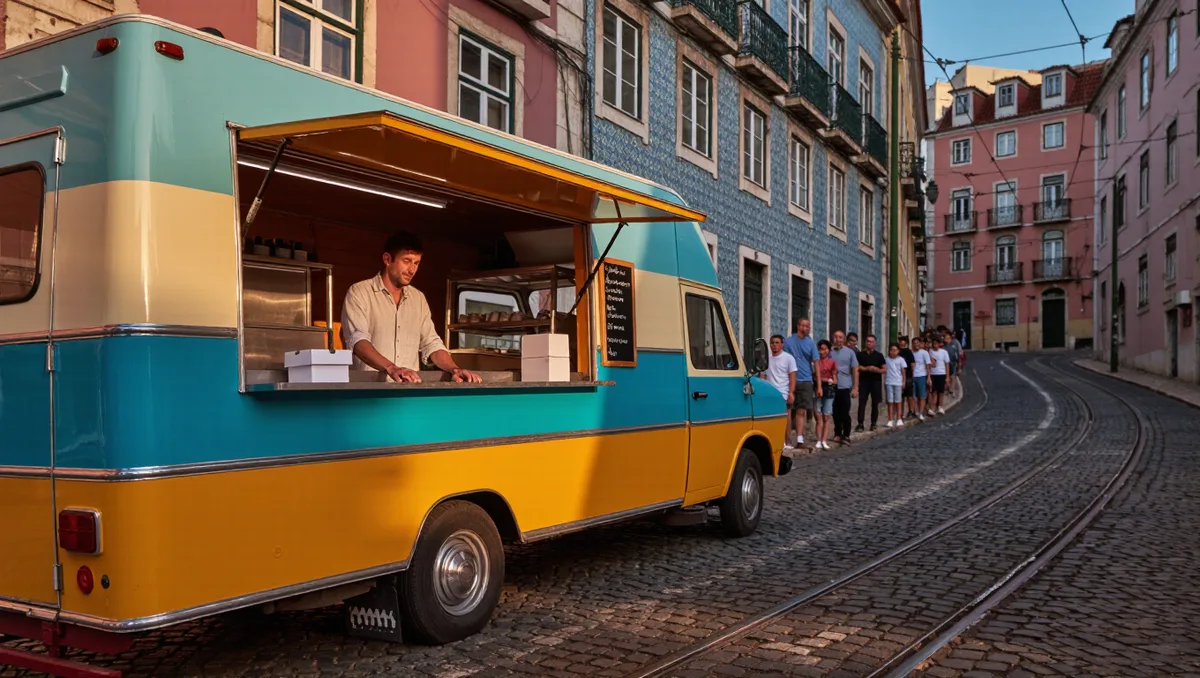
Queues are the least corruptible review system ever devised. A line of locals at 11:45, before the office rush, means the neighbourhood has already voted. A truck that is empty at 12:15 in a busy district has been voted on too. Crowds cannot be bought, seeded or gamed the way a review profile can, and they update daily.
Read the queue, not just its length. A line of people who clearly work nearby — lanyards, lunch bags waiting, nobody photographing the truck — is the strongest signal there is. Tourists photograph; locals return. A long line of visitors outside a landmark suggests the truck is on a list somewhere, which is not nothing, but repeat custom is the better endorsement. And note what the regulars order: watch two or three people ahead of you, and order what the second one orders. The queue is also your timing tool. Arrive just before the peak, around 11:30 or after 1:30 in most cities, and you trade a short wait for the full menu; arrive at the peak and the popular dishes may be sold through.
What separates a good truck from a great one?
Our analysis, drawn from the patterns reviews and operators themselves describe, is that great trucks do a small number of things deliberately, and each is visible before you spend a cent.
- A short menu. A truck kitchen is a few square metres. A menu of six confident dishes beats a menu of twenty aspirational ones, because the short menu means everything is made to a standard the space can sustain.
- Visible cooking. Many trucks cook in view. You can watch the handling of ingredients, the pace of the pass, whether food sits. This is the street-food equivalent of reading a garment's seams: the construction is on display, and it either holds or it does not.
- A named cuisine, cooked with specificity. The best trucks tend to cook the food of a specific place rather than a generic category — a regional style, not just "tacos" or "dumplings." This is the same principle behind why a city's food scene runs on immigrant kitchens: the most interesting cooking often comes from people cooking what they actually know, at a scale they control.
- Clean, organised service. Handwashing station present and used; surfaces wiped between orders; cold ingredients iced. You do not need a health inspection record to notice whether the person handling money also handles ready food, and whether the station is stocked and in use.
None of these require expertise. They require looking, which costs nothing.
What does a practical truck-hunting day look like?
Put it together and the day reads simply. The night before, shortlist three trucks from recent reviews and note which dishes get named repeatedly. In the morning, confirm locations from their feeds. Late morning, re-confirm and pick your primary, with a backup within walking distance. Arrive ahead of the noon peak, order what the regulars order, and eat where the truck is — a bench, a curb, a brewery picnic table. Total research time: under an hour. Total spend: one lunch, at a price the reviews already told you.
Two cautions worth their space. First, cash: some trucks are cash-only, and the reviews usually say so — check before you queue. Second, weather: rain empties both the queue and, sometimes, the schedule. A truck that cancels in the rain is not unreliable; it is a kitchen with no dining room to fall back on.
Where the homework ends and the eating begins
The evidence of this method is not a statistic but a structure: reviews reveal what to order, feeds reveal where and when, and the queue confirms both. What remains unknown is the part no tool can pre-deliver — whether today's batch is the good one. That uncertainty is the honest price of street food, and it is a small one. The truck that posts its route every Sunday, answers its comments and feeds a queue of locals at 11:45 has already told you almost everything. The last thing it cannot tell you is the thing you find out at the window, which is precisely why the hunt is worth doing.