Sanuki udon is the firm, flat, endlessly chewed wheat noodle of Kagawa Prefecture on the island of Shikoku, and the prefecture eats it as a civic function: Kagawa counts roughly 600 udon shops serving under a million people — one of the highest densities in Japan — and has formally branded itself "Udon Prefecture" (Udon-ken) on license plates, road signs, and tourism campaigns since the 2000s boom that made the noodle a national destination.
This guide explains what Sanuki udon actually is, how the self-service shop system works — the part that most confuses first-time visitors — which styles to order and where, and how a day or three in Kagawa can be built around the bowls. Prices and details reflect published prefecture and shop sources as of early 2026; a basic bowl still costs about the same as a cup of coffee, typically ¥300–¥600.
What makes Sanuki udon different?
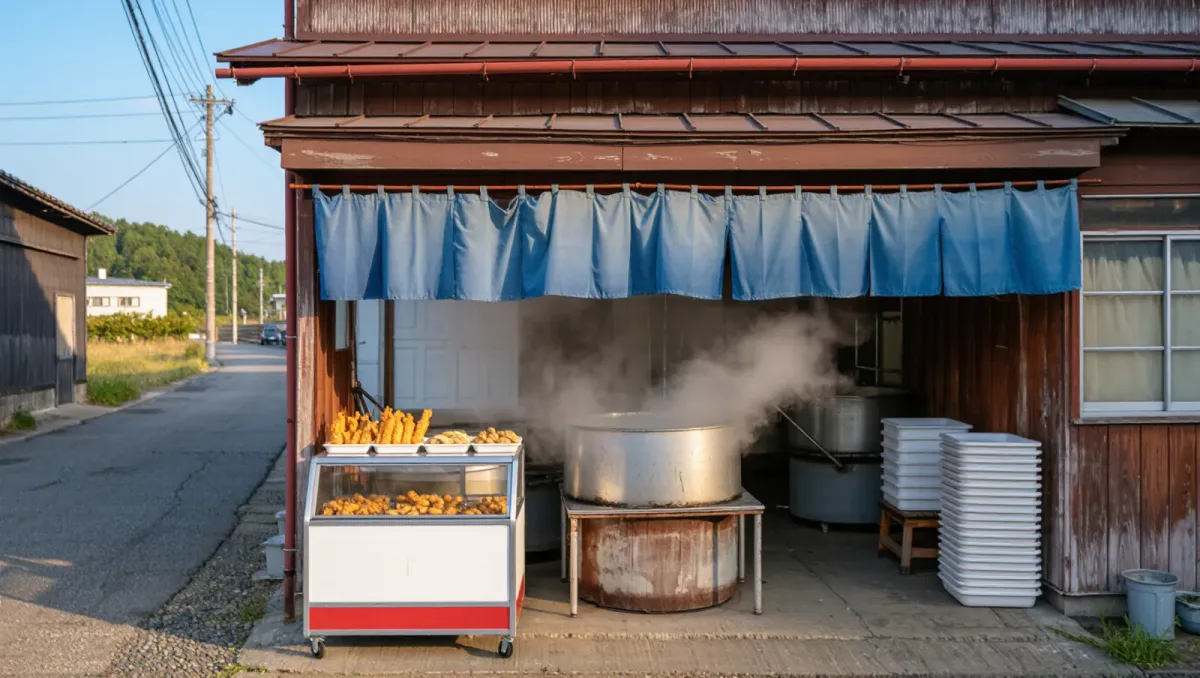
Three things: the knead, the cut, and the broth. Kagawa's dough is worked hard and rested, then rolled and cut into square-edged, moderately flat strands that stay springy after boiling — the texture the Japanese call koshi. The noodles are boiled in great open vats and finished in seconds; the classic broths are light dashi built on iriko (dried sardines) from the Seto Inland Sea, kombu, and soy, rather than the heavy pork soups of other udon regions. The old province name — Sanuki — survives in the dish because the region's low rainfall and strong Seto winds suited wheat drying, and flour merchants along the Marugame coast have been documented milling for noodles since the Edo period.
How does a self-service udon shop work?
Most Kagawa shops run the same choreography, and knowing it removes all friction. Take a tray at the entrance. Order your noodle style from the counter and watch it pulled from the vat. Choose tempura — vegetable, shrimp, or the local chikuwa-isobe — from the display as you move along the line. Add your broth yourself: kake from the warm urns, or chilled soy-tsuyu from the cold ones. Then pay at the end of the counter, take your bowl to a table, and return the tray. Eggs, green onion, and tenkasu crisps are self-serve extras. Nobody hurries you out, and a second bowl is normal — the order is called kae, and Kagawa regulars treat two bowls as a standard lunch.
Which styles should you order?
The canon is short. Kake udon: hot noodles, hot dashi, scallion — the baseline. Bukkake: hot noodles with a small splash of thick dashi and raw egg, eaten fast. Kama-tama: noodles straight from the boiling water, unbathed, with a raw egg beaten in a small bowl as a dip — the richest and most beloved of the hot styles. Shōyu udon: cold noodles with nothing but good soy, the shop's quality laid bare. Zaru and bukkake-cold variants follow in summer. Kagawa's shops divide between seimen (dried-surface) specialists and yude (boiled) specialists; locals chase the boil times, and many shops sell out by early afternoon.
Where do you eat it?
The range is the attraction. Former boat-houses and sake-storehouses turned noodle counters, shops down dirt lanes outside Marugame where the queue is a bench and a mutt, self-service giants near Zentsūji, and station stands where salarymen bowl-and-run. The Takamatsu area anchors most itineraries — the prefecture's capital sits an hour by frequent trains from Okayama on Honshu — while the countryside lanes around Kan'onji and Manno hold the legendary rural shops. Kagawa even licenses udon-taxis: drivers who shuttle pilgrims of the noodle between outlying shops on timed circuits, an idea the prefecture's tourism board promotes openly.
Two institutions deserve names. Nakano Udon School in Kotohira has taught visitors to knead, foot-press, and cut their own noodles for decades — classes run several times daily and end with lunch, booked on arrival or by phone. And the mountain shrine town itself, Kotohira, pairs a bowl with the climb: Konpira-san, the seafarers' shrine, is reached up 785 stone steps past noodle shops the whole way.
Beyond the bowl: what else does Kagawa eat?
The prefecture's second noodle, somen from Shōdoshima — the olive-growing island in the Seto Inland Sea — is oil-stretched by hand into fine, resilient strands, served cold in summer. Honetsukidori, chicken legs grilled over charcoal with salt and pepper, is Kagawa's other comfort plate. And the Seto Inland Sea's small catch supports olive-hamachi — yellowtail raised on olive-fortified feed, a Kagawa brand of the last decade — alongside the sardines that make the udon broth in the first place. Morning markets in Takamatsu and the fishing ports sell it all at seto-tide prices.
What do you drink beside the bowl?
The accompaniments are as plain as the food: iced oolong or barley tea at lunch, a small beer or a local shochu with the tempura plate in the evening, and on weekends at a few country shops a cup of local sake from Kagawa's modest breweries beside the bowls. The budget arithmetic is the trip's quiet pleasure: a double bowl with two tempura pieces and an egg lands near ¥1,000, which makes noodle touring here one of the cheapest serious food destinations in Japan. Most shops post prices by the door, and none charges for the seat or the tea.
Planning the trip
Two full days cover the essentials: a Takamatsu and Marugame day for the self-service giants and the station stands, and a Kotohira-to-Kan'onji day for the shrine climb and the rural lanes. Buses reach the major shrine towns; the far-flung shops are easiest by rental car. March, before Golden Week and the summer heat, is a comfortable month — noodles are an all-weather food, but standing in a bowl-hot shop in August argues for the chilled styles.
Frequently asked questions
Is Sanuki udon just a brand name? No. The name is protected as a regional brand under Japan's trademark system, and genuine Sanuki udon follows shared standards of noodle shape and texture; hundreds of independent shops in Kagawa cook within the tradition.
Can you take a udon-making class in English? The long-running schools in Kotohira and Takamatsu host travelers daily; English instruction is common, class lengths run from about 45 minutes to two hours, and the class lunch is the point.
How much does a bowl cost? A plain kake or bukkake bowl typically runs ¥300–¥600 as of early 2026; tempura and egg extras add ¥100–¥200 each. Cash is still standard at rural shops.
Do shops close early? Many country shops sell out and shutter by early afternoon; the famous ones post their soup-out time. Plan rural visits for morning.