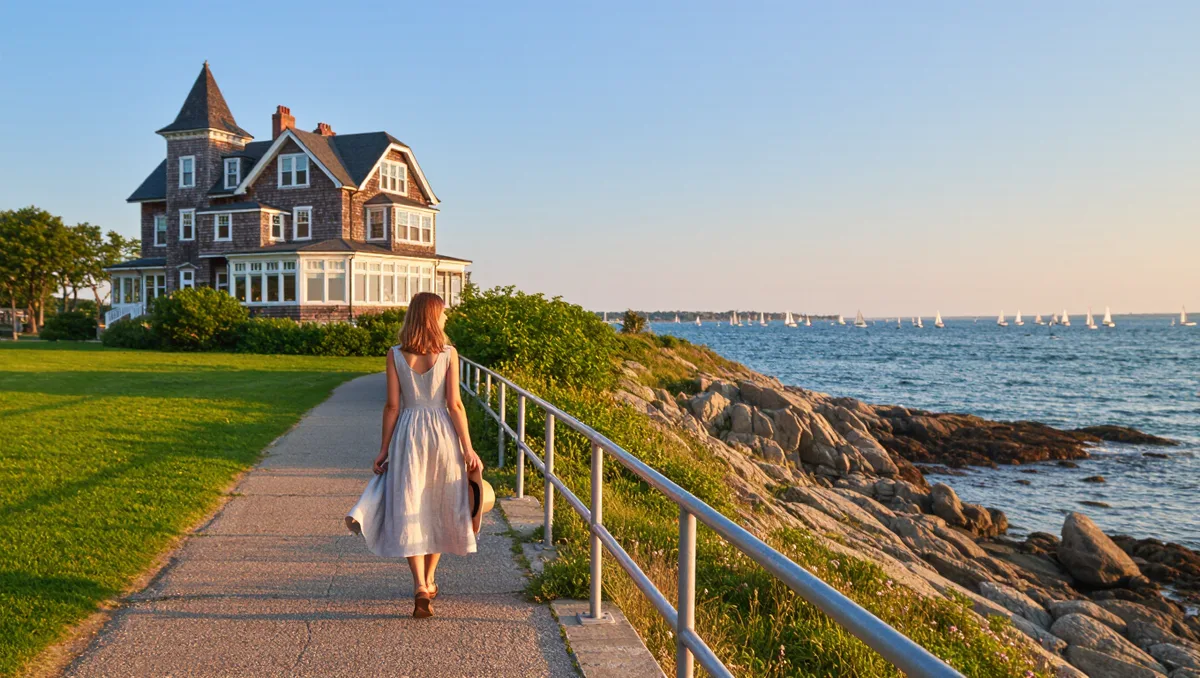
Newport is a small seaside city on Aquidneck Island in Narragansett Bay, about 74 miles south of Boston and 180 miles northeast of New York City, and a first-timer can cover its two great draws — the Gilded Age mansions and the colonial waterfront — in a well-planned weekend. The city is famous for its historic mansions and its sailing history, and it remains a classic New England summer resort. The key planning fact: summer is the season everything is open, and it is also when the town is busiest, so booking rooms and tours early matters more than any other single decision.
The good news for a budget-minded traveler is that Newport's best experiences skew cheap or free. The Cliff Walk is a public walking path. The colonial streets downtown cost nothing to wander. The money goes to mansion admissions, parking, and summer lodging — and those are exactly the three line items a visitor can manage with a little foresight. This guide walks through what to see, where the costs concentrate, and how to keep the weekend balanced.
What is Newport actually known for?
Two eras built this town's reputation, and both are still on display. The first is colonial: Newport was founded in 1639 and grew into one of the most important ports in colonial America, leaving a downtown dense with 18th-century buildings. According to Wikipedia's overview of Newport, the city was a major 18th-century port and retains many buildings from that era, including the Old Colony House, which served as the seat of Rhode Island's government from 1741 until 1904. Touro Synagogue, the oldest synagogue in America, still anchors the historic district; its congregation dates to a group of Jewish families welcomed to Newport in 1658.
The second era is the Gilded Age. In the late 19th century, America's wealthiest families built summer cottages along Bellevue Avenue — cottages the size of European palaces. The Breakers is the most famous, and several of the mansions open their interiors and gardens to visitors. The city's resort pedigree runs deep: Newport hosted the first U.S. Open tournaments in both tennis and golf, and every America's Cup challenge between 1930 and 1983 was sailed here. That history is why travelers come; the compact geography — roughly 7.7 square miles of land — is why a weekend works.
How do you plan a mansion weekend without overspending?
The mansions are the headline attraction and the biggest discretionary cost after lodging. The practical move is to choose rather than collect. Most first-timers are satisfied with one or two interiors — The Breakers for scale, plus one other for contrast — and then enjoy the grounds and coastline for free. The Newport Mansions' gardens and settings are part of the appeal in themselves, and the tourism board suggests making a picnic of it: Discover Newport recommends heading to the Newport Mansions to enjoy the coast's weather alongside some of the most striking architecture and garden landscapes in New England. A picnic on mansion grounds turns an admission ticket into most of a day.
What this means for the budget: decide your mansion count before you arrive, and treat anything beyond it as a bonus. The spending trap is not any single ticket; it is drifting from property to property because each one is impressive. Newport rewards a slower pace. One mansion toured properly, followed by an afternoon on the Cliff Walk, beats three rushed interiors.
What does the Cliff Walk and the coast cost?
Nothing, which is why it anchors any value-minded itinerary. The Cliff Walk runs along the eastern edge of the mansion district, with the Atlantic on one side and estate backyards on the other — the single most photographed stretch of the city, and free. Beyond it, the tourism board's own framing of the destination leans on the coast itself: salt air, ocean breezes, trails to walk, and water to paddle, sail, or simply sit and watch. Discover Newport's things-to-do guide describes hiking and walking options that range from light, leisurely scenic coastline walks to moderately intense trails in New England forests.
Practical notes: wear real shoes, since parts of the Cliff Walk path are rough, and go early in summer before the crowds thicken. The walk pairs naturally with a mansion visit because the two sit side by side. A short plain sentence for the road: this is the part of Newport that costs no money and stays with you longest.
Where should a first-timer stay — and what do hotels in Newport RI really cost?
Hotels in Newport RI cluster in three zones, and the zone you pick shapes both the bill and the itinerary. Downtown near the harbor puts you steps from the colonial streets, the restaurants, and the water; it is the most atmospheric and usually the most expensive. Midtown along America's Cup Avenue offers more mid-range options with easy access to both downtown and the mansions. The outskirts — Middletown, just north on the island — trades walkability for lower rates and free parking, which matters more here than in most small cities.
That parking point deserves its own sentence. Newport's streets are tight, summer lots fill, and metered and lot parking adds up over a weekend. Staying somewhere walkable, or choosing lodging with included parking, removes one of the trip's quietest budget drains. Summer rates are the peak of the year; shoulder season — late spring and early fall — brings the same town with softer prices and thinner crowds, with the caveat that some seasonal businesses reduce hours outside summer. For travelers extending the trip regionally, our guide to How to Travel New England Without a Car covers the rail and bus links that make a car-free Newport visit workable.
Where do you eat in Newport?
Downtown Newport is compact enough that eating well requires no car and no reservations made weeks out — though summer weekends reward both. The harborfront restaurants trade on the setting; the streets just off the water tend to deliver more food for the money. Seafood is the obvious order in a working port town, and clam chowder, stuffies (stuffed quahogs — large local clams), and lobster rolls are the regional standards you will see everywhere. The city's food story is older than the mansions: this was a colonial port where rum, chocolate, and trade goods moved through the wharves, a history documented in the city's record as a major 18th-century commercial center.
Two money notes from the service desk. First, harbor-view tables carry a view premium; the same kitchen often cooks for the room behind it. Second, Newport's summer dinner rush is real — an early seat or a late one both improve your odds of walking in without a wait. For readers building a broader food-travel itinerary, our dining coverage and the food section both sort by destination, and the guides hub collects the planning pieces.
What should you see beyond the mansions?
The colonial downtown rewards an unhurried morning: Washington Square and the Old Colony House, the lanes around Touro Synagogue, and the wharves where the city's maritime past is still in working view. Naval Station Newport remains an active presence on the island, home to the U.S. Naval War College, a reminder that this is a living city and not a museum set. Sailing is the other living tradition — on the water, boats outnumber cars on a fine June afternoon, and harbor sails run through the season for travelers who want the view from the other side of the seawall.
If the trip stretches, Boston is under two hours north by car, and our piece on How to Visit Boston's Freedom Trail Like a Historian pairs naturally with Newport's colonial quarter — two ports, two versions of the same American story. For travelers combining both, note that Newport was once the larger and richer of the two; the mansions came later, built by families whose fortunes the colonial port helped seed.
Practical steps: our analysis of a balanced Newport weekend
Our analysis, based on the documented geography and the structure of the town's attractions, is that a first-timer's budget concentrates in three places — lodging, parking, and admissions — and each has a straightforward lever. Book lodging early or shift to shoulder season. Pick walkable lodging or a property with parking included. Choose one or two mansions and let the free coastline carry the rest of the itinerary. A grounded example: a couple arriving on a summer Saturday who parks once, walks downtown and the Cliff Walk, picnics at one mansion, and eats dinner off the harborfront spends meaningfully less than a couple who drives between every stop and adds a second mansion on impulse — same town, same sights, a different bill.
What to watch: seasonal hours. Newport's calendar is summer-weighted, and hours for mansions, tours, and some restaurants shift outside the peak months. Verify current operating status and hours directly with each venue and with Discover Newport before locking an itinerary, since details change season to season. The evidence here establishes what the town offers and where the costs sit; the exact prices on any given weekend are the one number only the booking screen can tell you.