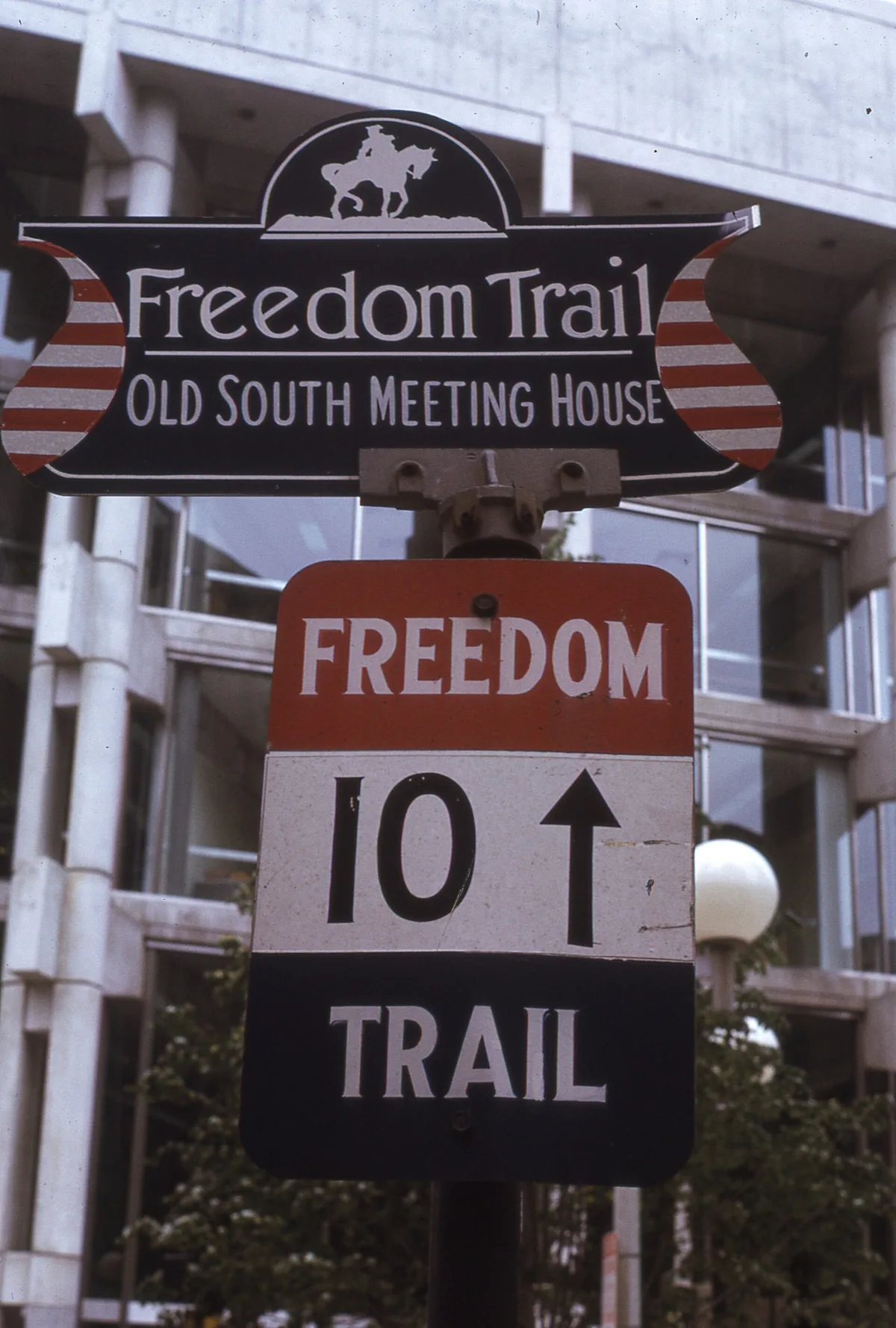
The Freedom Trail is a walking route through Boston that links the city's Revolutionary-era sites, marked by a line of brick or painted pavement. Most travelers walk it in an afternoon and leave with a camera roll and little context. Visiting it like a historian means the opposite trade: fewer stops, more reading, and a willingness to sit with what the buildings are actually telling you.
That shift changes the day. A visit, as Vocabulary.com puts it, is simply spending a temporary amount of time in a place — and how you spend that time is the whole difference between sightseeing and understanding. This guide lays out lesser-known stops, the guided-versus-self-paced decision, and the context most visitors walk right past.
Boston rewards this approach, and it pairs naturally with the rest of the region. If you are building a wider itinerary, our How to Travel New England Without a Car guide covers getting out of the city afterward.
What does the trail actually mark?
The trail's sites cluster into a few themes: colonial government, the events that pushed the colonies toward revolt, the churches where those ideas were discussed, and the burying grounds where the participants now rest. A historian's first habit is to group stops by theme rather than by distance. One morning might cover government buildings and the debates held inside them; another might trace the escalation from protest to violence to war.
Reading order matters more than walking order. Start at the oldest sites and move forward in time, even if that means doubling back. The story the trail tells is chronological, and the buildings read differently once you know what came before and after each one.
Which lesser-known stops repay the most attention?
The famous stops — the central burying ground, the old state house, the North End church with the lantern story — draw the crowds. The quieter stops often teach more:
- The small burying grounds. Read the headstones, not just the famous names. The epitaphs, the trades listed, the ages at death — they are primary documents about colonial life, and almost nobody lingers over them.
- The markers between the sites. The trail is lined with plaques about buildings that no longer stand, streets that changed names, and events that happened in ordinary doorways. These in-between texts are where the city's layers show.
- The neighborhoods the line crosses. The route runs through working districts whose food and history are part of the story. Our food coverage has more on eating well in the neighborhoods you walk through.
- Church interiors. The box pews, the galleries, and the memorials inside the older churches carry as much information as any plaque outside.
Slow down at one of these instead of hurrying through all of them. One building read carefully beats ten buildings photographed.
Guided tour or self-paced walk: which serves you better?
Both work; they serve different goals. A guided tour compresses context into a few hours and gives you a person who can answer questions on the spot. The trade-off is pace and depth: you move on the guide's clock and hear one interpretation. Our honest look at whether food tours are worth it makes a similar point about guided experiences generally — value depends on what you want from the hours.
Self-paced walking gives you the opposite bargain. You can read every plaque, sit in a pew, and revisit a stop that confused you. The cost is that you supply your own context, which is where preparation matters. Before you go, read one solid account of the Revolutionary era — a book, a park service overview, or a museum's online timeline — so the plaques have something to attach to.
A practical hybrid: take a guided tour first, then walk the route again alone the next day, stopping wherever the tour had to rush. Boston's compact center makes that easy.
What context do most visitors miss?
Three things, in our analysis, separate a historian's walk from a tourist's.
First, the city is still using these buildings. Some sites function as active civic spaces, not museums, and that continuity is itself the lesson — the institutions the trail commemorates did not end, they evolved.
Second, the Revolutionary story is contested history, not a finished legend. Historians argue about causes, about how ordinary colonists experienced the events, and about whose voices the record preserves. Read a plaque's wording with that in mind: what it emphasizes and what it leaves out tells you when the marker was written, not just what happened.
Third, the trail is a product of a later era's desire to preserve and narrate this history. The route itself has a history. Knowing that the line was laid out as a preservation project — rather than assuming it is some organic inheritance — helps you read the whole thing more critically.
For travelers who like their history with a rulebook, our guide to Naples, the city where pizza has a rulebook explores a similar idea: how a place formalizes and protects its own story. Readers following this should also see Naples: The City Where Pizza Has a Rulebook.
Practical steps for a historian's day on the trail
A few habits make the day work:
- Pick a theme, not the whole line. Choose government, churches, or burying grounds and go deep. You can return for the other themes another day.
- Carry a notebook or a notes app. Write down one question at each stop. Historians work by questions, and unanswered ones are what send you to the library afterward.
- Check opening status before you go. Site hours, interior access, and tour schedules change with the season and with renovations. Confirm current details with the official sources for each site rather than relying on older guides.
- Wear shoes that handle cobblestones and old sidewalks. The route is walkable but uneven, and comfort decides how long you last.
- Leave time to sit. A bench in a burying ground or a quiet pew is where the reading turns into understanding.
What to watch
The trail's core sites are stable, but the details a historian needs — interior access, hours, which exhibits are open — shift with seasons and restoration work, so verify them close to your travel date. Preservation debates and new interpretive projects at individual sites also change what you can see. Check each site's current official information before you go, and treat any guide, including this one, as a starting framework rather than a final word.