Walk into almost any Spanish restaurant at two in the afternoon on a weekday and the answer to a single question — ¿tienen menú? — produces the best value meal in Western Europe: three courses, bread, a first drink and coffee for a price that in 2025 commonly ran from about €11 to €16 in provincial cities, more in Madrid and Barcelona, per published menus checked in 2025. The menú del día is Spain's fixed-price weekday lunch, a format whose origins trace to the 1960s, when hospitality regulations tied to the tourism boom required restaurants to offer a set-price meal, per common accounts of the institution's history. It was built for workers; it feeds travelers brilliantly.
What exactly comes with a menú del día?
The structure is remarkably consistent. A choice of first course — salads, legume stews, rice dishes, soups — and a choice of second, usually meat or fish with a garnish; dessert or coffee; bread; and a beverage, which typically means water, wine, or a beer, served by the glass. In much of Spain the drink is genuinely a choice of any of the above. Prime steaks and seafood sometimes carry a small supplement printed on the card, per standard menu conventions. The quality surprise for first-timers is the first course: Monday's garbanzos with spinach or Wednesday's callos are the dishes Spanish home cooking is actually about, and restaurants serve them at their best at midday, when the pots are fresh.
When and where is it served?
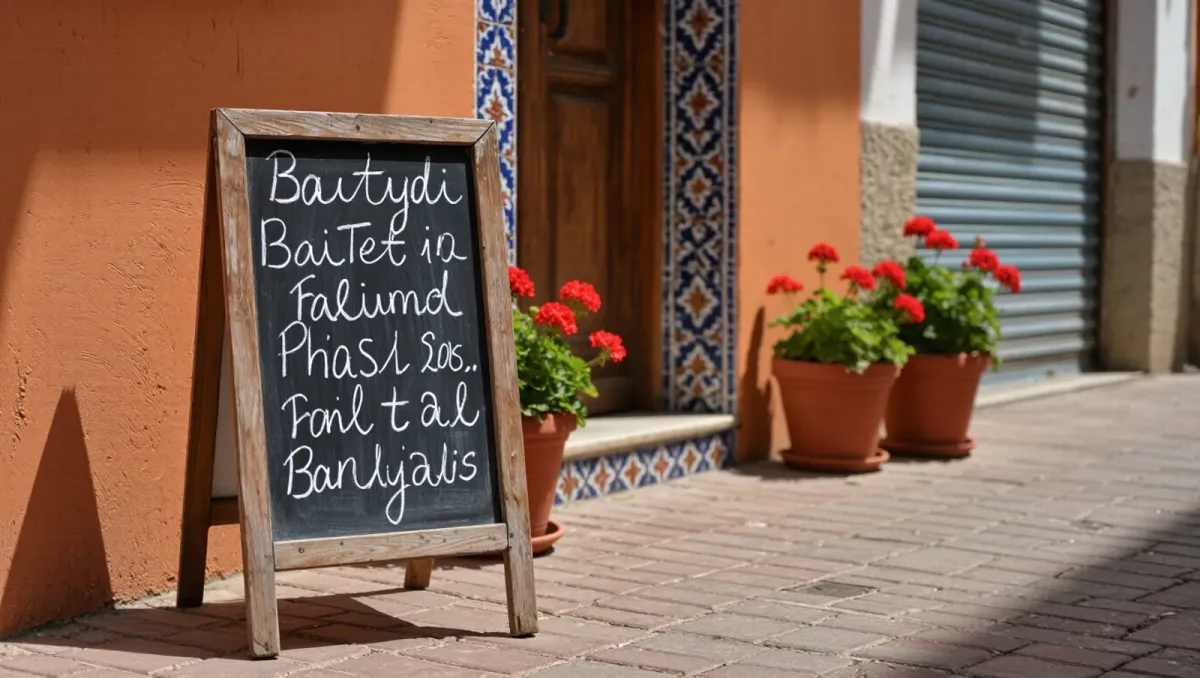
Weekdays only, lunchtime only — a feature that defines the format. Spanish lunch runs from about 13:30 to 15:30, later than most visitors expect, and the menú is the engine of that hour: offices empty, bars fill, and the whole ritual clears by four. On weekends the same restaurants serve a la carte or, in many regions, a more expensive weekend variant — the menú de fin de semana — at a higher price. The format survives everywhere in Spain, strongest in neighborhood bars and casas de comidas away from the postcard streets, where the chalkboard lists the stews rather than translated tapas.
How do you spot a good one?
Four signals, per the way Spanish diners themselves choose. The room is full of people who work nearby — the surest indicator at 14:15. The first courses are cooked dishes, stews and rice, not frozen planks awaiting a fryer. The card is handwritten or daily-changing, in Spanish, with a market price rather than a laminated one. And the menu lists plato del día specials — the day's single best ingredient, whatever the market gave. A menú that promises paella every day, in a landlocked province, is telling you its audience.
What does it cost by region?
Prices in 2025 ran roughly: €10 to €13 in Andalusian and Castilian provincial towns; €12 to €16 across Valencia, Zaragoza or Bilbao's barrios; €14 to €20 in central Madrid and Barcelona, with the trendiest rooms above that, per published menu listings in 2025. The region-to-region spread matters less than the street-to-street one — two blocks off the tourist axis, the same three courses routinely drop several euros.
Is the format under pressure?
Yes, and worth knowing as a traveler. Rising ingredient and labor costs have squeezed the fixed-price lunch, and restaurant associations have debated its future publicly in recent years, per Spanish hospitality-industry reporting; some city restaurants have raised prices sharply, dropped the drink, or retired the format on quieter weekdays. Yet the institution remains central to how Spain eats midday — desk lunches never replaced the sit-down menú in Spanish working culture, a habit hospitality coverage has noted repeatedly. For a food traveler, the practical read: the menú is alive, cheapest in smaller cities, and best eaten where it was invented — the neighborhood, at the hour it was built for.
The practical details
No booking needed at most menú houses — walk in between 13:30 and 14:30. Ask for the menú explicitly; some rooms prefer tourists never see the card. Check whether the drink is included and which supplements apply. Cash is welcome everywhere, cards nearly everywhere. Prices cited here reflect published 2025 menus and shift with the year; verify on the chalkboard, where the truth is always current.