A winery visit works on appointments and manners. The big, signposted estates take walk-ins and online bookings by the hour; the small family domaines — the ones worth planning around — often receive visitors by appointment only, a tasting fee of roughly $10 to $40 per person that may fold into a purchase, and a set of unwritten rules about time, perfume, and the driver's glass that decide whether you are invited into the cellar or handed a glass at the counter, based on published visit programs across major wine regions as of early 2026.
This guide covers the mechanics a first-time visitor needs: how far ahead to book, what visits cost and what the fee buys, how a tasting runs, the etiquette that travelers most often get wrong, and how to visit well without a driver's license problem. It publishes information, not legal advice; drinking-and-driving rules are set locally, and the zero-tolerance ones are increasingly common.
How far in advance should you book?
By estate size. Book large, tour-oriented wineries one to four weeks ahead in high season — their calendars run online, with hourly slots. Book small and mid-size family estates two to six weeks ahead, and more for weekends and harvest; many answer email and WhatsApp directly, and the appointment is a person's promise, not a slot in a system. Boutique producers with day jobs may offer visits only on set days; a flexible weekday is the visitor's best negotiating card. If you must cancel, do it as early and as humanly as you can — a no-show costs the producer a working morning, and wine regions talk to each other.
Harvest (roughly August–October across the Northern Hemisphere) is the exception to every rule: visits shorten, cellars are working rooms, and the best producers host little — book earliest and expect less of the tour and more of the smell of fermenting tanks, which is its own attraction.
What does a visit cost, and what does the fee buy?
Three formats dominate. The counter tasting: a flight of four to six wines at the bar or terrace, 30–45 minutes, at the low end of the fee range. The guided tasting with tour: cellar and vineyard walk plus flight, about an hour, the category's standard. The seated or premium tasting: library wines, verticals, food pairings — $40 and up, booked farthest ahead. Regional custom shapes the arithmetic: at many New World estates the fee is waived with a bottle purchase; at most Old World domaines the fee stands and the purchase is optional — a contrast worth expecting rather than resenting, since the fee is the visit, not an entry toll.
Groups change the price: many estates cap free-form visits at six or eight and charge per-head fees above it, or route larger groups to a separate format. A group of ten arriving unannounced is the classic etiquette failure; a booked one is a welcome customer.
How does a tasting actually run — and how much do you drink?
A standard flight pours 30–60 milliliters per wine — four to six pours, comfortably under two glasses total — and the professional skill on display is the spit. Spitting is not rude, it is the trade's own method: the bucket or spittoon is provided for use, tasters who swallow every pour are done after three wines, and drivers should assume they will use it. Palate etiquette runs alongside: look, smell in two passes, sip, and asking questions about soil, aging, or the family is the point of the exercise — the person pouring at a small estate is usually the grower.
Buying is never obligatory, but the congruence matters: at a fee-waived estate, buy something; at a fee-charged one, buy what you liked. Shipping exists everywhere wine does — many estates ship interstate or internationally, and a case shipped home beats a case dragged through a road trip.
What etiquette do travelers most often get wrong?
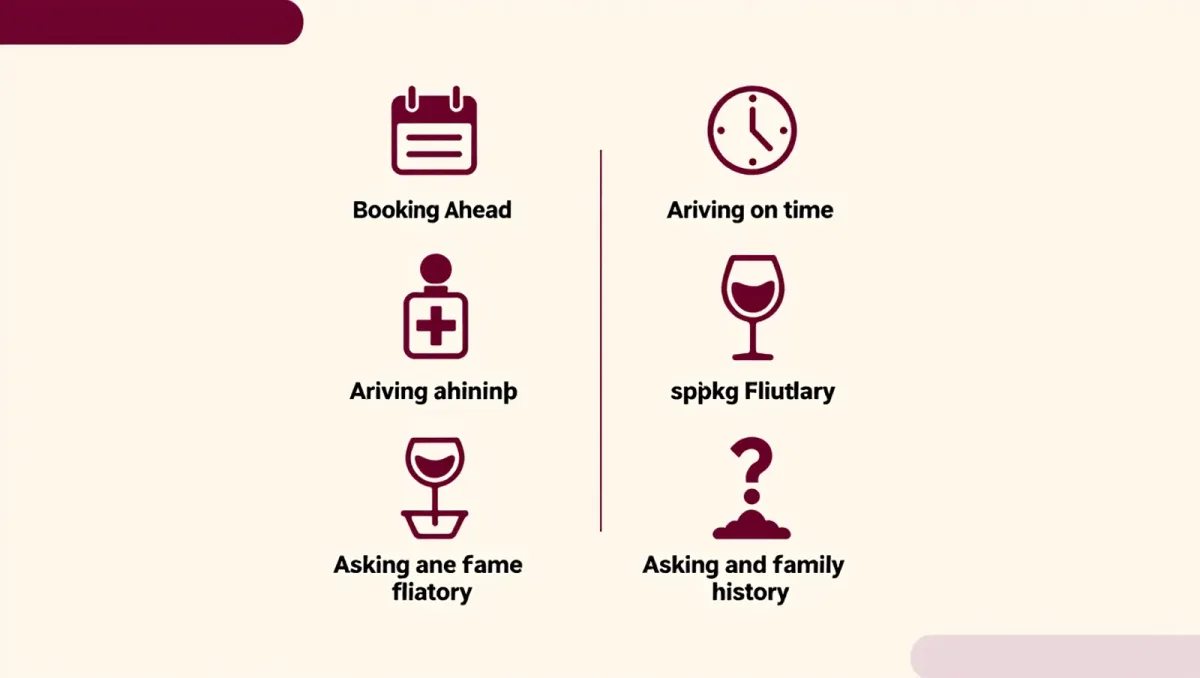
Five things, in order of frequency. Perfume and cologne: they block the nose the entire tasting is built on — skip them on tasting days. Punctuality: small estates run one host and one kitchen; twenty minutes late is the morning gone. Children and pets: policy varies enormously — ask, never assume, and note that some of Europe's most family-run domaines are also the strictest about cellar access. Photography: the cellar is the family's workplace; asking before the camera comes out costs nothing. And the palate's own manners: refusing a pour is fine ("I'll pass, thank you"), criticizing wines loudly is not, and drinking every pour to prove appreciation is the error that turns a three-estate afternoon into a two-estate afternoon.
How do you visit without drinking and driving?
The options, in descending order of flexibility: a hired driver for the day (the standard solution in most regions, bookable through your lodging); small-group or private wine tours that run the circuit; regions with rail or river access to vineyard villages — the Rhine, the Douro's Pinhão line, and others make the train the tasting driver; and basing yourself on a wine estate, where the bedroom is downstairs from the cellar. Local limits vary and tighten yearly; the honest rule is one pour, the spittoon for the rest, or no keys at all.
One habit separates the welcome guests from the masses: follow-up. A small domaine that hosted you well remembers an email that says thank you and reports which bottle was opened first. Wine regions run on repeat relationships — the visitor who writes is the visitor whose next appointment, two harvests later, ends up in the cellar with the barrels rather than at the counter with the price list.
Frequently asked questions
Do you have to buy wine after a tasting? No — but the custom differs by region. Where the tasting fee is waived with purchase (common in the US), buy; where the fee stands (much of Europe), buying is genuinely optional and no one minds.
How much wine do you actually drink at a tasting? Four to six pours of 30–60 ml — under two glasses in total. Spitting is standard, expected, and provided for; drivers should plan on using the spittoon for most or all of the flight.
Can you visit wineries during harvest? Yes, with earlier bookings and adjusted expectations: cellars are working rooms, tours shorten, and some small producers pause visits. The fermenting cellar in September is worth the constraints.
Are winery visits suitable for non-drinkers? Increasingly, yes — many estates pour juice, verjus, or non-alcoholic lines for designated drivers and non-drinkers, and the vineyard and cellar walk is half the visit regardless. Say so when booking so the host can plan.