Eating well on European trains is mostly a strategy about markets and a little about bistro cars: the continent's rail operators long since ceded the full restaurant car to history on most routes — today's high-speed services run bar-bistro counters or nothing at all, per published onboard-service guides as of mid-2026 — and the traveler who eats well is the one who assembles at the station market what the kitchen two hours away cannot sell.
This guide covers the mechanics: what onboard catering actually exists by train type, why the station is the real dining room, how to assemble a train picnic that survives four hours of curves, the alcohol and etiquette rules that vary by country, and which routes reward eating by the window more than others.
What onboard food actually exists?
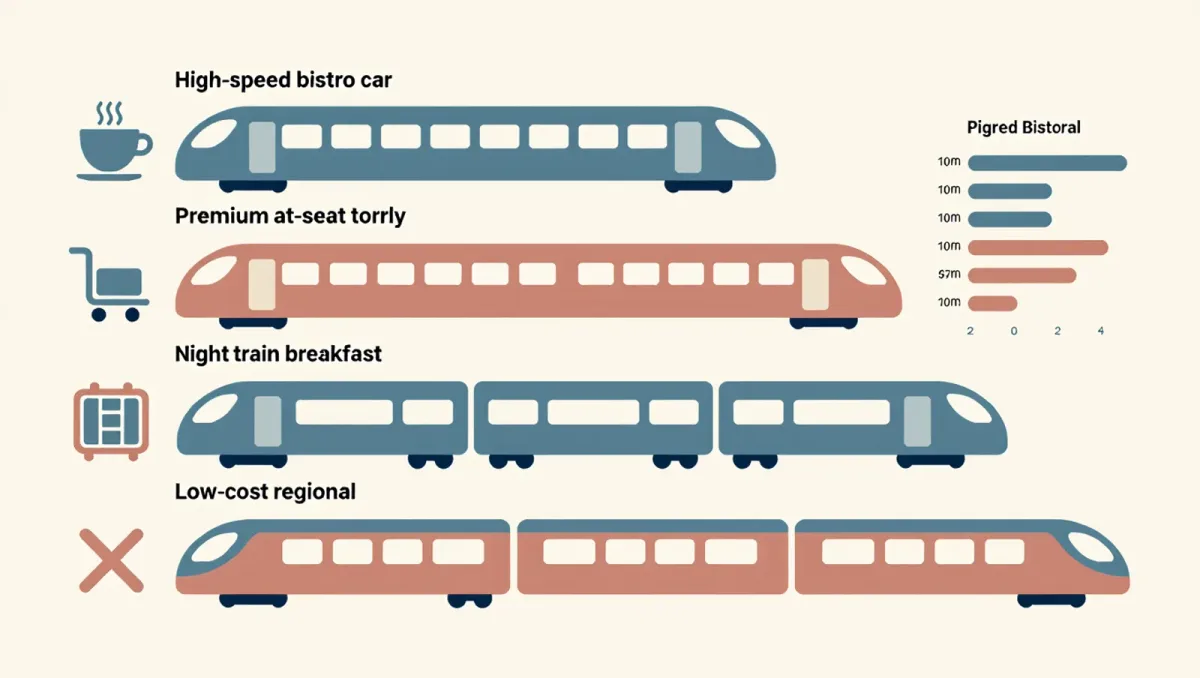
Three tiers. The bistro or bar car — standard on France's long TGV inOui services, Germany's ICE Bordbistro, Spain's AVE, and Italy's Frecciarossa — pours coffee, pours wine, and serves reheated plates of uneven ambition; it is a stretch-your-legs stop more than a dining room. At-seat trolley service survives on some first-class and premium formats. And the no-service tier — the low-cost Ouigo and Italo-Newton formats, most regional trains, and nearly everything under two hours — offers nothing, which is not a complaint but a design: the fare is cheap partly because the food is yours to bring. Night trains run the opposite extreme: breakfast trays at booked times, and a dining car on the routes that still carry one.
The honest expectation anywhere: coffee and a snack are buyable on many fast trains; a good meal is nearly always bringable and never guaranteed.
Why is the station the real dining room?
Because Europe's great stations are food destinations wearing a transit costume. The pattern is a century old and now deliberate: Bologna's station sits minutes from the Quadrilatero market; Rome's Termini shelters a food hall of the city's proper kitchens; Madrid's Chamartín and Atocha, Paris's Gare de Lyon with its old-school brasseries on the platform ends, Milan's Cento taste stalls — the station picnic assembled in fifteen minutes of market shopping beats most of what rolls onboard, and the specialty shops inside stations (the Fromagerie at Montparnasse, the ham counters of Madrid) sell the region you are heading toward or leaving.
The strategy: budget fifteen arrival minutes for the station's shops, buy lunch before boarding, and treat the onboard bistro as the drinks department.
How do you assemble a train picnic?
The format is proven. Bread and a hard cheese or cured meat — things that improve at room temperature over four hours — plus fruit that travels (grapes, cherries, oranges), something salty, and a sweet for the last hour; the bottle of water and the small wine from the station shop complete it. Cut nothing you cannot eat neatly: the train picnic's one law is one-handed food, because the table is small, the curves are real, and the seatmate is close. A lightweight kit — spork, napkins, a small bag for the wreckage — lives in the day pack for the whole trip.
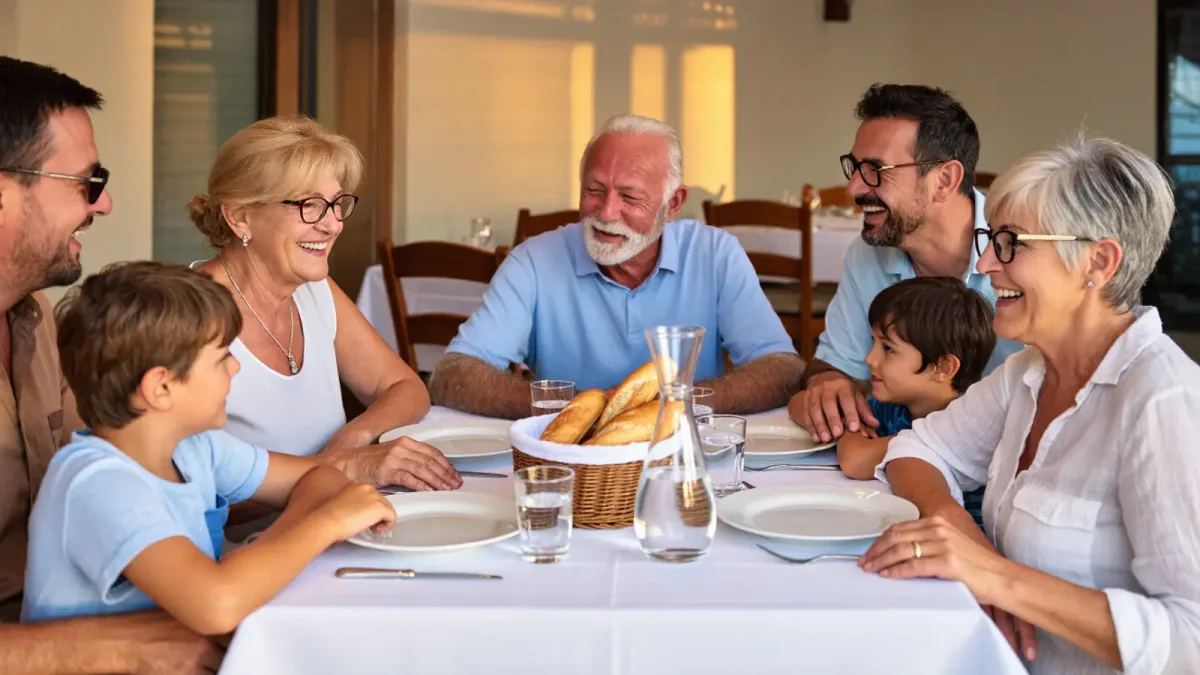
Seat choice matters more than menu: a table seat with four faces turns lunch into the trip's best conversation; the airline-style rows make the same picnic a solo pleasure. On trains with reservations, book the table class where it exists — the small supplement often buys the best meal setting in Europe.
What are the alcohol and etiquette rules?
Alcohol on trains is legal and normal in most of Europe — the bottle of wine with the picnic is a continental institution — but operators differ on their own vessels: some low-cost carriers prohibit alcohol brought onboard on specific routes, and a few national networks restrict it on late-night services; the ticket's fine print or the operator's site settles it. Etiquette is stricter than law: no strong-smelling food in quiet carriages (the hot-soup crime of European rail), the table cleared before the station stop, headphones if the meal comes with entertainment, and the bistro car's seats left for those buying.
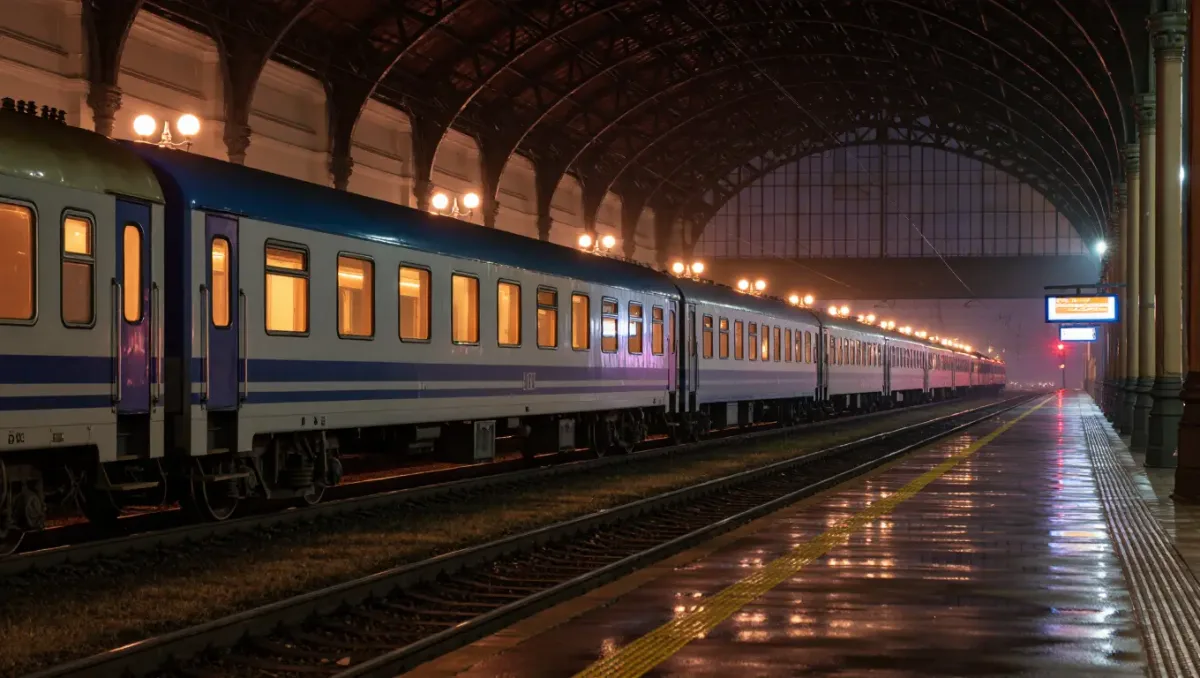
One habit deserves rescue from extinction: the dining car as destination. Where the old-style restaurant car survives — a handful of scenic and night services — booking lunch there is the meal of the trip, with the Alps or the Rhine doing the kitchen's work.
Which routes reward eating by the window?
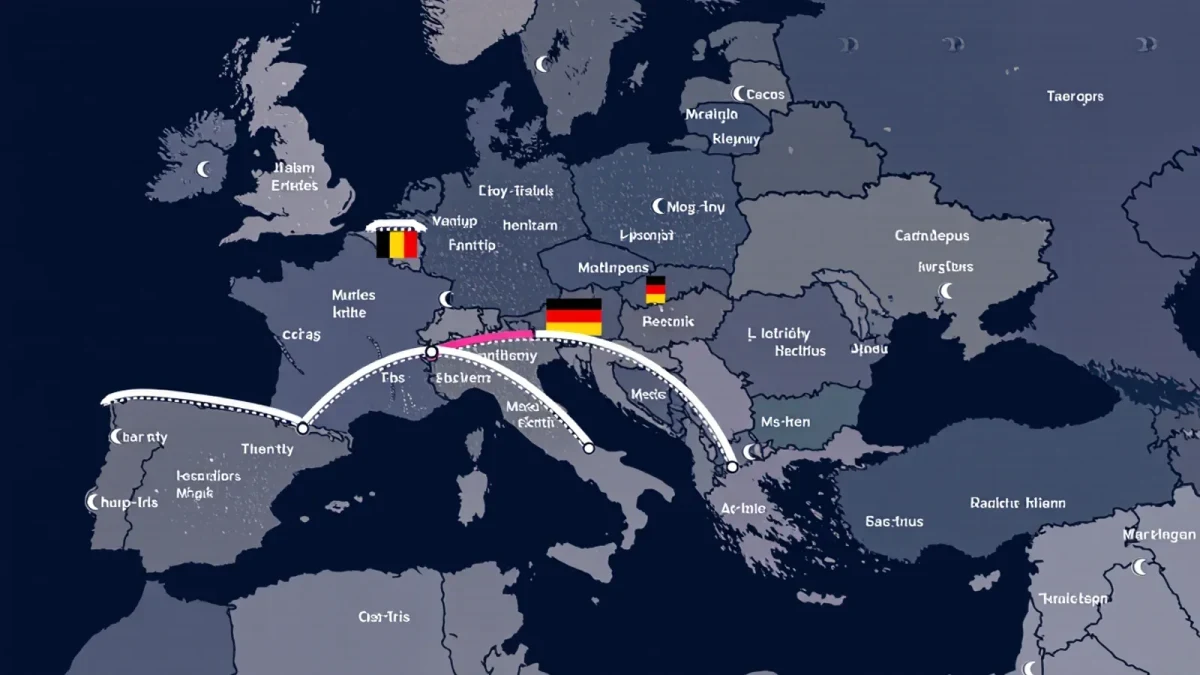
The pairings worth planning: the Milan–Geneva and Zurich lines with an Italian or Swiss picnic; the Rhine valley stretch of the Frankfurt–Cologne run with Riesling from a station shop; the Brenner pass route with an apple from the market at either end; Portugal's Douro line — covered in our valley guide — whose Pinhão leg pairs port country with a station-platform picnic; and Norway's Bergen line, where the fjord ascent argues for coffee and a skillingsbolle from the Bergen station bakery. The principle scales: the picnic is bought where the train departs, eaten where the scenery peaks, and packed out where it ends.
A word for the skeptics who consider train eating a compromise: continental rail lunch is one of Europe's oldest food pleasures, older than the bistro car — the corridor window with a paper-wrapped sandwich and the wrong weather going the other way is a form of eating no restaurant sells, and the four-hour ride is the rare meal where the scenery is included at no cover charge.
Timing the buy matters as much as the menu: station shops open early but the best bread sells by mid-morning, and evening departures find the cheese counters picked over — a ten-minute margin decides whether the Rhine picnic is the trip's best meal or its consolation. The overnight option closes the system: night trains serve booked breakfast trays at wake-up times, and the traveler who requests coffee for seven and rolls into the Alps with croissant in hand has completed the circuit this guide started — the train as table, the window as dining room, and the station as pantry.
Frequently asked questions
Can you bring your own food and drink on European trains? Yes — on the overwhelming majority of services it is normal and welcome, from regional rails to the flagship high-speed lines. A few low-cost operators prohibit onboard alcohol on specific routes; food is essentially always allowed.
Do European trains still have dining cars? Mostly no — bar-bistro counters are the standard on fast services, at-seat trolleys survive in premium formats, and true restaurant cars live on a handful of scenic and night services. Low-cost and regional formats have no catering at all.
What is the best food to bring on a long train ride? One-handed and room-temperature: bread, hard cheese, cured meat, grapes or cherries, something salty, something sweet, and bottled water. Avoid soup, shellfish, and anything requiring two hands or a sink.