A cheese visit works on the dairy's clock: the make usually starts between 6 and 9 a.m. — milk cannot wait — so most producer visits are morning events, booked a week to a month ahead, run 45 to 90 minutes, and end at the farm counter, where the wheel that costs a city cheesemonger's markup is sold at the price the family set, based on published visit programs of farmstead dairies and cheese routes across Europe and North America as of early 2026.
This guide covers the practical mechanics: the three kinds of cheese visit and how they differ, how to book and when, what to wear and why biosecurity is the one rule with no exceptions, what happens at an ager's cellar versus a farm, and how to buy, taste, and — with packing sense — carry the visit home. It complements our guides to the Comté route and to winery etiquette; the principles rhyme, the logistics differ.
What kinds of cheese visits exist?
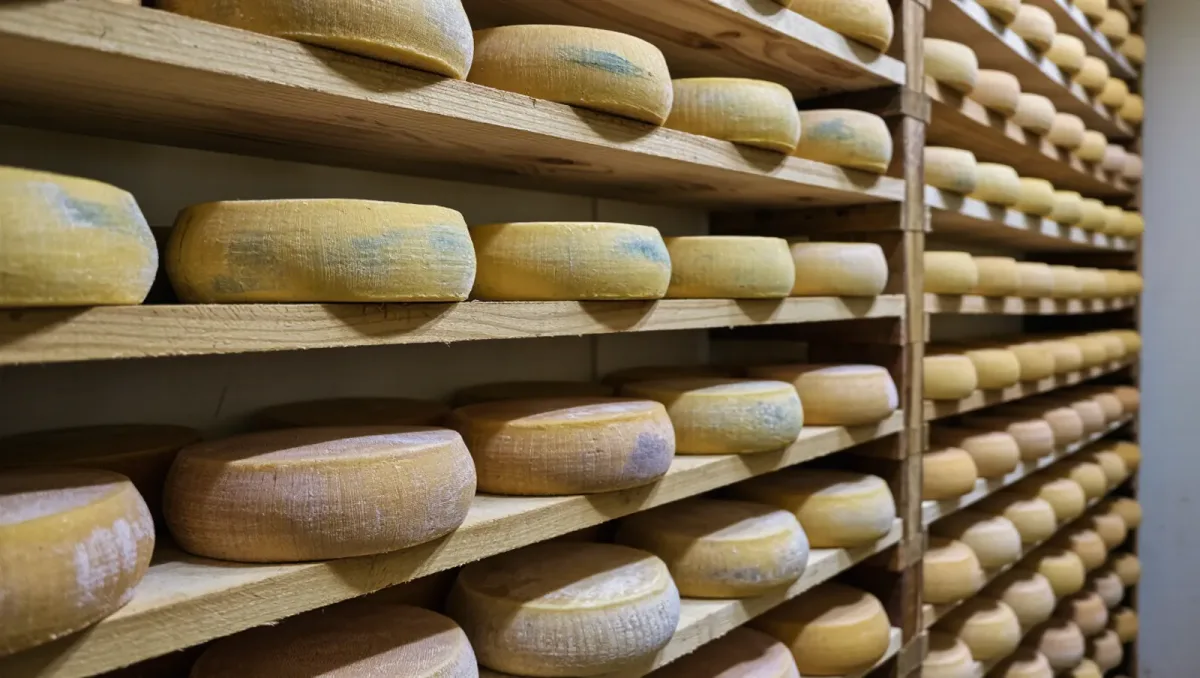
Three, each with its own rhythm. The farmstead dairy: one family, their own herd or goats, milk to wheel under one roof — the classic farm visit, often with the animals in view and the make behind a viewing window or open door. The cooperative fruitière or creamery: member farms deliver milk, and the make is industrial in scale but traditional in method — the Comté and Gruyère model, with scheduled public makes. And the affineur or aging cellar: no milk at all, but rows of maturing wheels under a cellar master's brush and salt — the visit that teaches what time does to cheese, and the rarest of the three to book.
The differences decide the day: farm visits answer where cheese comes from, cooperative visits show the craft at volume, aging cellars show the trade's slow half. A traveler with one morning should pick by appetite; a traveler with three should do one of each.
How do you book, and when should you come?
Direct contact beats platforms for small dairies: a call or email two weeks ahead is standard, a month ahead for school-holiday periods and festival weekends. Many farm dairies run fixed public visit times (often one morning slot per day); others receive by arrangement only, and some tiny farmsteads sell at the gate with no formal visits at all — the farm shop is itself a visit if you catch the make. Confirm three things when booking: the start time (and that it is the make, not just the shop), the language, and whether children are welcome, which most dairies genuinely like but a few working farms must restrict around machinery.
Morning is the honest answer to timing: makes happen at dawn because milk is collected at dawn, and afternoon visitors typically see a washing, brining, or packing room instead — worth seeing, but half the show.
What do you wear, and what is biosecurity?
Wear shoes that can be washed — rubber boots or trainers you have retired — and clothes that forgive a barn. The biosecurity rules are the visit's one non-negotiable: visitors can carry disease between herds on their soles, so dairies in controlled regions may require boot dips, disinfection mats, or that visitors have had no contact with other livestock that day; some regions restrict visitors entirely during disease outbreaks. Declare contact with animals when asked, follow the footbath without skipping, and never carry food into the make room — the discipline that lets a family host strangers in the room where their milk becomes their income.
Photography follows the same courtesy: ask before the camera comes out, and expect the animals and the make to be fair game while paperwork and the family kitchen are not.
What happens during the visit?
The canonical arc: the herd or the milk first, then the make — culture added, rennet, the curd cut and gathered, wheels pressed and salted — then the aging room if the farm has one, then the tasting and the counter. A good host narrates while working; the make waits for no audience, and visitors stand where told, which is usually a rope's length from the vat. Tastings run from a wedge and a story to a guided flight across ages; buying direct is the point of the trip for most visitors, and the farm price is typically 20–40% under city retail for the same wheel — the margin that pays the cheesemonger staying home with you.
Cellar visits at affineurs add the professional layer: grading, brushing, turning schedules, and the label bands that mark a wheel's fate. They are shorter, quieter, and best for travelers who already know their farm from their affinage.
How do you carry the visit home?
Hard and aged cheeses travel days at cool temperatures; vacuum sealing at the farm — ask, it is standard — buys the flight home, and original labels stay on for quality's sake. Soft cheeses eat on the trip or go home only with a cold pack and a same-day flight. Butter, cream, and yogurts are road-trip purchases, not flight ones. The full packing method — bags, padding, and the cabin-liquids line between cheese and everything spreadable — is covered in our guide to packing gourmet souvenirs; the short version for dairies is buy last-day, vacuum everything, and let the aged wheels do the traveling.
What does a seasonal calendar add?
Cheese is a seasonal trade, and the visit changes with the year: spring brings the first grass milks and, in alpine regions, the transhumance festivals when herds climb; summer is peak visitor season with the fullest visit schedules; autumn adds the year's maturing batches and, in many regions, the fairs where the year's wheels are judged; and winter concentrates both the affinage — the winter months are when last summer's makes deepen — and the quiet, when some farm dairies close visits entirely during the animals' dry period. Check the region's calendar before fixing dates: the best visit of a cheese year is often a festival day, not a tour.
Frequently asked questions
Can you just show up at a farm dairy? Sometimes — farm shops and gate sales usually welcome drop-ins during posted hours, but the make itself is appointment-only almost everywhere. A call the day before converts a shopping stop into a visit.
How much does a dairy visit cost? Many farm visits are free or a few euros with the expectation of a purchase; guided tours at larger creameries and aging cellars typically run €5–€15 per person, with premium tastings above that.
Are dairy visits suitable for young children? Usually yes, and animals make them a family favorite — but confirm age policy when booking, hold hands near machinery and animals, and skip the visit during disease-control restrictions, when dairies may close to visitors entirely.