Packing gourmet souvenirs is a craft with three laws: buy shelf-stable when you can, seal against pressure and leaks, and pad for pressure changes — and a traveler who follows them lands the Romagna honey, the Kyoto tea, and the vacuum-packed mountain cheese intact, while the one who wraps a jar in a T-shirt lands a suitcase with a story. The stakes include the carry-on liquids rule, which caps containers at 100 milliliters in cabin baggage — the reason every jar of oil, mustard, and spread must fly in the hold.
This guide is a packing manual, not a customs briefing: which foods travel well and which do not, how professionals wrap jars, cheeses, and bottles, what cabin baggage rules do to food, and the kit that turns any suitcase into a pantry carrier. Every technique below comes from standard practice among cheesemongers, wine shippers, and veteran food travelers.
Which foods travel well — and which never should?
The reliable travelers are shelf-stable and sealed at origin: unopened jars and tins (anchovies, confit, honey, jams, tahini), hard cheeses in vacuum, cured and dried goods (spices, tea, dried mushrooms, chiles, jerky-style sausages from producers who seal them), chocolate in temperate weather, and bottled drinks in padded sleeves. The reliable failures are the opposites: soft-ripened cheeses without refrigeration, fresh produce, anything requiring the cold chain for more than the hours you can provide, and open or fragile packaging — the market paper cone of fried anything that seemed like a good idea in the square.
Temperature is the quiet variable. Chocolate survives a hold if the flight is short and the season is kind; in summer heat, chocolate and filled candies move to insulated layers or stay home. Butter-based goods, the same. Olive oil survives pressure and heat well; it is the glass that needs the work.
How do you pack jars and bottles so they arrive whole?
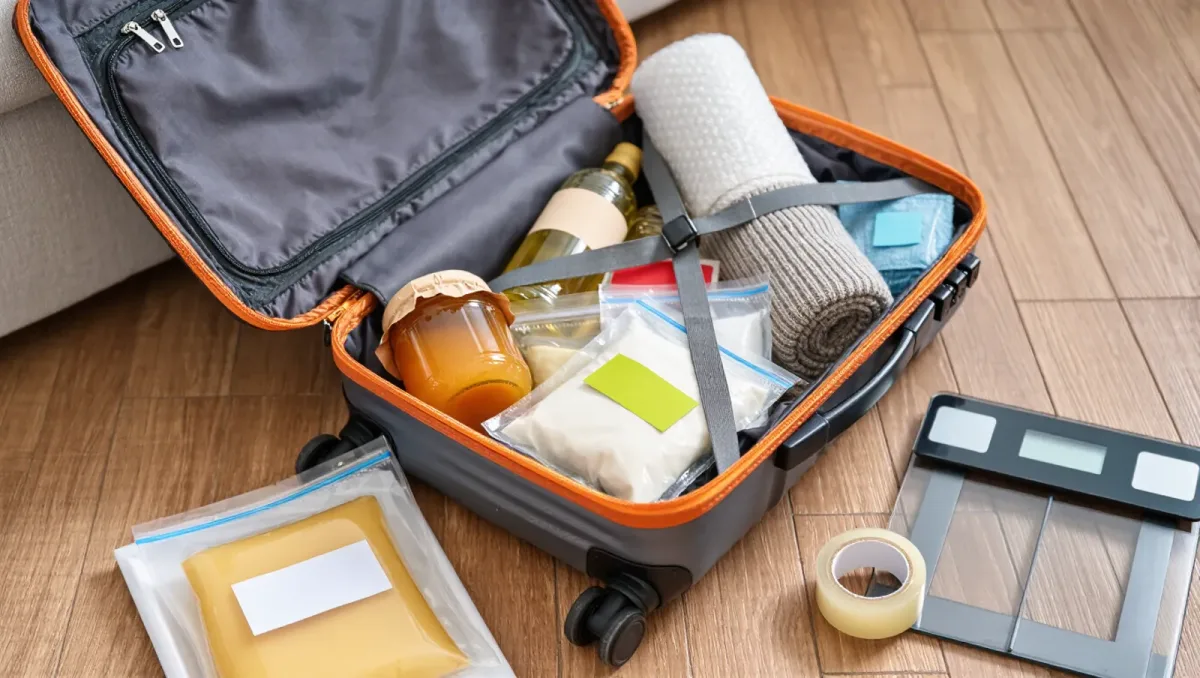
The professional method has four steps. First, seal the closure: a strip of strong tape around the lid (or a gasket-tight cap), because altitude pressure and handling loosen threads. Second, double the primary barrier: the jar inside a zip bag, sealed with most of the air pressed out — if the glass fails, the bag holds the loss to a few grams. Third, cushion individually: each item wrapped in soft material — a sock, a sweater, bubble wrap — with an inch of padding between items, never glass on glass. Fourth, center in hard luggage: the middle of a suitcase, surrounded by clothes, is the safest compartment you own; the corners and the wheel-end are where cases get crushed.
Wine and oil bottles have a fifth step: purpose-built sleeves or a split pool-noodle sleeve per bottle, stood on the base, never against the suitcase wall. Shippers who fly wine weekly also use the pressure trick — a sealed, unopened bottle is already the strongest container in the bag.
What does the cabin-liquids rule do to food?
Security rules at most international airports cap liquids, gels, and spreads at 100 milliliters per container in carry-on baggage — a rule that sweeps up honey, jam, soft cheese, peanut butter, pâté, and anything spreadable or pourable, however solid it feels. The practical consequence: all jars, oils, and soft foods fly in checked luggage, sealed and bagged as above. Solid dry goods — vacuum-packed cheese, spices, tea, chocolate — are the carry-on exception and make the best cabin souvenirs: inspection-friendly, odor-manageable, and immune to pressure.
Two carry-on notes: Duty-free sealed bags (STEB) are for airport-bought bottles connecting through, not for market purchases; and powders over a threshold face extra screening on some routes, which argues for original, labeled packaging for spices.
How do you handle cheese, charcuterie, and the perishables?
Cheese is the classic problem and the solvable one. Hard, aged cheeses — a twelve-month Comté, a young pecorino, a wax-rinded wheel — vacuum-seal at the shop, keep for days at cool room temperature, and arrive themselves. Soft cheeses should be eaten on the trip, not packed. Charcuterie from producers who vacuum-seal travels similarly; ask the counter to seal and to include the label — original packaging reads as quality at any inspection and as a gift at home.
For any perishable in transit, compress the timeline: buy on the last morning, not the first; carry on the coldest bag you can manage; and a cold pack wrapped with the parcel buys half a day more. The honest ceiling for unrefrigerated soft foods is about four to six hours — plan the flight around it, not hope around it.
What belongs in a souvenir-packing kit?
- Zip bags in two sizes — the leak insurance for everything wet or jarred.
- A roll of strong tape — lids, seams, and the bag of a hundred other repairs.
- Bubble-wrap sleeves or reusable bottle protectors — one per bottle.
- A luggage scale — airlines enforce weight limits at check-in, and pantry bags run heavy.
- A small cooler bag and a cold pack — for the last-day cheese and salumi run.
- Space budgeted on the way out — half-empty outbound cases are the difference between souvenirs and shipping costs.
What do people regret packing?
The regret list is consistent across veteran travelers: the market's unwrapped pastries bought hours before a long flight; the ceramic flask of farm oil with a cork, not a cap; the soft cheese chosen for sentiment over science; and the wine bought on day one and hauled through four hotels. The inverse habit is just as learnable — taste on the road, buy on the last day, and let the last morning's market run be a scheduled event, bags empty and seals ready, rather than a scramble after checkout.
Frequently asked questions
Can you put food in carry-on luggage? Solid, dry foods — vacuum-packed hard cheese, chocolate, spices, tea, sealed snacks — yes. Anything liquid, spreadable, or gel-like (honey, jam, oils, soft cheese, spreads) is capped at 100 ml per container in cabin baggage and belongs in the hold.
Will olive oil or wine explode in flight? No — cargo holds are pressurized like the cabin. The risks are leaks at the closure and impact; tape the lid, bag the bottle, pad it individually, and center it in the case.
How do you keep chocolate from melting? Season and flight length decide: in summer or on long routes, chocolate needs insulation — wrapped in clothing in the case's core, or a small insulated pouch — and fragile tempering (filled pralines) may simply wait for winter travel.
Is it cheaper to ship food home than to pack it? For a case or more of bottles, a freight forwarder or the shop's own shipping service can beat airline excess-baggage fees; for everything else, packed luggage wins on cost, speed, and the small pleasure of carrying the trip home yourself.