Tap water is drinkable across most of Western Europe, North America, Australia and New Zealand, Japan, and a short list of other countries; in much of the rest of the world the safe rule is simpler — treat all tap water, and everything touched by it, as unsafe to drink. The stakes are concrete: the World Health Organization estimated in recent years that roughly two billion people worldwide use drinking water sources contaminated with feces, and the CDC estimates that 30–70% of international travelers — somewhere between 10 and 40 million people a year — develop traveler's diarrhea, most of it water- and food-borne.
This guide gives the food traveler's version of the question: where tap water is safe, how ice fits in, what to do about brushing teeth, raw produce, and street drinks, and the legitimate options — bottled, filtered, boiled — ranked.
Where is tap water safe?
The reliable short list: Western and much of Northern Europe, the United States and Canada, Australia and New Zealand, Japan, South Korea, Singapore, Hong Kong, and the Gulf states' urban networks — destinations where municipal systems are treated, tested, and legally potable. Within regions, cities and towns vary: rural networks, old plumbing, and mountain villages can differ from the national norm, and hotel tanks and cisterns add their own variables on islands and in coastal resorts.
The practical instruments: your government's travel-health pages list country-level advice, and the destination's own tourism authority states plainly whether the supply is potable. When the answer is unclear, the water is — treat it.
What about ice, and everything else the water touches?
Ice follows water: ice made from treated municipal supply is safe, ice made from anything else is water with a costume. High-volume hotels and international chains usually produce safe ice; street drinks and rural eateries may not. Asking helps less than observing — machine-made ice with a hole through the cube comes from commercial production, while hand-chipped blocks off an indeterminate block are the risky kind.
The water also reaches you sideways. Brushing teeth with tap water is the commonest slip; so is the shower swallow, the wet glass at a café, and the fruit washed at the sink. Raw produce deserves its own rule in any unsafe-water destination: eat fruit you peel yourself, and treat salads — rinsed in the local supply — as tap water in leaves.
Are bottled drinks and hot drinks safe?
Sealed bottled water and factory-sealed drinks are the safe default in unsafe-water countries — check the seal, since refilled bottles are a documented trade in some markets. Carbonated drinks are their own safety check: the fizz is carbonation added at bottling, and a properly fizzy sealed bottle has not been opened and refilled. Hot drinks — tea, coffee — are safe when the water was actually boiled; the steam test. Fresh juices, blended drinks, and anything with ice reintroduce the water question at the last step, which is where most drinks go wrong.
Beer and other brewed-and-bottled alcohol are safe everywhere — the historical reason travelers' adage makes it the default toast in uncertain places.
What are the actual options for safe water?
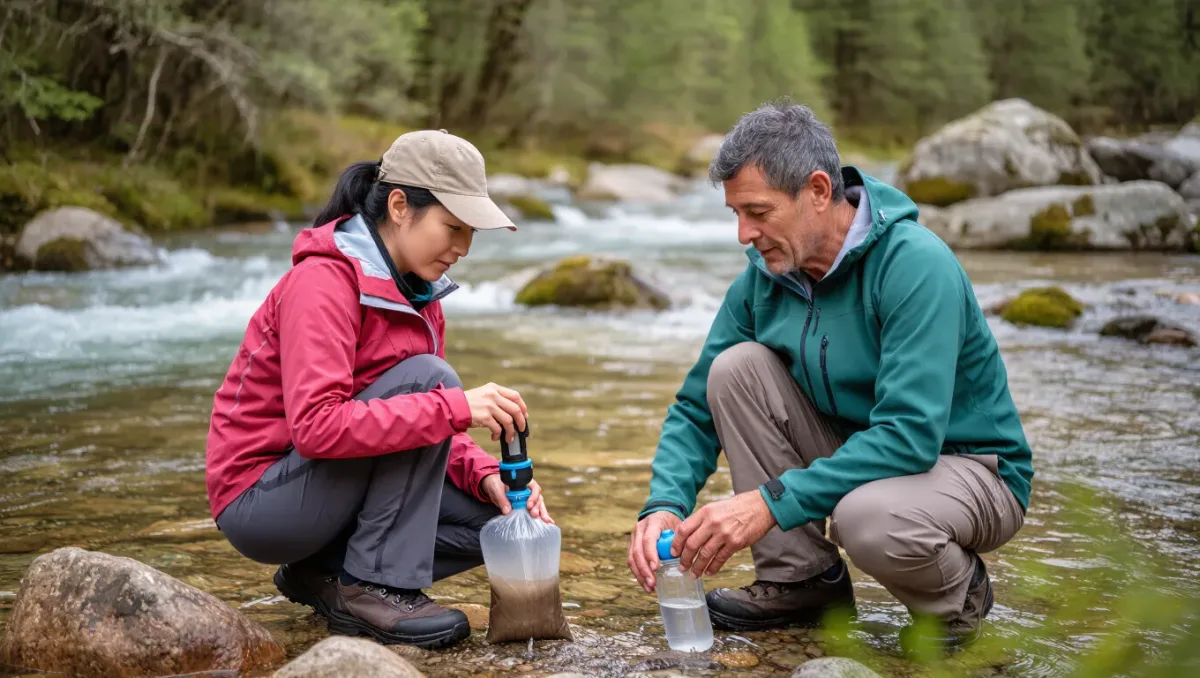
Ranked by reliability. Boiling is the gold standard the CDC and WHO endorse: a rolling boil, one minute at sea level and three at altitude, makes any water safe. Commercial filtration and purification carry the rest: purifying tablets and drops (chlorine dioxide among them) work per their labeled contact times; portable filters need the right rating — microbiological purifiers, not mere carbon filters — to handle viruses as well as bacteria and protozoa. Bottled water is the convenience option and the waste problem: in unsafe-water destinations it is the realistic default, but a filter bottle or purification drops turn a two-week trip's plastic footprint into a rounding error.
One boundary deserves emphasis: filters clean water, not salt — desalination is not a travel-gear question — and ultraviolet pens purify only clear water, so murky sources need filtering first.
How does this fit a food-focused trip?
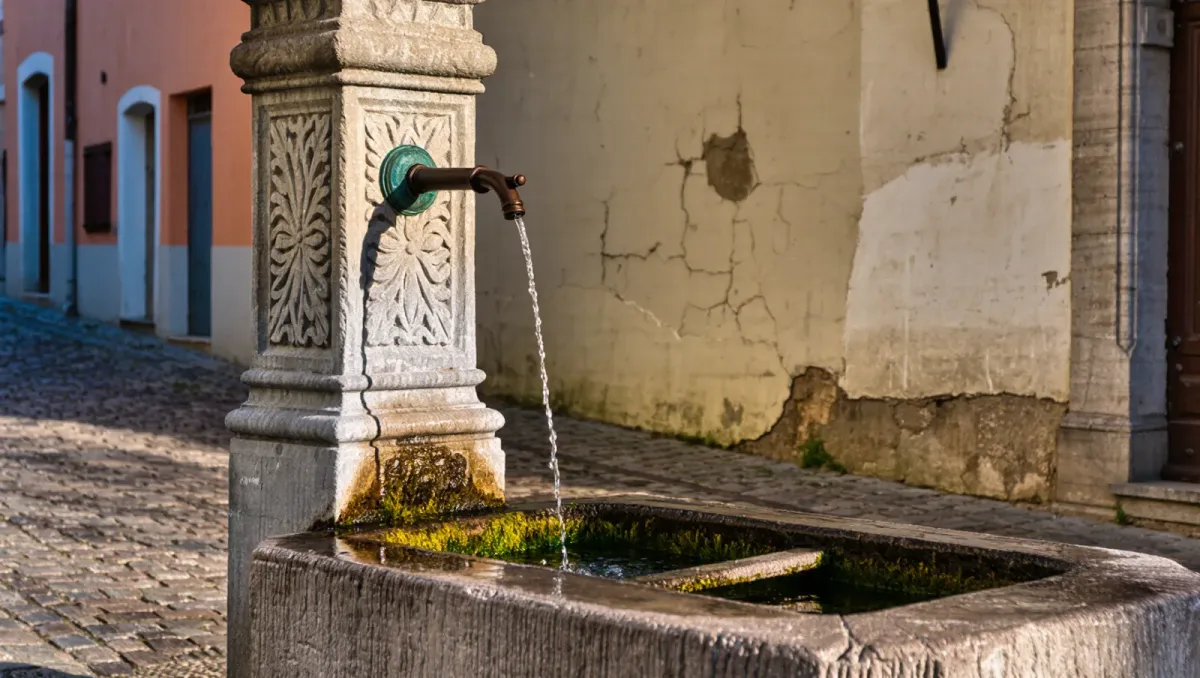
For the food traveler the water question attaches to specific pleasures, and each has a workaround. Street drinks: order them sin hielo — without ice — which works as a phrase in Spanish and a gesture everywhere. Markets: peel-your-own fruit is the rule, and cut-fruit vendors are a judgment call about the water and hands involved. Coffee and tea cultures are natural allies — boiled water is their foundation. And the local tap question doubles as a sustainability question: in safe-water cities, a refillable bottle is both the budget and the environmental answer; refill stations and fountains across Europe make the habit easy.
Duration matters too: the stomach that adapts is real, but it adapts over weeks, not a fortnight's holiday, and short-stay visitors should not experiment. Long-stay travelers can transition gradually — cooked foods, hot drinks, peeled fruit first.
A final note on the health math: traveler's diarrhea is overwhelmingly a short, unpleasant illness, and the serious outcomes concentrate in travelers with existing conditions, infants, and the elderly — the groups for whom the travel-medicine consult is not optional. For everyone else, the kit is small: rehydration salts, the usual commonsense rules, and the willingness to drink more water than feels necessary in hot markets. The food traveler's paradox holds — the same destination that requires caution with water often serves the safest thing you will eat all trip: food cooked fast, hot, and in front of you.
What about returning home?
Traveler health services note that symptoms persisting after return deserve a doctor rather than self-treatment, and that persistent post-travel digestive trouble is common enough to have a name. The overwhelming majority of trips end better than that: a week of discipline with water buys an unrestrained table.
Frequently asked questions
Is ice safe in Mexico, Southeast Asia, and Egypt? Treat it as unsafe unless the venue demonstrably produces its own from treated water — large hotels and chains usually do; street stalls often buy block ice of unknown origin. The phrase for the request: without ice.
Can you brush your teeth with tap water? Only where the tap water is drinkable. Elsewhere, use bottled or boiled water — it is the commonest low-stakes exposure travelers report.
Do water filters make water safe anywhere? Only the right ones. A filter must be rated as a microbiological purifier to handle bacteria, protozoa, and viruses; chemical tablets and boiling remain the fallback, and boiling is the single most reliable method anywhere.
Is it rude to refuse ice or drinks? No — "no ice, please" is a phrase every hospitality worker on earth knows, and declining politely costs nothing.