The world's serious food festivals keep stubbornly fixed dates: the Alba white truffle fair opens each early October and runs to early December, Oaxaca's Guelaguetza fills the last two Mondays of July, Munich's Oktoberfest starts in September and ends the first Sunday of October, and Galway's oyster festival — running since 1954 — takes the last weekend of that month. A trip planned around food is often a trip planned around one of these weeks.
This calendar gathers the annual food events worth building a trip around, organized by season rather than rank, with the practical notes — booking windows, crowd realities, and what is actually eaten — for each. Dates below reflect the standing traditions as of mid-2026; religious-linked festivals shift with the calendar year, so confirm each year's edition before booking flights.
Spring: blossom, asparagus, and Carnival's leftovers
The food year opens with two movements. In late March and April, Spain's Jerte Valley flowers — a million cherry trees in two weeks — and the harvest follow-up arrives in June, when the stemless Picota hits the roadside ventas. In the same weeks, Germany's Spargelzeit reaches its peak: white asparagus season, traditionally closed on St. John's Day, June 24, and celebrated across Baden and Bavaria with restaurant menus built entirely around the spears. Carnival, meanwhile, belongs to the movable calendar — its tables matter even where the party is quiet, from Venice's fritole to the king cake of New Orleans, both tied to the weeks before Lent.
Summer: Oaxaca in July, Buñol in August
Guelaguetza, Oaxaca's festival of the state's dances and delegations, fills the last two Mondays of July — but the food traveler's reason to be there is the whole fortnight around it: village markets at full volume, festival stalls of the seven moles, and the city's mezcalero cantinas on their best behavior. Rooms book out weeks ahead; the market strategy is covered in our Oaxaca guide.
Late August belongs to Buñol's La Tomatina — the last Wednesday of August, when the town's tomato fight spends some 100 tons of ripe fruit in an hour — and, more deliciously, to the Festival du Cassoulet in Castelnaudary, the Occitanie town's late-August homage to its bean pot. The same weeks bring the short season of Norway's and Sweden's crayfish parties, kräftskiva, a Swedish August institution with paper lanterns and aquavit.
Autumn: the truffle-and-beer quarter
No quarter of the calendar carries more food-travel weight. Munich's Oktoberfest opens mid-September and closes the first Sunday of October — a beer festival, but an eating one too: the festival halls serve roast chicken by the millions, pretzels by the ton, and steer on the spit. Galway's International Oyster Festival, late September, has run since 1954 and pairs the season's first oysters with a shucking championship and a serious pint program. In early October, the Alba fair opens in Piedmont and the white truffle market sets its daily price board; November inside the fair is the connoisseur's month. Paris's Salon du Chocolat, the chocolate trade's public show, takes late October into early November.
Two smaller autumn observances reward travelers already in place: the Zurich Zibelemärit, the onion market that fills the old town on the fourth Monday of November, and Beaujolais Nouveau day, the third Thursday of November, when the year's wine is released at one minute past midnight and Lyon, two hours south, drinks its share by lunch.
Winter: saints, markets, and the deep season
December is the Christmas-market quarter, and its food — Nuremberg bratwurst and gingerbread, Vienna's punsch and krapfen, Strasbourg's bredele — is festival cooking by any measure. January answers with zeppole di San Giuseppe's cousin season in Naples and, farther south, the citrus festivals of Sicily, where the winter orange harvest peaks. February closes the loop with Carnival again — the calendar, like the kitchen, is a circle.
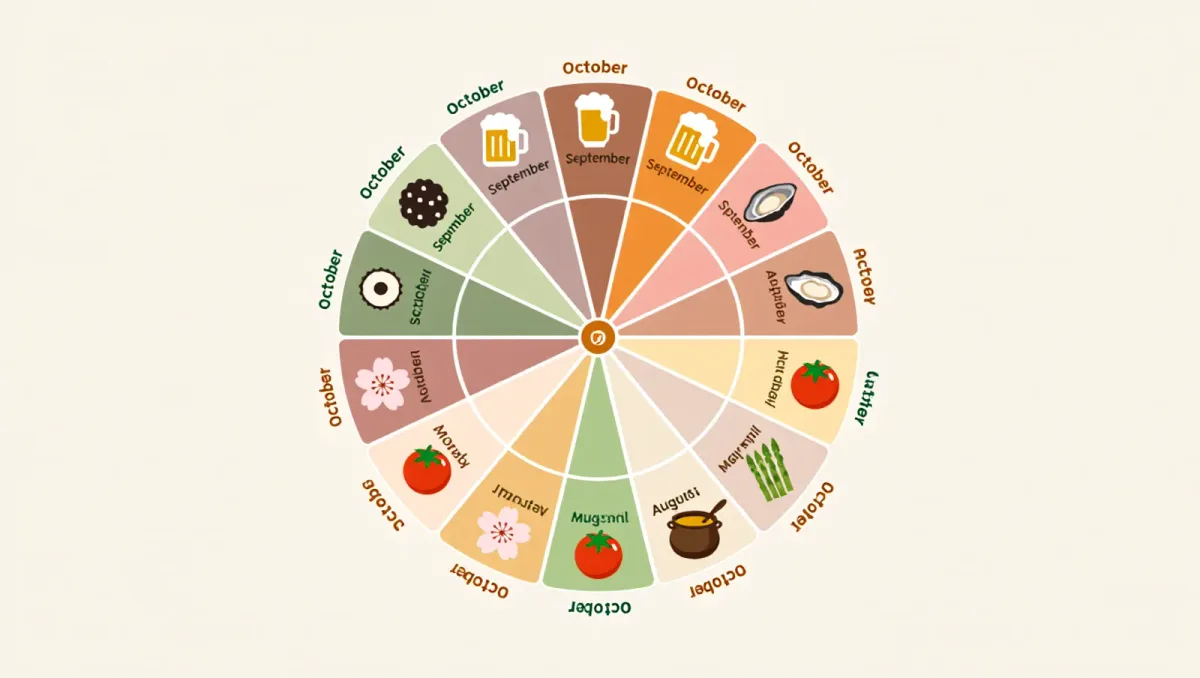
The calendar at a glance
| Month | Festival | Place | What you eat |
|---|---|---|---|
| Feb–Mar | Carnival tables | Venice, New Orleans | Fritole, king cake |
| Mar–Apr | Fiesta del Cerezo en Flor | Jerte Valley, Spain | Cherry blossom season |
| Apr–Jun | Spargelzeit | Baden, Bavaria | White asparagus |
| Jul | Guelaguetza | Oaxaca, Mexico | Seven moles, mezcal |
| Aug | Festival du Cassoulet / La Tomatina | Castelnaudary / Buñol | Cassoulet / tomato fight |
| Mid-Sep–early Oct | Oktoberfest | Munich | Beer, roast chicken, pretzels |
| Late Sep | Galway Oyster Festival | Galway, Ireland | First oysters, stout |
| Oct–early Dec | Alba White Truffle Fair | Alba, Italy | White truffle |
| Late Oct | Salon du Chocolat | Paris | Chocolate |
| Nov | Zibelemärit / Beaujolais Nouveau | Zurich / Beaujolais | Onion tarts / new wine |
| Dec | Christmas markets | Nuremberg, Vienna, Strasbourg | Market street food |
How to plan around a festival week
Three rules carry most of the weight. Book rooms first and far ahead — Guelaguetza, Oktoberfest, and the Alba weekends price like holidays and sell like them, sometimes months in advance. Then eat outside the festival itself: the permanent markets and neighborhood tables of the host city are often better and reliably calmer than the event stalls. And time your day for the locals — the fairgrounds and market halls belong to the mornings and weeknights, while the weekends belong to visitors.
The small festivals: sagre and village fairs
The famous names are the headliners, but the calendar's depth is in the village tier: Italy alone runs hundreds of sagre each summer and autumn — one-dish festivals where a town cooks its local specialty for a weekend, from truffle fairs in the Marches to chestnut roasts in the Apennines — and France's fêtes gourmandes, Spain's ferias, and Germany's market festivals do the same work on their own calendars. They rarely need advance booking beyond a room, they cost pocket money, and they are where the dish is still made by the families who grow it. Check the regional tourism boards' event calendars a season ahead; the small festivals post late and local.
A note on scale: the counter-intuitive advice for first-time festivalgoers is to go smaller before going bigger. A sagra weekend or a regional harvest fair teaches the logistics — crowds, rooms, meal timing — at village stakes, which makes the Oktoberfests and Alba weeks of the calendar far easier to enjoy when you step up to them.
Frequently asked questions
Which food festival is the oldest? Among those tracked here, Galway's oyster festival — running since 1954 — claims the longest unbroken run; Oktoberfest dates to 1810, though it is a beer festival first. Harvest and saint festivals across Europe long predate all of them.
Do festival dates move every year? Harvest festivals stay anchored to their season; religious-linked events move with the liturgical calendar; and some, like Guelaguetza, are fixed to a weekday-and-month formula. Always confirm the current year's dates before booking.
Is Oktoberfest worth it for food travelers? Yes, with strategy: the halls' roast chicken, pretzels, and festival fare are genuine Bavarian cooking at volume, and weekday afternoons are manageable. The city's beer gardens and markets do the rest.