The Douro Valley, carved into northern Portugal's schist plateau upriver from Porto, is the world's oldest demarcated wine region — its boundaries legally fixed in 1756 under the Marquis of Pombal, more than a century before similar rules reached Bordeaux — and it remains the only source of true port, the fortified wine that still finishes its life in the riverside lodges of Vila Nova de Gaia. UNESCO inscribed the Alto Douro wine landscape as a World Heritage site in 2001.
This guide explains the region's geography and port styles, the practical ways in — by river, rail, and road — where cellar visits and tastings actually happen, and how to sequence two or three days so the valley reads in order rather than as a blur of quintas. Price ranges cited are indicative, drawn from producer and tourism sources as of early 2026.
What is port, and what styles matter to a visitor?
Port is wine whose fermentation is stopped early with grape spirit, leaving sweetness and roughly 19–22% alcohol. Two families organize the shelf. Bottle-aged ports — ruby, reserve ruby, late-bottled vintage, and the great vintage years — mature in bottle and keep their dark fruit; drink them young, decant vintage declarations. Wood-aged ports — tawnies and colheitas — spend years in cask and develop walnut, caramel, and dried-fig notes; tawnies are labeled by age (10, 20, 30, 40 years) and colheitas by a single vintage. White and rosé ports round out the range and, in Portugal, serve as the afternoon aperitif with tonic.
One name from the table-wine side deserves a traveler's attention: the Douro DOC reds made from the same grapes — Touriga Nacional, Touriga Franca, Tinta Roriz — now rival the fortified wines in reputation, and every serious quinta pours them beside the ports.
How does the valley's geography organize a trip?
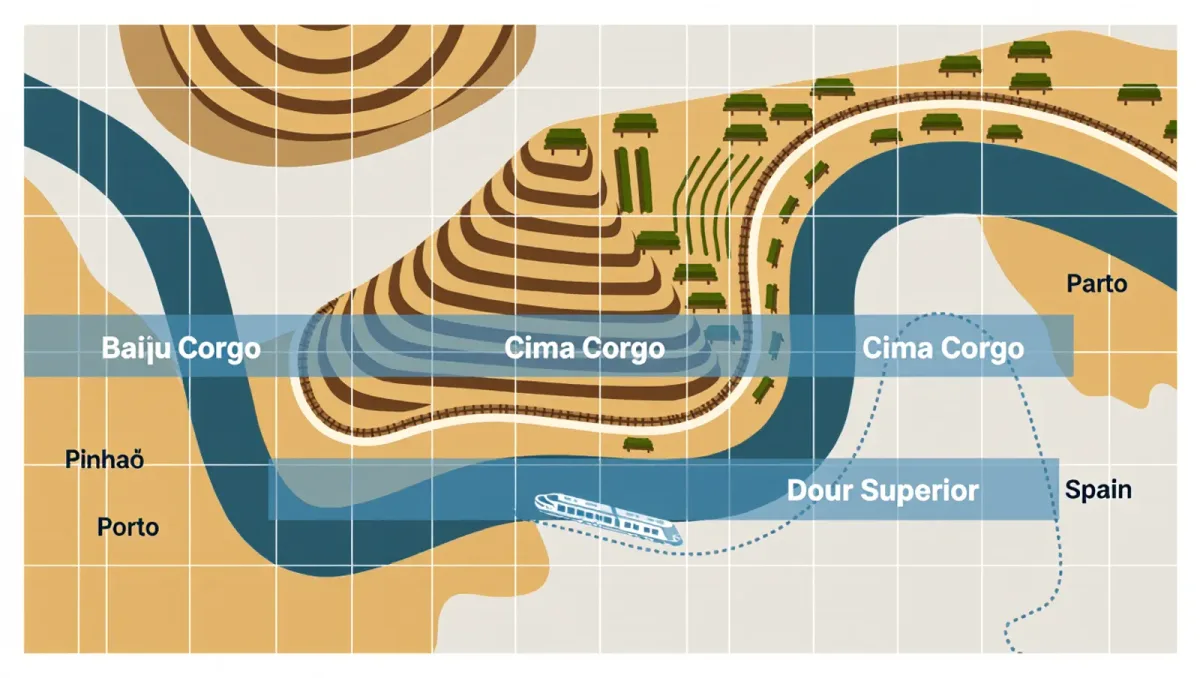
The Douro is divided into three subregions running upriver. The Baixo Corgo, nearest the coast, is the wettest and the historic workhorse. The Cima Corgo, centered on Pinhão, holds the classic terraces and most of the iconic quintas. The Douro Superior, stretching toward the Spanish border around Foz Côa and Vila Nova de Foz Côa's prehistoric rock-art park, is the wild, high, hottest sector where the newest plantings and the luxury-wine projects sit. A two-night trip reads naturally in that order — a day each for the Corgo heart and the Superior — and the river's meanders mean distances that look short on the map take a slow, gorgeous hour apiece.
How do you get there — train, boat, or car?
The Linha do Douro railway is the region's argument in motion: from Porto's São Bento station the line follows the river to Pinhão in roughly two and a quarter hours, passing the most photographed bend at Tua, and return fares sit around €20–€30. River cruises of one to six days run from Porto through the locks of the Carrapatelo and Valeira dams; day cruises from Pinhão cover the heart of the valley in an afternoon. A rental car remains the only way to reach the upriver quintas on your own clock — the N-222 between Régua and Pinhão is routinely called one of Europe's great drives, and it is.
The quintas themselves run visit-and-tasting programs, typically €15–€50 per person depending on the wines poured, and the serious tastings — vintage flights, old colheitas — need booking a few days ahead, more in September–October. The mechanics of arranging producer visits, including the etiquette that gets you past the front gate of the small family estates, are covered in our dedicated guide to visiting wineries.
Where do the cellar visits actually happen?
Two distinct visits define a port trip. In Vila Nova de Gaia, across the river from Porto, the historic lodges — Taylor's, Graham's, Fonseca, Sandeman among them — store and mature the wood-aged wines in cool riverside warehouses; guided lodge tours run hourly, last about an hour, and pair each flight with the aging story. The Gaia side also holds the region's archive: some lodges still cellar wines from the 19th century, available by the glass at prices that make them events rather than drinks.
Upstream, the quintas make the wine. The difference matters: a lodge shows you maturation, a quinta shows you viticulture — schist walls, terraces cut to hold the impossible slopes, and in harvest season the concrete lagares where some estates still tread grapes by foot after dark, a tradition the region's leading houses keep because it extracts color gently. Harvest visits run late September through October and book earliest.
When should you go, and where should you sleep?
April to June and September to October give the valley at its best — green or golden, without the 40-degree days of midsummer. Harvest is the season of maximum interest and maximum demand; the valley's quintas-with-rooms, some of them among Portugal's most celebrated wine hotels, fill weeks ahead for the vintage. Pinhão makes the practical base: a working river town with the train stop, a handful of restaurants serving the region's staples — posta mirandesa beef, bacalhau, and the almond and egg-yolk pastries the convents left behind — and the river at the end of every street.
What does the valley eat?
The Douro's kitchen is a river-and-plateau kitchen: posta mirandesa, the thick Mirandese beef cut grilled over vine-wood coals; bacalhau in its endless Portuguese forms; alheira and chouriço sausages smoked in kitchen chimneys; and the conventual pastries — almond tortes, bolo de amêndoa, and egg-yolk sweets — that the region's monasteries left behind. Most quintas with rooms now cook for guests from their own orchards and olive groves, and the olive oil of the valley, pressed from century-old trees among the vines, is an appellation in its own right. Ask to eat at the table with the working team: the estate kitchens that feed the harvest crew in September feed visitors almost as well the rest of the year.
Frequently asked questions
Is a day trip from Porto enough? A day covers one or two lodge or quinta visits by train or cruise. Two nights are the honest minimum for both the Gaia lodges and the upriver quintas.
Do port lodges and quintas need reservations? Standard lodge tours accept walk-ups on most days; quintas and premium tastings should be booked in advance, and harvest-season visits earliest.
What is the difference between tawny and ruby port? Ruby-style ports age in bottle and keep dark fruit; tawnies age in wood for years and gain oxidative nut and caramel flavors, labeled by age or by a single colheita vintage.
Can you visit during the grape harvest? Yes — late September to October — and several quintas run guest treading programs, but rooms and tastings book out far ahead for those weeks.