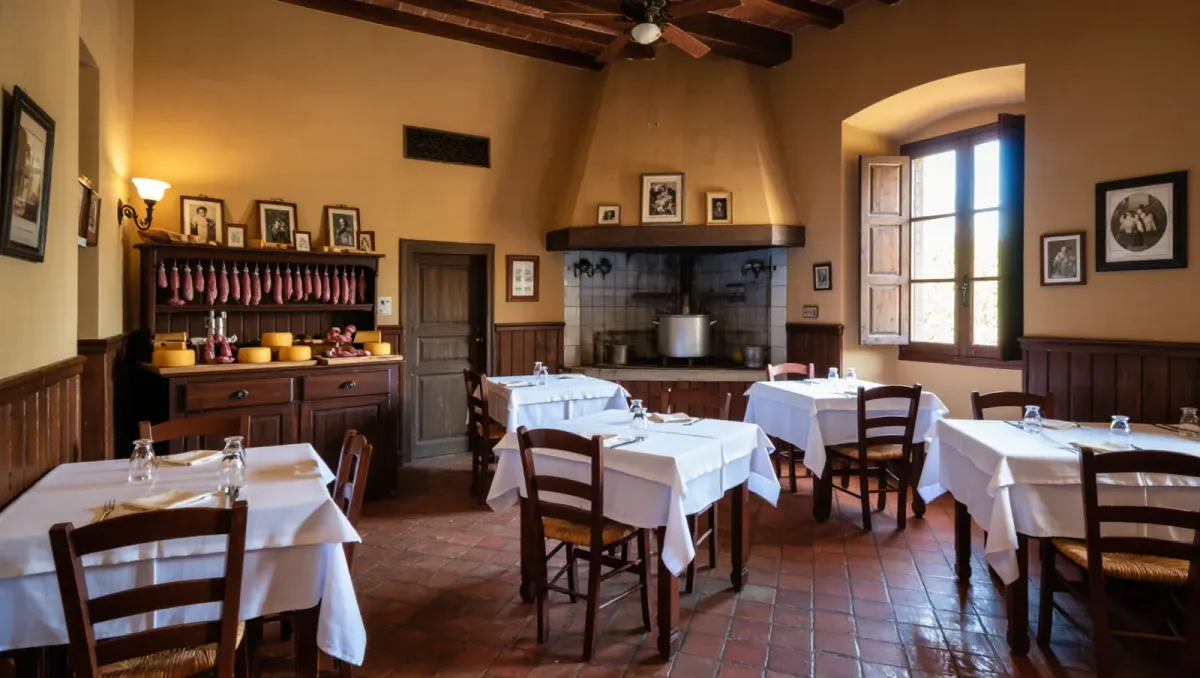
The ragù for Sunday has been on the stove since morning, and the table has been booked since the week began — because Sunday lunch, the pranzo della domenica, remains the meal Italians protect above all others, a tradition Italian food historians have traced through centuries of regional cooking. At a family trattoria the format runs like clockwork: antipasto, primo, secondo with contorno, dolce, coffee, maybe a digestivo — two unhurried hours at minimum, three in the south. For a traveler in Italy on a Sunday, this is the single meal most worth rearranging a schedule around.
Why is Sunday lunch so important in Italy?
Because it is the meal that binds the extended family, and it has been for as long as the records discuss home cooking: the Sunday ragù in the south, the bollito misto of northern winters, the pasta al forno that marks the week's hinge. Restaurants serve the same need for families whose kitchens no longer host it — the trattoria's Sunday room is three generations deep, and the kitchen cooks the grandmothers' dishes, not the chef's. Industry observers have noted the pranzo's persistence even as weekday eating modernized; the weekday lunch compressed, the Sunday table did not.
What does the meal actually look like?
The sequence is fixed even when the dishes change weekly. Antipasti — cured meats, preserved vegetables, perhaps a crostino — arrive without ceremony. The primo is the heart: fresh pasta with the week's ragù, gnocchi, risotto, or a baked pasticcio. Secondo follows lighter than foreigners expect — roast meats, a fish — with the contorno of vegetables. Bread, water, wine of the house. Dolce or fruit, then espresso, then the long, talking aftermath. Courses arrive when they arrive; no one has ever hurried a Sunday in Italy, and the bill arrives only when asked for.
Can travelers join, or is it a family-only table?
Travelers are welcome — with preparation. The trattoria ecosystem shifts on Sundays in three predictable ways, per the working patterns of Italian family restaurants. First, the menu narrows: Sunday is ragù day, roast day, the day the kitchen commits to the classics, which is precisely the day to eat there. Second, bookings are essential: the Sunday room fills with regulars, and walk-ins face a wait or a refusal — reserve by Friday for anything outside a major city. Third, the pace is non-negotiable; a two-hour minimum is built into the room, and tables are booked for the afternoon.
Where does the tradition run strongest?
- Emilia-Romagna. Bologna's trattorie and the countryside rooms around Modena treat Sunday as the week's showcase — tagliatelle al ragù, tortellini in brodo, roast at the second.
- Puglia and Sicily. The longest lunches in the country, often extending past four; expect antipasti di mare, baked pastas and the afternoon spilling into the piazza.
- Tuscany. The Sunday roast and ribollita territory, with the agriturismo kitchens adding the farm's own wine to the formula.
- Rome's neighborhoods. The trattorie of Testaccio and Garbatella serve the Roman Sunday canon — gnocchi of Thursday is not on the list, but abbacchio and carciofi are.
What does a Sunday lunch cost?
The fixed-menu versions make this easy: many trattorie run a Sunday pranzo formula — antipasto through dolce — that in 2025 commonly cost between €25 and €45 per person outside the tourist cores, with house wine included or cheap, per published menus checked in 2025. A la carte at the same tables runs similar or less; the format is not a markup but the kitchen's own rhythm.
Any etiquette a visitor should know?
Little, and it matters: book ahead; eat at the room's pace rather than the waiter's; ask for what the kitchen recommends — the answer is the nonna's dish; and linger past the plates, because the table is yours for the afternoon and the bill will not arrive uninvited. Coffee comes after, not during; cappuccino after noon is a tourist signature, per the custom every Italian table observes.
The practical details
Sunday lunch service typically runs from about 12:30 to 15:00, with kitchens closing mid-afternoon; many trattorie close one weekday in return. Reserve by phone where possible — the smaller the town, the less the online listing reflects the room. Prices cited here reflect published 2025 menus and move with the year.