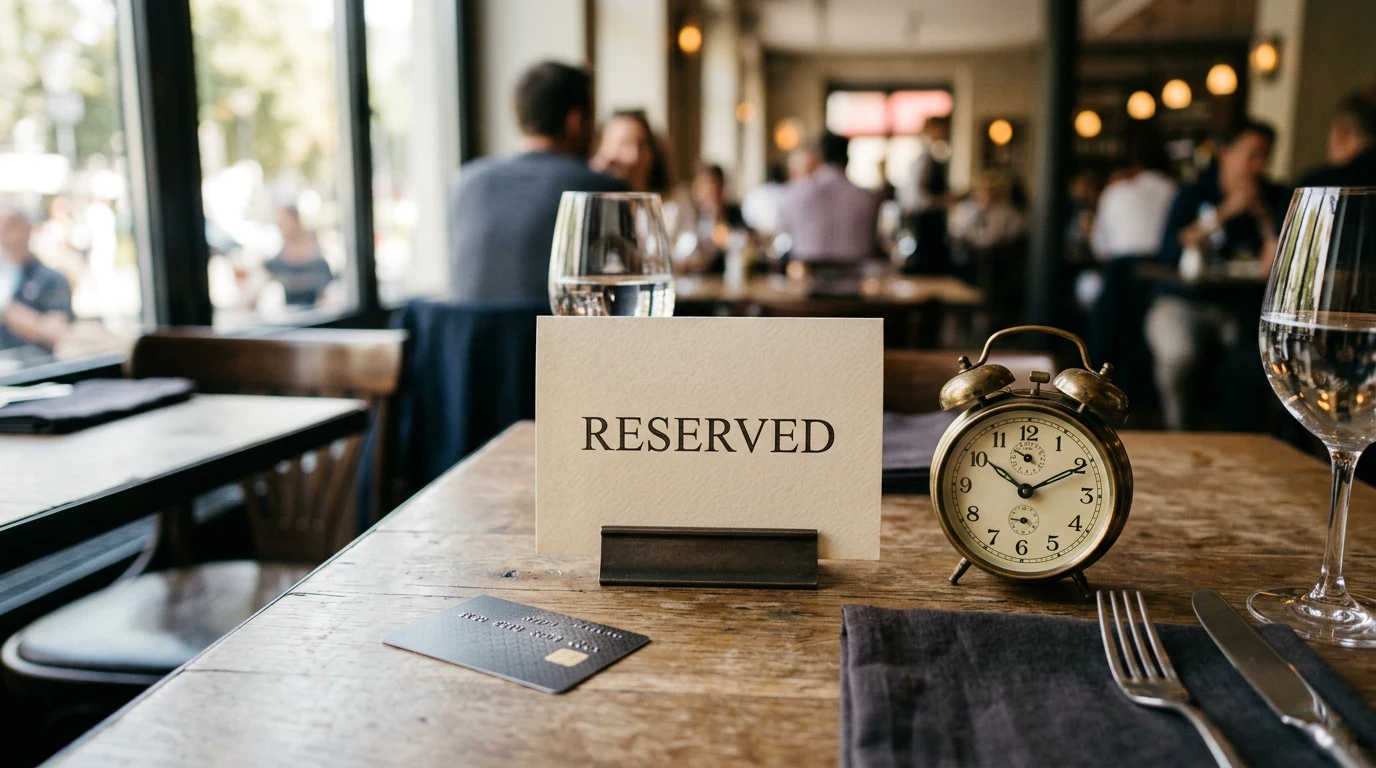
Paris moved its widely watched reservation dash to 15 days before the date — the city's most-demanded tables open at midnight, 15 days out, a change the major booking platforms implemented for many French restaurants in 2023, per platform announcements — while New York's prime rooms still open 30 days ahead and Kyoto's famous counters accept no direct booking from a stranger at all. Every great food city runs a different clock, and a food traveler who understands the clocks eats where the itinerary points; one who does not eats at the hotel.
This guide lays out the major cities' booking windows and the tactics that actually open tables in each. It publishes information, not booking advice; windows shift, so verify with the restaurant or platform.
How do the main cities compare?
- Paris. The 15-day system now governs many of the city's bistros and neo-bistro rooms via the dominant platforms, with midnight releases and heavy five-minute competition, per platform booking rules as of 2025. Cancellation lists are productive — the French no-show rate guarantees churn.
- New York. The 30-day drop dominates at tasting rooms, with released seats claimed in seconds and resale markets circling; off-peak times — 5:30 and 9:30 — release later and linger longer, per standard platform behavior.
- Tokyo and Kyoto. The referral economy: many celebrated counters book through hotels, regulars or introducing services rather than open calendars, per their published policies. Months of lead time and a concierge are the practical keys.
- Barcelona and the Basque Coast. High-season rooms and the asador houses of the Basque Country open calendars 30 to 90 days out; August and the San Fermín and Semana Santa weeks compress everything, per regional booking practice.
- Copenhagen. Tasting-menu rooms release seasonal batches — some celebrated houses open whole quarters at once and sell through them in days, per their own booking pages' pattern in 2025.
Why do windows differ at all?
Because kitchens differ. A 40-seat bistro running two turns a night can hold tables for walk-ins; a 12-seat counter selling one seating per guest per night cannot afford an empty chair, which is why the smallest rooms have the strictest systems. The 15- and 30-day releases exist to equalize access — a compromise between regulars who booked by phone and a platform era that rewards reflexes, per industry commentary on reservation reform. No-show deposits, card holds and cancellation fees are the same logic arriving late: the seat is inventory, and the industry has spent the last decade making that explicit.
What tactics actually work?
- Set the release alarm. Know the window, the timezone and the exact release minute; book the platform account and card details the night before.
- Fly solo or as a pair. Two covers fit the gaps a four-top never will; the solo or deuce reservation is the easiest table in any city.
- Target the edge times. First seating, last seating, midweek — the released-but-unclaimed slots.
- Use the waitlist honestly. Same-day cancellation lists reward persistence in every city; some rooms text released seats to the queue within hours of service.
- Book the restaurant with the room. At destination restaurants, the attached hotel's tables are reserved inventory — a room night unlocks a seat that no platform sells.
What about the high season itself?
The window is the same but the arithmetic brutalizes it: August in San Sebastián, cherry-blossom April in Kyoto, the December run-up in every city multiply demand onto identical seat counts. High-season rule of thumb, per the pattern across destinations: book the trip's two most-wanted meals the moment flights are issued, not after hotels. Everything else can stay fluid.
The practical details
Confirm before you build an itinerary: the restaurant's exact release time and timezone; card-hold and no-show fees, now standard at tasting rooms; group-size caps, since parties above four face separate systems everywhere; and cancellation deadlines, often 48 to 72 hours at the small rooms. Booking structures summarized here reflect platform and restaurant policies as of 2025; they change often, and the release calendar is the one page worth rereading each trip.