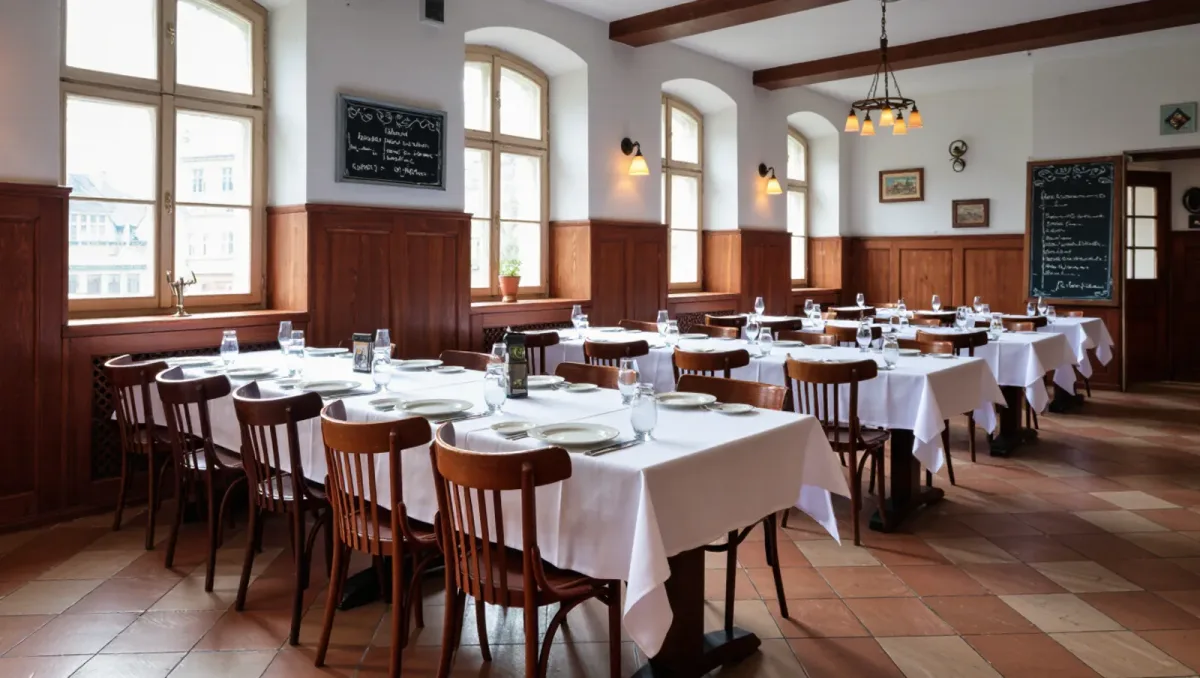
The Mittagstisch — literally the midday table — is Germany's fixed-price weekday lunch: one changing dish or a short choice of two, served from about noon until 14:00 at Gasthäuser, neighborhood Wirtshäuser and canteen-style kitchens, at prices that in 2025 commonly ran from roughly €9 to €15, per published lunch menus checked in 2025. It grew out of the same logic as Spain's menú or France's formule midi — a hot meal for people who work nearby — and it survives as the format through which Germany actually eats lunch, in a country where dinner is often the smaller meal.
What exactly is a Mittagstisch?
A short chalkboard, written for the day. Typically one main — sometimes with a choice between two — occasionally with soup or dessert added, priced below the evening a la carte. The dish changes daily and follows the German home-cooking calendar: Schnitzel and Königsberger Klopse, rouladen, goulash with Spätzle, Heringstag on Fridays in the north, and a rotating list of seasonal specials — Spargel in the asparagus weeks of spring, Grünkohl through the northern winter. Vegetarian options have grown from rare to routine, per the way Gasthaus menus have shifted across the 2010s and 2020s.
Where does the tradition come from?
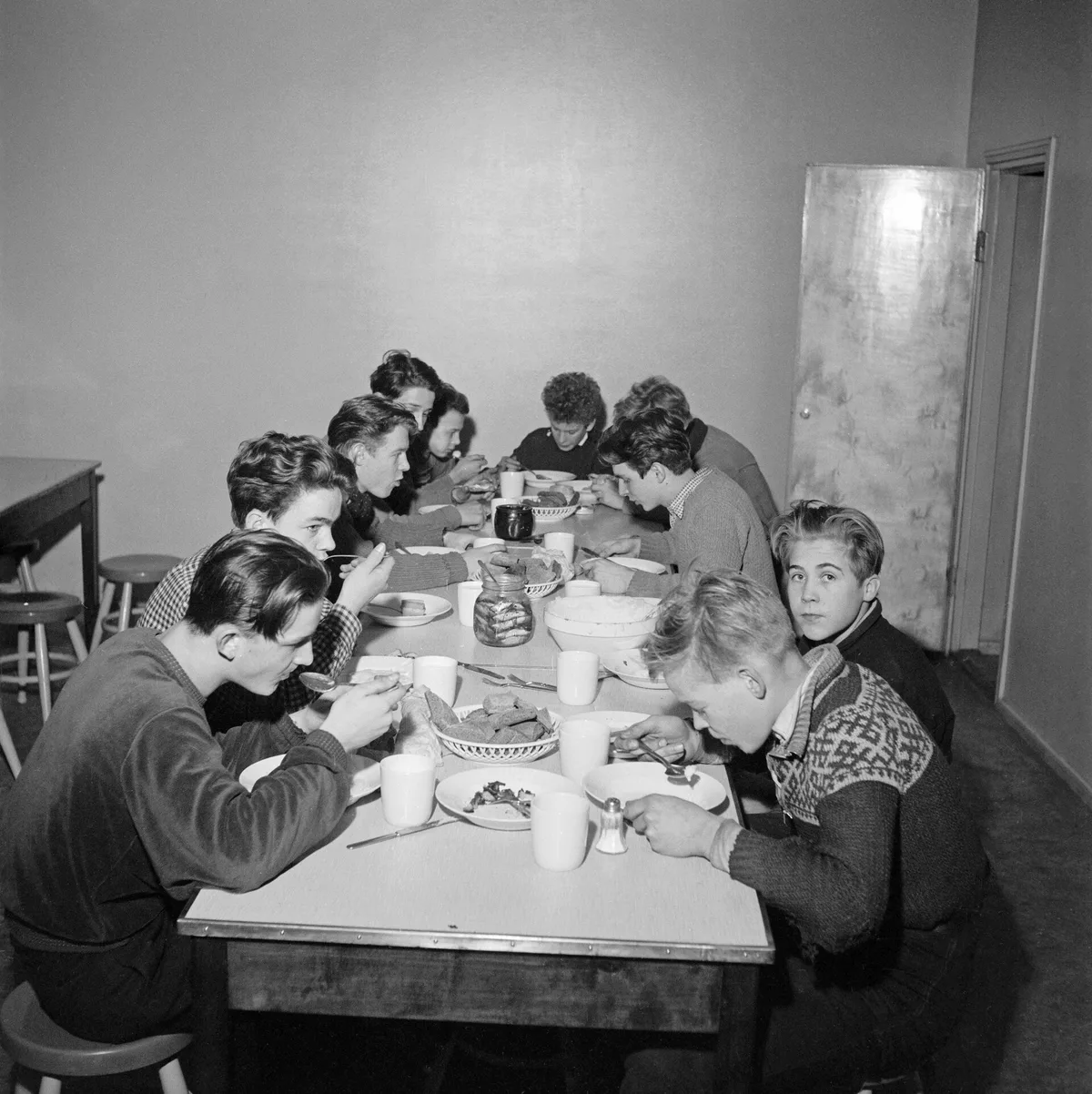
From the household economics of the 19th and 20th centuries. The midday meal was once the day's main cooked food, taken at home; as work moved into factories and offices, the meal moved with it — to the canteen, the Gasthaus near the works, the corner Wirtshaus that cooked one dish a day for the neighborhood. The Mittagstisch formalized that arrangement: cheap, fast, filling, and identical every Thursday of the year. Hospitality-industry commentary has traced its persistence to German lunch hours that still run long enough to sit down properly — shops close, kitchens open, the meal is not a sandwich at a desk.
Where should a traveler look for one?
- Old working-class districts. The Wirtshäuser around former factory quarters — Berlin's Kreuzberg and Moabit, Hamburg's St. Pauli side streets — keep the format's truest form.
- Market halls and canteens open to the public. Many city Markthallen and corporate canteens serve visitors at noon; the quality-to-price ratio is often the best in town.
- Village Gasthäuser. Outside the cities the Mittagstisch remains a social institution — the table where the village meets, with soup included and no menu decisions.
- Brewery pubs. Brauhäuser pair the format with their own beer at lunch prices; the Rhineland and Bavaria run the strongest examples.
How does it differ from its neighbors' versions?
The same meal exists across the German-speaking world and its borders — the Mittagstisch in Germany and Austria, the business-lunch Zmittag board in German-speaking Switzerland, France's formule midi. The German version distinguishes itself by plainness: fewer courses, bigger portions, and a daily rhythm regulars set their watches by — Schnippelbock Thursday in some Rhineland houses, the same goulash every winter Saturday. What it loses in ceremony it keeps in reliability; the chalkboard is a contract with the neighborhood.
What should you know before ordering?
Arrive between 12:00 and 13:00 for the full choice — the dish of the day sells out. Tap water stays unusual and bottled water arrives by the bottle; the norm is asking for Leitungswasser if you want tap. Tipping follows the round-up convention of the evening restaurant, roughly five to ten percent, per standard German dining practice. And the noon hour is the point: many Gasthäuser close the kitchen by 14:00 and reopen for the Abendbrot hours, per long-standing German restaurant schedules.
The practical details
No reservations are needed for a Mittagstisch; walk in with the offices. Check the chalkboard outside, confirm whether soup or salad is included, and remember the format lives on weekdays — weekends belong to the longer card. Prices cited here reflect published 2025 menus; they move with the year, and the chalkboard, as ever, is current.