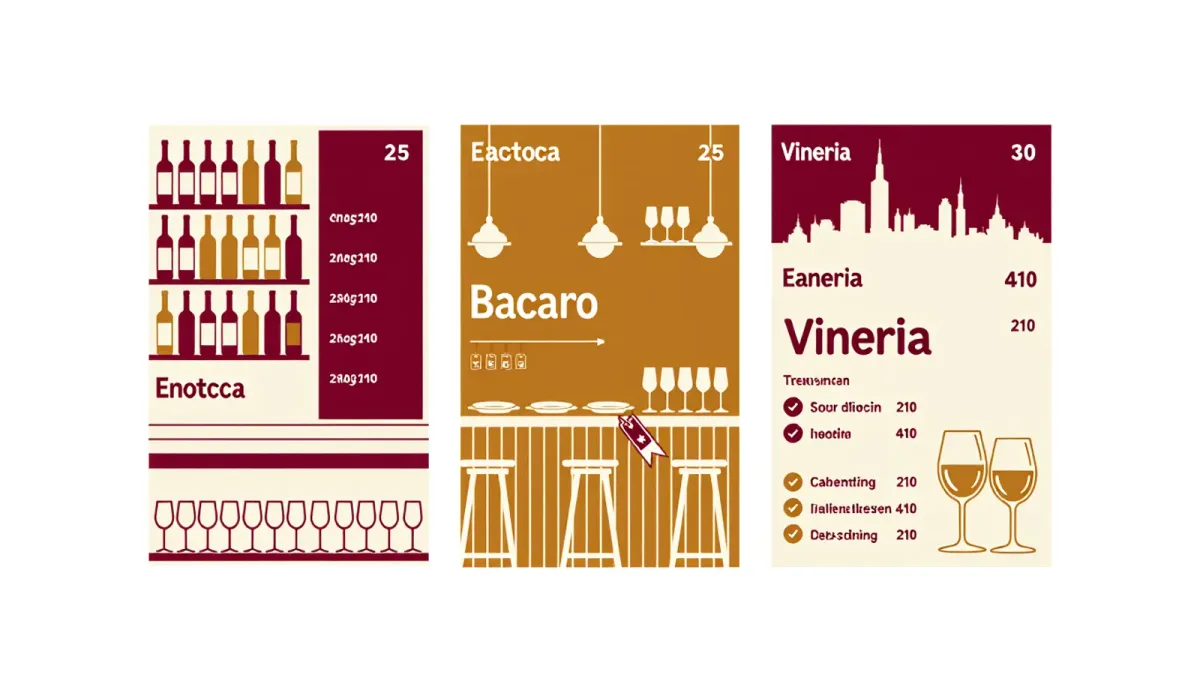
The enoteca began as a wine shop with a generous idea: taste before you buy. Bottles line the walls as inventory, and the same bottles are poured by the glass — commonly €4 to €8 for quality regional pours in 2025, per published listings across Italian enoteche — with small food alongside. The format turned shopping into education, and it spread: Venice's bacari pour ombre — small glasses — against the day's cicchetti; Florence and Rome built whole quarters around vinerie and wine bars; Piedmont's enoteche double as archives of Barolo and Barbaresco vintages. For a traveler, the enoteca is the cheapest serious wine education in Europe.
What makes an enoteca different from a bar?
Commerce first, conviviality second — and the distinction is visible. A true enoteca sells what it pours: the shelves are the cellar, staff can tell you the producer, the vintage and the story of anything in the room, and a glass is a audition for a bottle you carry home. A bar with an enoteca name and a fridge of anonymous labels is something else entirely, per the way the format's own trade bodies and associations define it. The test is a question: ask where the Montepulciano on the second shelf is made, and watch whether the answer includes a village and a family.
How does a visit actually run?
Informally, in three movements. Take a seat or a standing shelf, order a glass — or better, ask for a recommendation within a price range, which is the room's entire purpose. Food is a supporting act: boards of pecorino and salumi, crostini, in Venice the morning's cicchetti at a euro or two each, per the standing customs of the format. Then the quiet transaction: many enoteche apply the glass price against the bottle if you buy it, a convention common enough to ask about when ordering.
Where are the strongest enoteca cultures?
- Venice. The bacaro circuit — All'Arco, Cantina Do Mori and their peers, some operating for centuries — pairs ombre with cicchetti across a morning-to-evening crawl, a Venetian institution documented in food writing for decades.
- Florence. The historic center's wine windows and vinerie, some serving from Renaissance buchette del vino — the small street hatches through which plague-era Florence traded wine — a history the city's own records preserve.
- Rome. The vinerie of the historic center pour Lazio's ignored whites beside the great national list; aperitivo hour fills them at seven.
- Piedmont and Tuscany. The archive towns — Barolo's regional enoteca, Montepulciano's — hold deep verticals of the local appellation and pour flights of them.
What should a visitor order?
The regional glass. Enoteca culture is local by conviction: drink what the shop's province makes — Soave or Valpolicella in the Veneto, Vernaccia in Siena, Frascati in Rome — and ask for the least exported thing the staff loves. The food follows the same rule: whatever the region puts on small bread. The one ritual worth keeping is the standing format — the Venetian in-and-out, one ombra and one cicchetto per stop, three bacari deep, per the crawls Venetians have run for generations.
How much does an evening cost?
Less than almost any wine experience in Europe. In 2025, glasses at traditional enoteche commonly ran €4 to €8, cicchetti €1.50 to €3, tasting flights — three to five pours — from roughly €12 to €25, per published listings in 2025. An evening of three stops with food lands under €30 a head in most cities, which is the format's quiet argument: it prices wine education at a bar tab.
The practical details
Hours skew early — many enoteche close their kitchen by 21:00 or earlier, and the bacaro rhythm peaks before lunch. Standing room is normal; seats go to diners. Cards are accepted nearly everywhere now, cash still smoothest in the oldest bacari. Prices and conventions here reflect published listings and documented custom as of 2025; the format moves slowly, which is rather the point.