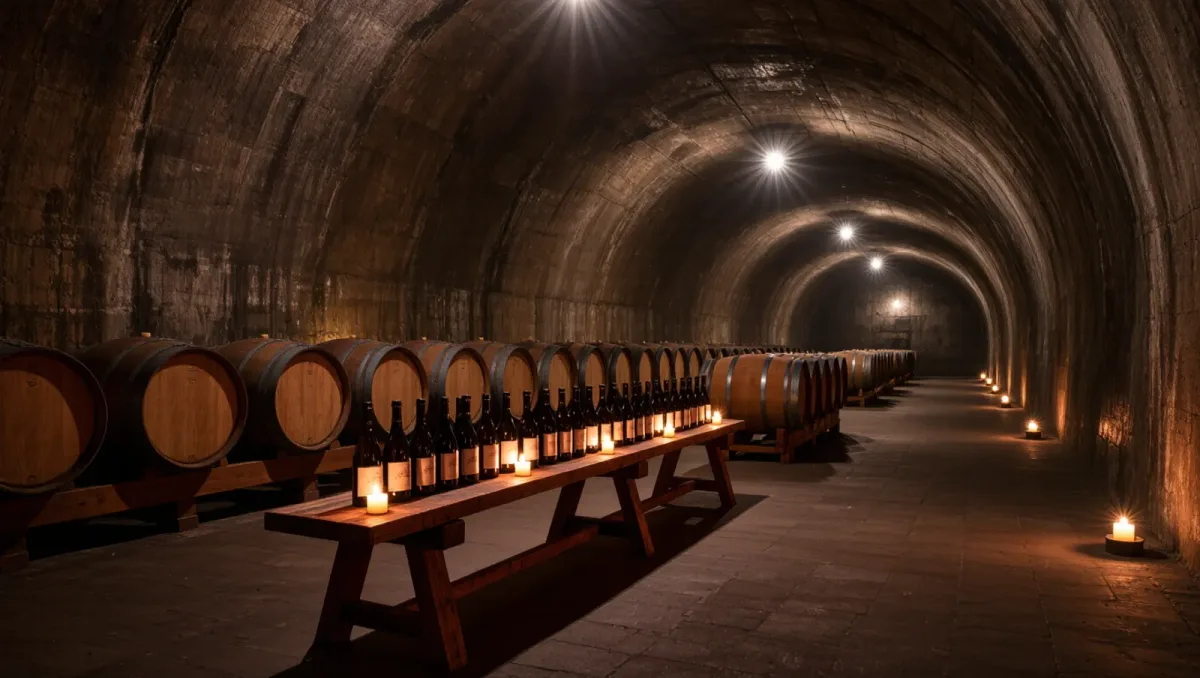
Bordeaux alone counted thousands of wine estates open to visitors — the region's tourism body has put the number at more than 4,000 châteaux receiving guests — and a growing share of them now offer rooms as well as tastings. A vineyard hotel is a hotel on or beside a working wine estate, where the cellar, the tasting room and often the winemaker himself are part of the property. For a food traveler, the appeal is structural: the tasting happens upstairs from the bedroom, dinner pairs with the estate's own bottles, and the harvest timetable sets the rhythm of the stay.
This guide explains the types of vineyard lodging, how to tell a working estate from a wine-branded resort, what a stay costs across the major regions, and when the wine calendar makes a visit worthwhile. It publishes information, not booking advice; confirm details with each property.
What are the main types of vineyard lodging?
- The working estate room. A château, weingut or bodega that rents a handful of rooms to guests — the winemaker's side business. Few frills, direct access to the cellar, and the truest version of the idea. Common in Bordeaux's outskirts, the Pfalz, and Rioja's villages.
- The estate hotel. A full hotel built by a wine family on their property, with a serious restaurant, spa, and the cellar as the centerpiece. Think of the landmark hotel-wineries of La Rioja and the boutique estates of Stellenbosch.
- The village base. A hotel in a wine town — Beaune, Montepulciano, Valparaíso-adjacent Casablanca — that runs tastings and vineyard access through partner estates. Less romantic, far more practical for car-free travelers.
How do you tell a working estate from a wine-themed hotel?
Ask what is poured. If the restaurant list and the room-service bottle are dominated by the property's own label, with the winemaker on site during harvest, it is a genuine estate. If the cellar is decorative and the list is bought-in, you are paying for scenery — legitimate, but priced accordingly. Two further tests, per estate listing practices current as of 2025: whether guests can walk the vineyard parcels with someone who farms them, and whether the estate's vintage calendar appears anywhere in the guest experience, from barrel tastings to a harvest-workshop week.
Which regions do vineyard hotels best?
- Rioja, Spain. The landmark hotel-wineries around Haro and Briones — glass-walled flagship bodegas with hotels attached — made the format famous in Europe; dinner-and-vertical-tasting packages are the local currency.
- Tuscany and Piedmont. Chianti Classico and the Langhe pack estate stays against hill towns; Piedmont adds truffle season in October, when the same farms pour Barolo.
- Douro Valley, Portugal. Quintas line the river, many with pools over the water and port cellars downstream in Vila Nova de Gaia.
- Stellenbosch and Franschhoek, South Africa. The strongest value-to-glass ratio in the category, with Cape Dutch estates running restaurants that food writers have covered for two decades.
- Mendoza, Argentina. Luján de Cuyo and the Uco Valley, where estate hotels sit at altitude under the Andes and asado evenings double as tastings.
What does a vineyard hotel stay cost?
Published rates in 2025 spanned the category's full width: working-estate rooms in the Pfalz and Rioja villages from roughly €90 to €150 a night; estate hotels in Tuscany, the Douro and Mendoza commonly €250 to €600; the landmark Rioja and Bordeaux names well beyond that, per listing checks in 2025. Half-board, where offered, is usually the right call — the kitchen exists to showcase the cellar, and estate wines at table cost a fraction of their export price.
When should you go?
The calendar matters more here than in almost any other lodging category. Harvest — late August and September in the northern hemisphere, February to April in Argentina, Chile, South Africa and Australia — brings energy, activity and the highest rates; some estates restrict casual visits during the crush. Spring offers flowering rows and empty roads; autumn after harvest pairs new wine with the food calendar — Piedmont's truffle fairs run through November. Winter is the connoisseur's season: barrels, fireplaces, cellar-only tourism, and the lowest prices of the year.
Do you need a car?
At most estate hotels, yes, or a driver. Vineyard regions are rural by definition, and the estates are spread; the exceptions are the village bases — Beaune for Burgundy, with wine-cycle routes out of town — and a few concentrated valleys where hotels run their own shuttles to partner bodegas. Confirm transfer options before booking rather than after arrival, since rural taxi coverage across wine regions is thin, per regional tourism guidance as of 2025.
The practical details
Confirm before booking: whether tastings for guests are included or charged; the estate's own-label presence on the restaurant list; harvest-season access rules; dinner service days, since rural estate kitchens often close one or two nights midweek; and driving distances to the nearest town. All rates and policies here reflect published listings as of 2025 and early 2026 and should be reconfirmed with the property.