The Court of Master Sommeliers has certified only a few hundred Masters in the organization's decades of examinations, and a meaningful share of them work in hotel dining rooms rather than standalone restaurants — a concentration the profession's own published registries make visible. That fact explains a quiet truth of wine travel: some of the most accessible great-cellar experiences on earth sit inside hotels, where the cellar list, the tasting program and the sommelier's table are open to any guest who asks.
This guide explains what hotel sommelier programs actually offer, how cellar lists differ from restaurant lists, and how to use a hotel's wine program without paying the flagship-bottle prices. It publishes information, not purchasing advice.
What does a hotel sommelier program include?
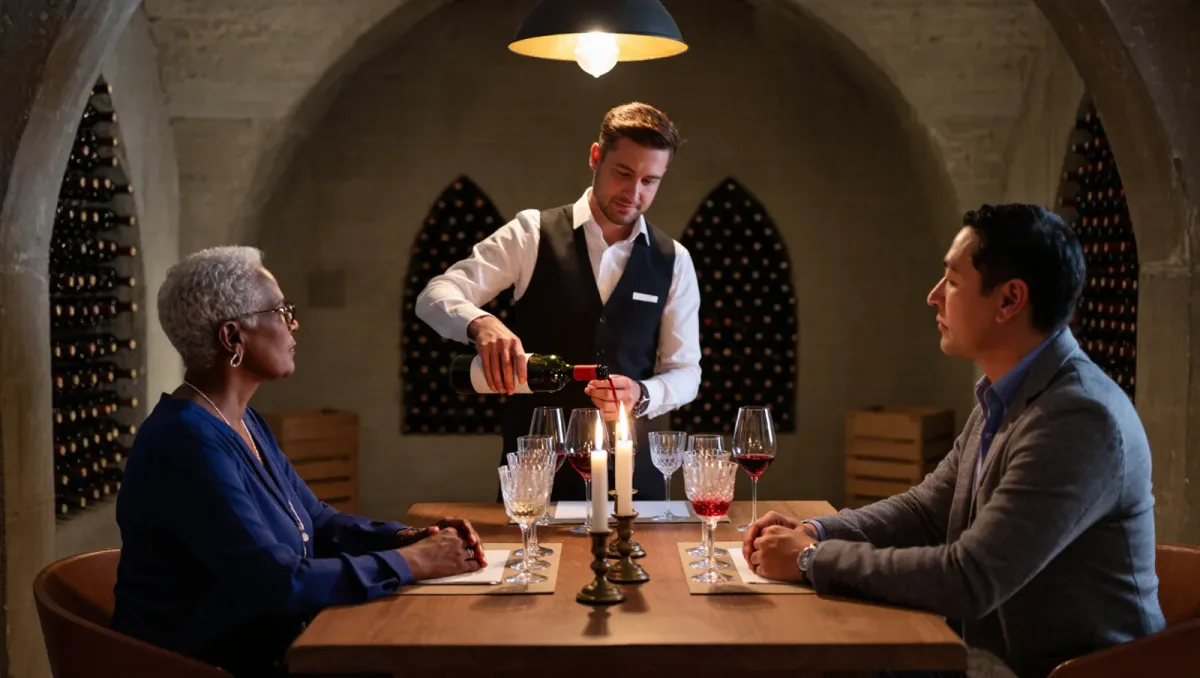
The mature version, common at grand hotels and wine-region properties, has four working parts. First, the list itself — at the strongest hotels a document of thousands of references spanning decades of vintages, built through continuous purchasing that standalone restaurants rarely sustain. Second, the pairing program: by-the-glass flights matched to the tasting menu, curated nightly. Third, experiences — cellar tours, vertical tastings of a single producer across vintages, and the sommelier's table, a dinner staged inside the cellar. Fourth, the consultation, which is free: tell the sommelier what you like and what you plan to spend, and the recommendation — including half bottles and lesser-known regions — is part of the service, per standard practice across professional hotel wine programs.
Why hotel cellars run deeper than restaurant cellars
Storage and patience. A hotel with decades of operation accumulates back vintages the way a restaurant cannot: cases bought and cellared through successive executive changes, released when ready. Wine-region hotels add a second advantage — direct allocations from neighboring estates, sometimes bottles that never reach retail. The practical consequence for a guest is vertical access: the chance to drink, say, three successive vintages of the same Rioja or Barolo in one evening, an experience the standalone wine bar structurally struggles to offer.
How do you use the program without a flagship budget?
Five moves, all standard practice, per sommeliers' published guidance for guests:
- State a number. A budget given plainly gets an honest answer; the sommelier's job includes finding interest below it.
- Book the sommelier's table or flight, not the trophy bottle. Cellar experiences at major hotels commonly ran $80 to $250 per person in 2025 — a fraction of one great bottle's list price.
- Ask for the half-bottle and coravin pages. Programs pour older wines by the glass from opened bottles; two guests can taste four or five serious wines in a night.
- Drink the region, not the list's greatest hits. In wine country, the hotel sommelier's neighbor allocations are the bottles retail never sees.
- Go on the first night. The consultation sets up every later dinner of the trip, including recommendations for restaurants the sommelier knows first-hand.
Which hotels run the strongest programs?
Three families of property dominate, per the shape of published programs as of 2025. The grand-city hotels — Paris, London, Vienna — whose cellars date back a century or more and whose lists run to tens of thousands of bottles. The wine-region estates — Bordeaux, Tuscany, the Douro, Napa — where the hotel cellar doubles as the region's archive. And the modern wine destinations — Singapore, Hong Kong, Tokyo — whose hotel programs, built recently and lavishly, hold some of Asia's deepest lists and host the industry's tastings. Certification level on staff is a useful signal: a sommelier team carrying Advanced or Master credentials, listed in the Court's registry, indicates a program that treats wine as a department, not a side duty.
Do you need to be a guest?
Usually not — and this is the format's open secret. Hotel wine cellars are restaurants and bars first; cellar tours and sommelier dinners sell seats to outside diners at nearly every property that runs them, per published booking terms in 2025. For a traveler staying elsewhere in town, booking the hotel's sommelier table for one night is the cheapest serious-cellar experience available — and often the route to the trip's most instructive evening, since the sommelier's day job includes knowing every vineyard within an hour's drive.
The practical details
Confirm before booking: whether cellar experiences run on your dates or by private arrangement; per-person pricing and minimums; whether non-guests may book; corkage terms if you bring your own bottle; and the sommelier team's credentials. Program structures here reflect published hotel wine-program materials as of 2025; lists rotate with allocations, so reconfirm with the property.