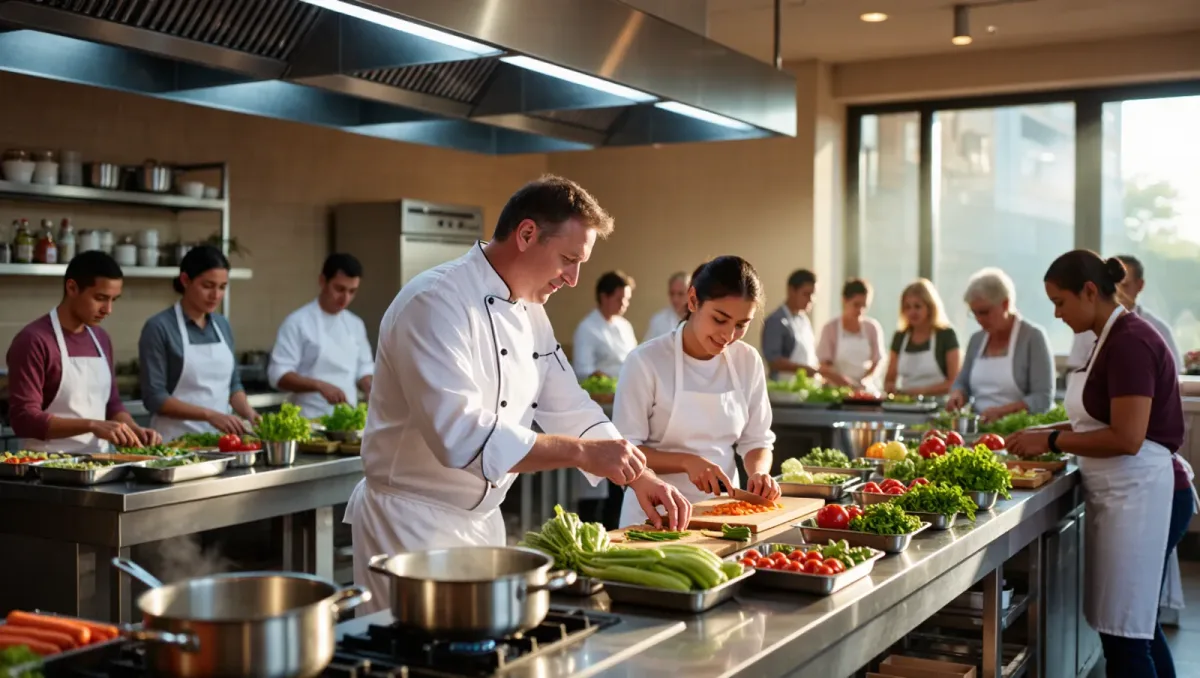
The Ritz Paris has run a cooking school inside the hotel since 1984, when École Ritz Escoffier opened its doors a few steps from the lobby — a pattern that has since spread from grand-city palaces to rice terraces in Bali and olive groves in Andalusia. A hotel cooking school is a purpose-built teaching kitchen inside a hotel, run by that hotel's chefs or a partner academy, where guests book anything from a two-hour pasta session to a multi-day certificate course. For a traveler who plans trips around food, it compresses an entire destination into a plate you learn to make yourself.
This guide explains how hotel cooking schools work, what a class actually involves, and how to judge whether a property's kitchen program justifies the booking.
What exactly is a hotel cooking school?
Three models dominate. The first is the classic academy attached to a name hotel — École Ritz Escoffier in Paris is the template, offering courses that run from a single morning to multi-week professional modules, per the school's own program materials. The second is the resort teaching kitchen: a studio kitchen, often open-air, where the property's executive chef or a dedicated instructor leads small groups through local dishes. The third is the partnership model, in which a hotel hosts a recognized culinary academy or a celebrated local cook for scheduled sessions — common in Southeast Asia, where resorts in Chiang Mai and Ubud bring in instructors from town rather than building a kitchen brigade of their own.
The distinction matters because it shapes what you take home. An academy course teaches technique with certificates available; a resort class teaches a place, usually through its market basket.
What does a class actually look like?
The strongest programs build the day around sourcing. A typical structure at resort schools in Thailand and Vietnam runs market-to-table: guests meet the instructor early morning at a wet market, buy produce and spices with the chef translating and choosing, then return to a teaching station set with a wok or clay pot per student. Cooking runs two to four hours, the meal you cooked is the lunch, and recipe cards go home in a folder. per the published formats of long-running hotel school programs in Chiang Mai and Hoi An, group sizes rarely exceed ten.
In Europe the rhythm differs. City academies such as the Ritz Paris school run demonstration and practical formats — you watch a chef break down a sauce, then reproduce it at your own station, with the hotel's pastry and savory brigades rotating as instructors. Tuscan and Provençal estate hotels often fold the class into the property's own garden and cellar, which shifts the emphasis to seasonality: winter courses favor bread, preserved vegetables and braises; summer ones favor whatever the kitchen garden is yielding.
How do you judge a program before booking?
- Who teaches. A named chef with a contract to the property beats a rotating instructor pulled from banquet service. Ask whether classes are led by the restaurant brigade or by a dedicated teaching team.
- Class size and stations. One student per station is the standard at serious schools; shared stations at resort level are acceptable if group size stays small.
- Sourcing. The best sessions include a market, garden, or producer visit. If the entire class happens indoors with pre-portioned ingredients, you are learning recipes, not a food culture.
- Duration. Two hours is a taster. For a trip organized around cooking, look for half-day formats on consecutive days, which allow dough to rest, stock to simmer, and skills to compound.
What does it cost, and how far ahead should you book?
Published rates at well-known hotel schools in Europe typically run from roughly €90 to €200 per person for a half-day practical class, and several hundred euros for full-day or multi-day formats with meals included, per school rate sheets checked in 2025 and early 2026. In Southeast Asia, half-day market-to-table classes at resort schools are commonly priced far lower, often in the range of $30 to $80. City academies around holiday periods — December, Easter, summer — fill first, and multi-day courses at name schools are routinely booked weeks ahead; contacting the school directly, rather than the central reservation line, remains the reliable route to accurate schedules and waitlists.
Which destinations do this best?
Paris remains the reference for the academy model, with the Ritz school and comparable hotel kitchens teaching classical French technique in the building where it was codified. Chiang Mai and Hoi An anchor the market-to-table model in Southeast Asia, where several resorts run teaching kitchens that shop the same stalls as the town's standalone schools. Tuscany and Provence suit travelers who want the garden and the cellar folded in; Mexico's Yucatán and Oaxaca have seen resort kitchen programs grow around corn, chiles and mole, taught by local cooks rather than hotel brigades — a format worth seeking out for its cultural specificity.
Is a hotel school better than a standalone cooking class in town?
Not inherently — different tools for different trips. A standalone school in a food city often goes deeper into one cuisine for less money. The hotel school's advantage is friction: the kitchen is downstairs, ingredients are handled, and the day wraps with lunch you cooked. For a traveler spending two weeks somewhere, one of each is the honest answer; for a two-night stay, the hotel kitchen is often the only realistic window into the local larder.
The practical details
Confirm before booking: whether classes run daily or on set days; whether the market visit is included or an add-on; apron, recipe folder and certificate inclusions; and the cancellation terms, since teaching-kitchen seats are among the more strictly capped inventories a hotel sells. Reconfirm all hours and prices with the property directly, as programs change seasonally and details in this guide were compiled from school materials current as of early 2026.