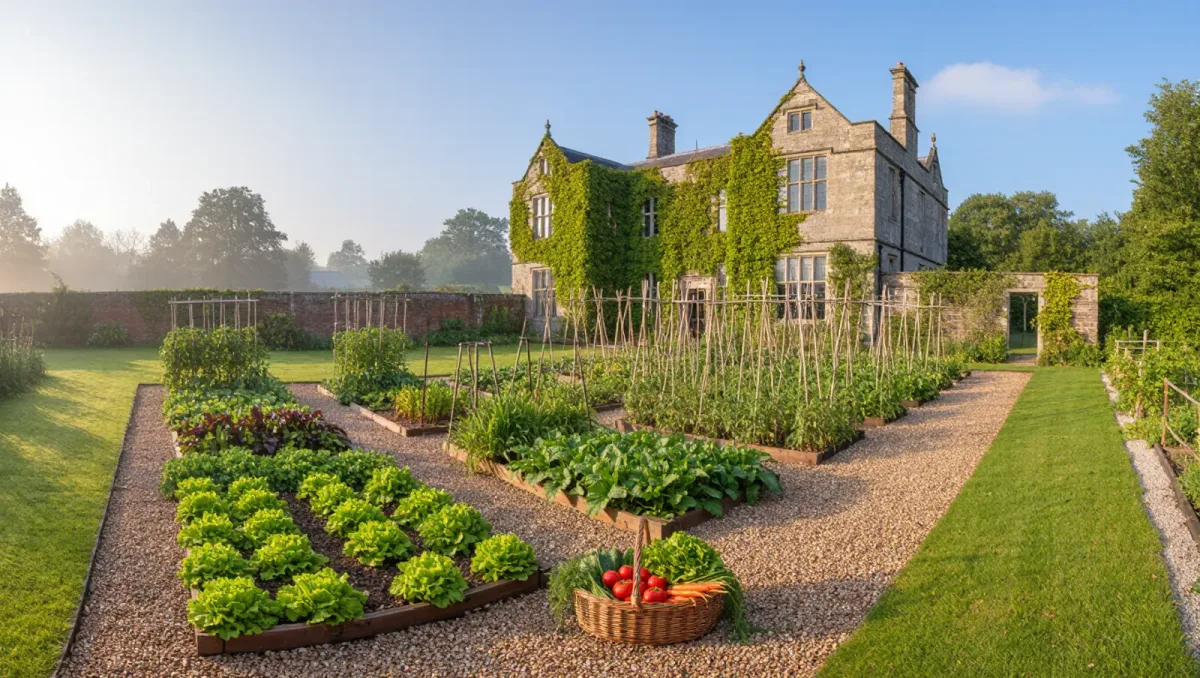
A serious hotel kitchen garden is measured in paces, not adjectives: how far the rows stand from the kitchen door, and how many items on tonight's menu were standing in soil that morning. Over the past two decades the kitchen garden — the potager of French country hotels, the walled gardens of Irish manor houses, the tropical plots of Sri Lankan and Balinese resorts — has shifted from decorative asset to the working core of food-forward hotel kitchens, a change hospitality trade coverage has tracked as chefs took direct control of planting schedules, per industry reporting on the hotel farm-to-table movement.
This guide explains what a genuine hotel kitchen garden is, how to tell it from a landscaping budget, and how to plan a stay around one. It publishes information, not booking advice.
What counts as a real hotel kitchen garden?
Three working tests, drawn from how chef-owners themselves describe the discipline. First, supply: a real garden feeds the restaurant, week in and week out — a meaningful share of the vegetable section, herbs, and in season the salads — rather than garnishing it. Second, command: the chef tells the gardener what to plant, on a schedule set by the menu calendar, per the working pattern described in interviews with hotel chef-gardener pairs; the reverse arrangement is a farm stand with a hotel attached. Third, transparency: the menu names the rows. When a dinner card says which bed the beets came from, the garden is a production unit. When the garden is photographed for the website and never named on the menu, it is scenery.
Where did the model come from?
None of this is new — it is a revival. The great European country-house kitchens drew on their own walled gardens for centuries, a supply logic that supermarket logistics broke in the postwar decades. The re-run began in the 1990s and 2000s as restaurant farm-to-table culture spread from pioneers in California and the UK — a movement with its own documented history — into hotel kitchens, which had the land that city restaurants lacked. Provence and the English countryside led among hotels; tropical resorts adapted the model to year-round growing, and the current generation of food-forward properties now hires head gardeners the way it once hired sommeliers.
What does a garden-focused stay look like?
- Season-driven menus. Short menus that change weekly, sometimes daily, with the garden's surplus printed as the day's vegetable course — the clearest marker of a kitchen actually listening to its rows.
- Garden breakfasts. The meal where the model shows most honestly: eggs, herbs, preserves and fruit from the property, a structure long standard at farmhouse and estate hotels.
- Gardener-led walks and harvest sessions. Many properties run morning tours or pick-and-cook classes; the good ones are led by the gardener, not the activities team.
- Preserving as proof. Hotels that bottle, ferment and pickle their surplus in autumn — the pantry of preserves at breakfast is the surest sign the garden feeds the house year-round.
How do you plan a trip around one?
Timing is everything, because a garden is a calendar. In temperate Europe the window of maximum yield runs June through September, with the September-October harvest weeks the richest and the most demanded; spring stays catch the first cuttings and asparagus; winter stays rely on the store cupboard, which is its own measure of a kitchen. Ask the property directly what the garden is producing in your weeks — a kitchen that answers in specifics is the one to book. Estate hotels in Provence, Tuscany, the English countryside, and tropical resorts in Sri Lanka, Bali and Thailand form the deepest field of candidates, per the destinations hotel garden programs concentrate in as of 2025.
Does it cost more?
The garden itself rarely carries a premium — the premium belongs to the properties that build serious kitchens, and the two overlap heavily. Garden-to-table tasting menus at such hotels commonly ran in the same range as any quality resort tasting menu in 2025, roughly €90 to €200 with pairings beyond that; the honest difference is that the menu is shorter and the produce younger. Garden tours, cookery sessions and pick-and-cook lunches are usually add-ons priced modestly, per published hotel activity rates in 2025.
The practical details
Confirm before booking: the share of the menu the garden actually supplies in your season; whether tours or harvest sessions run during your dates; dinner service days, since estate kitchens often close midweek; and children's access to the garden programs, which family-run estates often welcome. Everything here reflects hotel materials current as of 2025; gardens and menus change with the weather, so reconfirm with the property.