Breakfast is the one meal a hotel cannot outsource to its location. Dinner guests can walk out the door; the guest who wakes up hungry has only the kitchen downstairs. That is why hotel breakfast quality works as a reading of the whole property: the sourcing, the staffing, the pride of the kitchen, and whether management sees food as a cost line or a promise.
The signal is not price. A modest roadside inn can pour genuinely good coffee around the clock, while a glossy property can serve tired eggs under chafing lamps. What separates them is attention — and attention shows up in specific, checkable places. This is how to read a breakfast the way a kitchen reads a delivery invoice.
For travelers who plan trips around food, the morning meal deserves the same scrutiny as dinner. It is also the meal most often bundled, comped, or quietly degraded, which makes the details worth learning. Those who want the wider context of eating well on the road can start with the publication's hotels coverage, but the morning plate rewards its own close look.
What does the coffee line tell you before anything else?
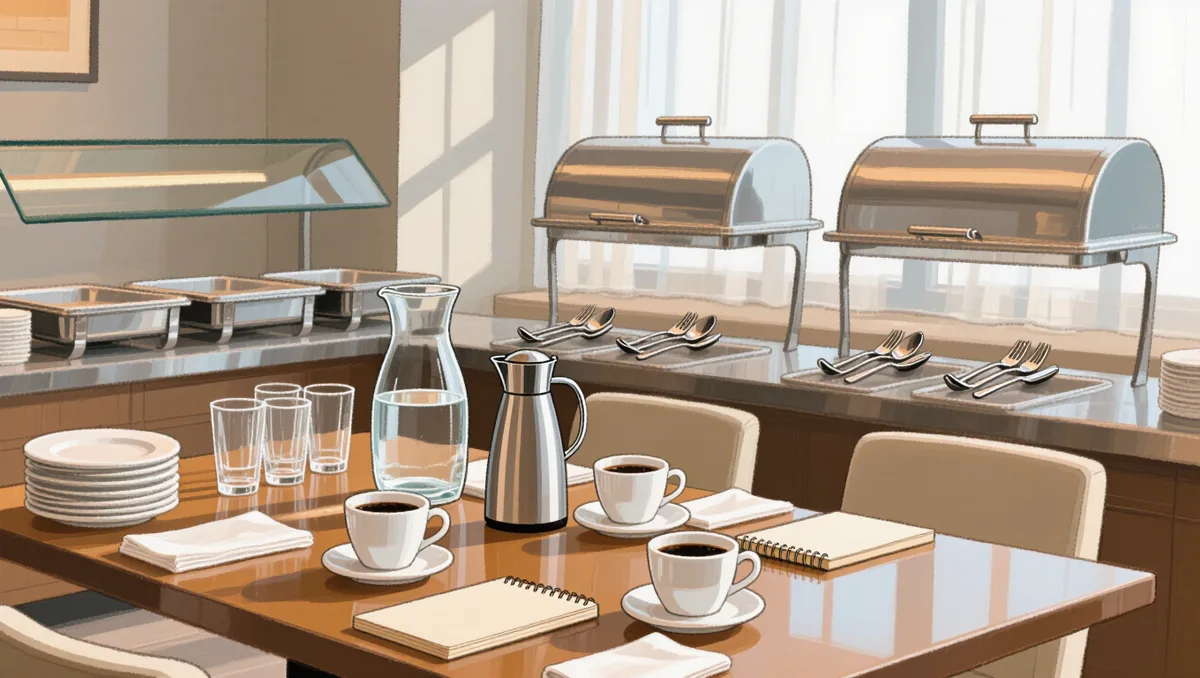
Coffee is the cheapest item on the breakfast line and the most revealing. It is a commodity the hotel buys by the pound, so the choice of beans, the freshness of the brew, and whether a fresh pot appears when the urn runs dry all come down to management priorities rather than budget. A property that lets coffee go stale at six in the morning has told you something about how it handles everything else it buys.
Guests notice. On Booking.com's listing page for Cheyenne hotels, one long-running guest review of the Cheyenne Guest Inn singles out that the coffee was really good and available around the clock, filed alongside praise for cleanliness — the reviewer treats the two as one continuous standard. That is the pattern worth learning to spot: coffee care rarely travels alone.
Practically, the check takes thirty seconds. Is the coffee hot, or has it sat on a burner since before dawn? Is there a decaf option that is not an afterthought? Does someone refresh the urn, or does the last guest drink the dregs? These are operational questions, and operations are visible.
Where does freshness show first: eggs, bread, or fruit?
Freshness is easiest to judge on the items that cannot be frozen and revived. Scrambled eggs made to order hold their texture; eggs from a carton poured onto a griddle develop that uniform, rubbery sheen regular travelers recognize instantly. Bread tells its own story: a crust that crackles means a recent bake, while a roll that bends without breaking has been sitting in a warming drawer since the night shift went home.
Fruit is the honest one. Melon and berries degrade visibly within hours, so cut fruit left glistening under plastic for a full service betrays a kitchen buying for volume rather than the day. Whole fruit, or fruit cut in smaller batches with visible turnover, suggests someone is watching the pan rather than the clock.
None of this requires expertise. It requires the willingness to look at the tray instead of past it. A hotel that sources well wants you to look; the sourcing is the marketing.
What does the menu's shape reveal about the kitchen?
Menu design is where a property's intent becomes architecture. A short menu executed well — eggs three ways, one good grain bowl, bread from a named bakery — signals a kitchen with a point of view. A sprawling buffet of eighty lukewarm items signals a purchasing department. Length is not quality; it is often the opposite, because every extra tray is one more thing the line cannot watch closely.
Local anchoring is the second marker. A property that names its region on the plate — the local honey, the state's dairy, the bread from a bakery guests could walk to — is making a claim about its supply chain, and a claim that specific can be checked. The same logic runs through the publication's reporting on hotel kitchen gardens, where the menu literally starts at the garden gate. A breakfast that names its growers is making the same promise in miniature. This connects to our earlier piece, The Menu Starts at the Garden Gate: How Hotel Kitchen Gardens Changed Resort Dining.
Our analysis: the menu's shape matters more than its length. Look for rotation, seasonality, and at least one item the kitchen would be embarrassed to serve from a freezer bag. Absent all three, the buffet is a cost center, and you now know how the property reads its food budget.
How do free-breakfast properties differ from à la carte kitchens?
The included breakfast and the charged breakfast are different products with different economics, and judging one by the other's standard is a category error. The included breakfast is a volume operation: its job is to feed a rotating crowd predictably, and the good ones do that with discipline — hot items refreshed on a schedule, a staffed line, coffee managed as seriously as the eggs. The charged breakfast is a restaurant morning: fewer covers, higher expectations, and a menu where technique is visible.
Booking platforms have made the distinction easy to filter. KAYAK's Cheyenne hotel search lists free breakfast as a standard filter, and its listings flag properties such as the Microtel Inn & Suites by Wyndham Cheyenne for a complimentary breakfast and the Comfort Inn & Suites for free parking and breakfast — evidence of how central the included morning meal has become to mid-market positioning in the United States. The same page notes that KAYAK users typically book Cheyenne stays for about three days, which is long enough for breakfast to matter three mornings running.
The traveler's job is to match expectation to product. Judge the included buffet on consistency and turnover; judge the à la carte room on technique and sourcing. Both can be excellent. Both can be mediocre. Neither should be judged by the other's rules — a point the publication develops further in its comparison of all-inclusive versus à la carte resort dining. For related coverage, see Buffet or Booking: All-Inclusive Versus à la Carte for a Food-First Resort Trip.
What does service reveal that the food cannot?
The dining room staff are the guests' only interface with the kitchen, and their behavior is diagnostic. A server who knows which items run out first, who flags the fresh batch coming off the line, who remembers a returning guest's table — that is a managed operation, and managed operations extend to the rooms. A dining room where trays pile up and nobody clears them for an hour is telling you about the staffing plan for the whole building.
Turnover pace is the quiet tell. Food that is replaced steadily means someone is forecasting; food that sits until it is gone means someone is counting. Guest reviews often capture this without naming it. On the Cheyenne Guest Inn's Booking.com listing, one reviewer observed that breakfast always filled up immediately — a comment that reads as crowding but is really an occupancy signal, and a useful one: busy breakfast rooms usually mean a property being run at full attention, for better or worse.
Watch also for how the room handles dietary requests. A kitchen that treats a gluten-free or halal request as a solvable problem, rather than an inconvenience, has trained its staff to see guests individually. That training shows up again at the front desk, at check-out, at every service failure a property either absorbs or passes on.
What this means: a five-point morning audit
For travelers who want a quick, honest read on a property before committing to a longer stay, the breakfast offers a repeatable check. It costs nothing extra and takes one service to run.
- Coffee: hot, fresh, refreshed on request, with a real decaf option.
- Freshness markers: eggs with texture, bread with crust, fruit cut in visible batches.
- Menu shape: short and confident beats long and lukewarm; named suppliers beat unnamed ones.
- Service behavior: trays cleared, items forecast, dietary requests treated as solvable.
- Turnover: steady replacement signals forecasting; sitting trays signal counting.
Run the audit once and you will know more about the property than a dozen lobby impressions can teach. The evidence breakfast establishes is real but bounded: it reads the kitchen and the morning operation, not the housekeeping schedule or the night audit. A great breakfast with a chaotic front desk is possible; the reverse is rarer, because kitchens are harder to fake than lobbies. Guests who want to go deeper than the morning plate can look at how properties structure their whole food program, from gastronomic packages to kaiseki ryokan stays, where breakfast is a course in a longer argument. The morning plate remains the fastest first chapter — and, for many properties, the most honest one.