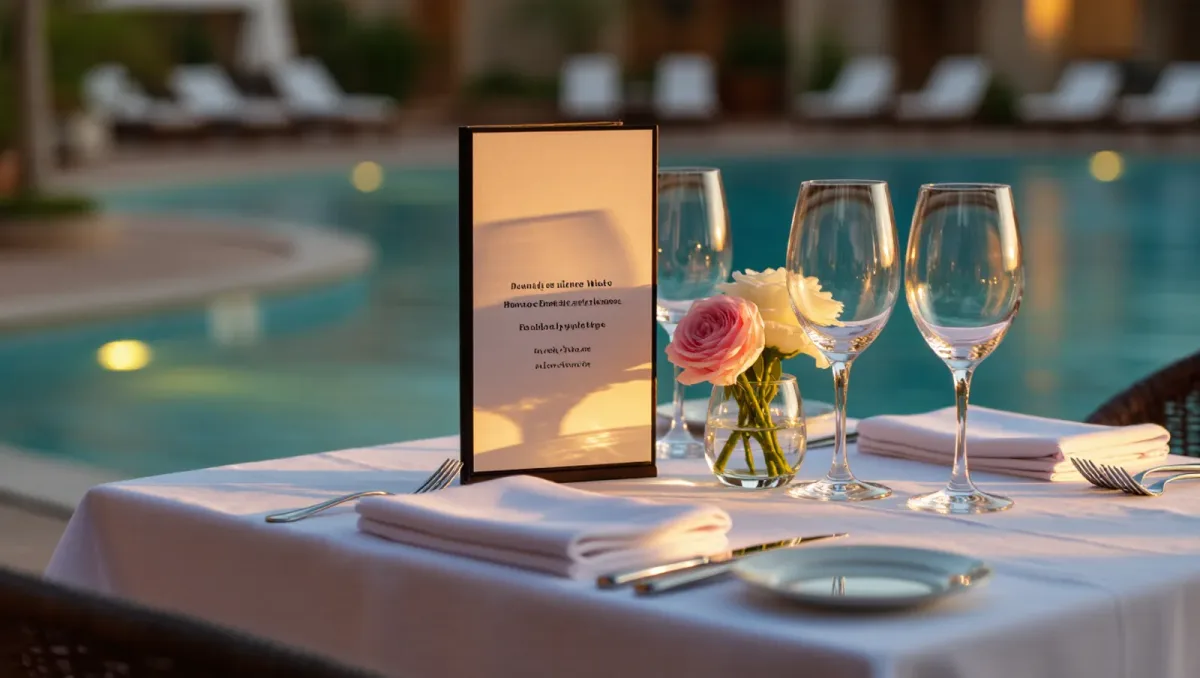
All-inclusive remains the fastest-growing resort meal plan in several markets — Spain's Balearic and Canary islands in particular have seen all-inclusive shares of hotel stays climb for over a decade, per regional tourism reporting — while food travelers keep drifting the other way, toward à la carte resorts where each meal is chosen and paid for separately. The choice is not about budget alone. It decides whether a trip's meals are an infinite, anonymous supply or a curated sequence of specific dinners — and for a traveler who plans holidays around eating, that is the whole question.
This guide compares the two models on food quality, true cost, and cultural access, and names the traveler profiles each one suits.
What does each model actually include?
An all-inclusive plan bundles room, all meals and most drinks — typically including local alcohol — into one prepaid rate, served mainly through buffets and included snack outlets, with the resort's specialty restaurants either capped at a number of visits or surcharged. An à la carte resort sells the room alone: breakfast may or may not be included, and every lunch and dinner is ordered and paid as taken, from the hotel's restaurants or anywhere in town. Semi-inclusive hybrids — breakfast plus dinner credit, or half-board with a set menu — occupy the middle ground and are now the most common compromise, per published resort plan structures in 2025.
How does food quality compare?
The honest generalization, with plenty of exceptions worth naming. All-inclusive kitchens cook to a formula that privileges volume, safety and variety over specificity: buffets rotate internationally, local dishes appear, and the best resorts staff dedicated live-cooking stations. What buffet format structurally cannot deliver is a dish cooked to order ten minutes before it reaches you — the thing à la carte exists for. The strongest argument for the à la carte model is rhythm: an Italian coast resort where lunch is whatever the beach club grills, and dinner is a booked table in town, gives the region's food culture a channel that a self-contained buffet cannot. The strongest argument for the other side is that a good all-inclusive removes the anxiety tax — no bill-reading, no menu math — which for families with children is not a small pleasure.
Which is actually cheaper?
Run the same three-number comparison each time: the price gap between plans, the number of resort dinners you would genuinely eat, and the local cost of eating out. All-inclusive wins when guests eat nearly every meal on property — common at remote resorts where alternatives are absent, and at destinations with high restaurant prices. It loses where eating out is cheap and good: across most of Spain, Portugal, Greece and Mexico's beach towns, a couple eating dinner in town four nights out of seven typically spends less à la carte, per menu-price comparisons across 2025 listings. The hidden line item either way is drinks: all-inclusive local-beverage packages push guests toward included brands, while à la carte resort bar bills are the item most likely to shock at checkout.
Which model connects you to the destination's food?
À la carte, structurally. A self-contained resort has no economic reason to send guests into town, and the all-inclusive model has measurably changed some resort towns' dining economies — a tension Spanish destinations have debated publicly for years, per reporting on the Balearics' efforts to rebalance tourism. Food travelers who want markets, family restaurants and regional dishes will find the à la carte base camp — or better, a town hotel — the more productive choice. All-inclusive suits travelers for whom the resort is the destination: the food culture sampled is the kitchen's own, which can be excellent in its terms without ever being the region's.
When does each one make sense?
- Choose all-inclusive for: remote properties with no off-site alternatives; family trips with young children and irregular mealtimes; short recovery stays where decisions are the enemy; resorts with genuinely strong specialty restaurants included in the plan.
- Choose à la carte for: destinations with rich cheap dining within walking distance; trips of a week or more, where buffet fatigue compounds; travelers who plan days around specific lunches and dinners; anyone counting local restaurants as attractions rather than competition.
The practical details
Whichever model you price, confirm: which restaurants are included versus surcharged; whether the specialty-restaurant cap applies per stay or per night; drinks inclusions by brand category; resort-guest priority for town-facing dinner times; and whether a semi-inclusive hybrid can be added after booking — most resorts sell the upgrade mid-stay, per published plan terms as of 2025, which makes the decision cheaper to reverse than it first appears.