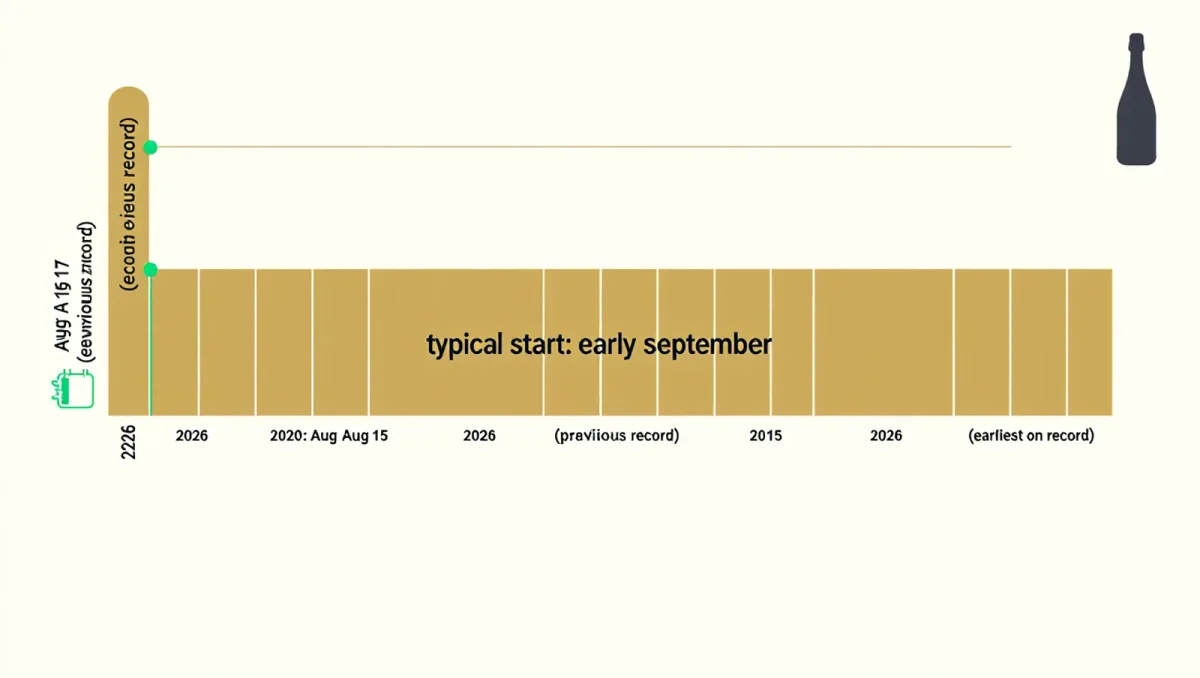
Champagne is heading for its earliest harvest in the region's recorded history. Per trade reporting in July 2026, the region's official picking calendar opens on August 15, with the bulk of harvesting expected between August 20 and 25 — roughly a fortnight ahead of a normal year, and on course to beat the previous record start of August 17, 2020. The dates are set village by village and grape by grape by the region's trade body, the CIVC.
Why is the harvest so early?
Grape ripeness, not calendar. A hot, dry run-up to summer advanced ripening across the chalk hills of the Marne, and the CIVC's annual date-setting — which legally defines when each grape variety may be picked in each commune — responded accordingly. The Drinks Business reported in July that the region was on course for the earliest start in its history, and the published dates confirm it. Earlier harvests have become a pattern: the 2020 record was itself a heat-year marker, and the long-term drift of the French harvest is one of the clearest documented signals of a changing climate in any food region.
What does an early harvest mean for the wine?
For Champagne specifically, less catastrophe than in still-wine regions. The region's signature method — a second fermentation in bottle, and the house style built on blending — gives producers tools to manage ripeness: earlier picking preserves acidity, the backbone of the wine, and reserve wines from previous years buffer vintage variation. The open question for the 2026 vintage is concentration, not survival: rapid ripening in heat can compress aromatic development, which is what tasters will be listening for when base wines are assessed in spring.
What does it mean for a visit?
Harvest season is atmospheric but logistically complicated. Cellar doors in Épernay, Reims, and the Côte des Bar stay open, but the producers who staff them are in the vines and presses, and some family estates close tasting rooms for the two to three weeks of picking. Travelers set on seeing the harvest should book estate visits now for mid-September, when pressing cellars are still running and the villages have their working-year energy; travelers set on quiet tastings should aim for October. The autumn release of official yield figures will complete the 2026 picture.