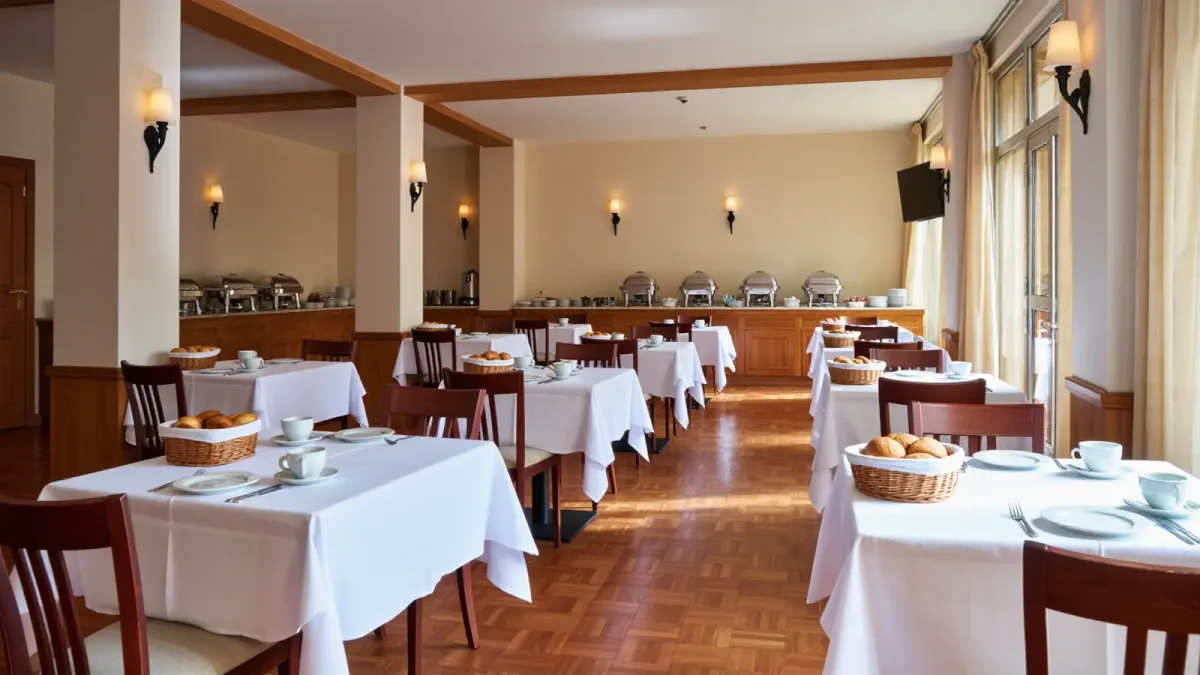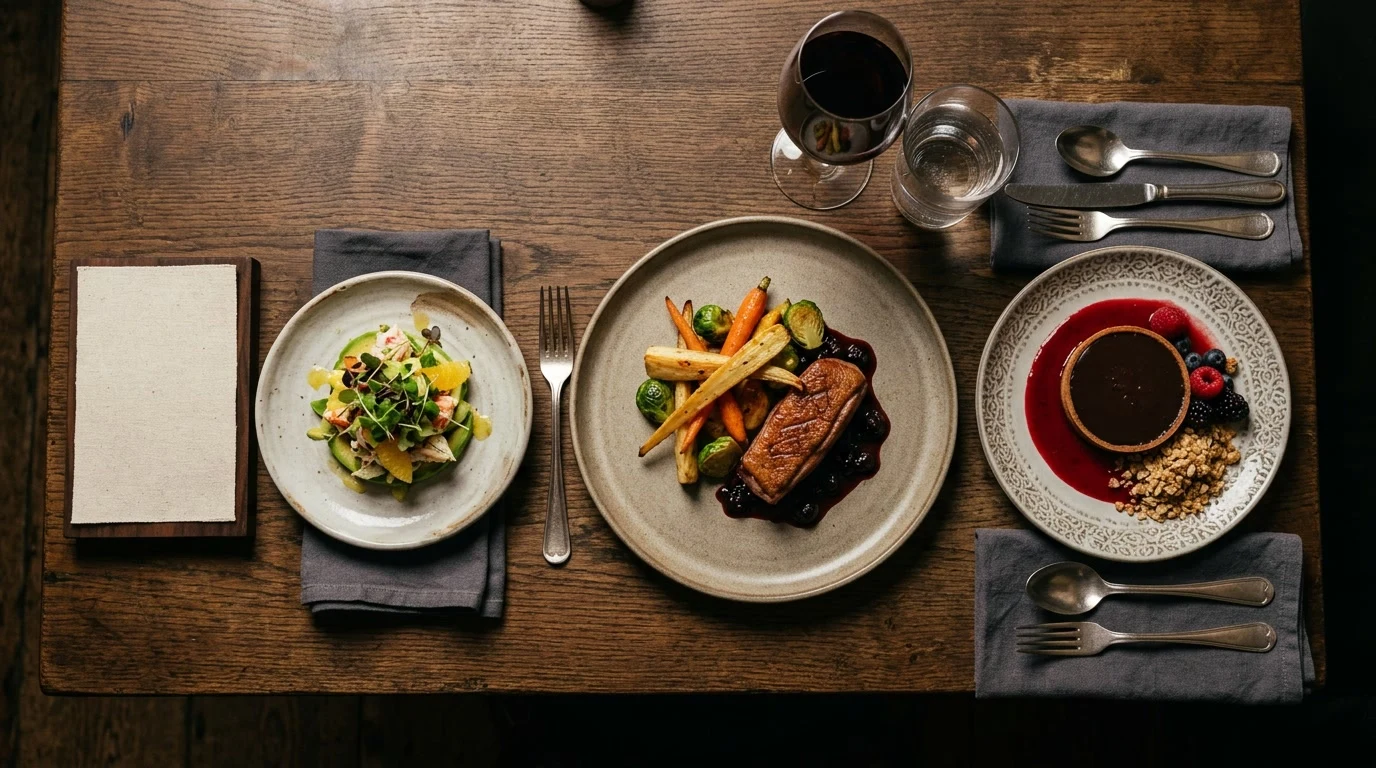
Half-board with dinner included is the oldest formula in hotelkeeping; the modern gastronomic package is its aggressive cousin, and it now appears at nearly every hotel with a serious restaurant — a room rate bundled with tasting menus, dining credits or guaranteed seats in the signature dining room, per the way major hotel groups have rolled out such bundles across 2024 and 2025. The pitch is simple: lock the meal at booking, pay less than the menu costs à la carte. The reality depends entirely on six or seven lines of fine print.
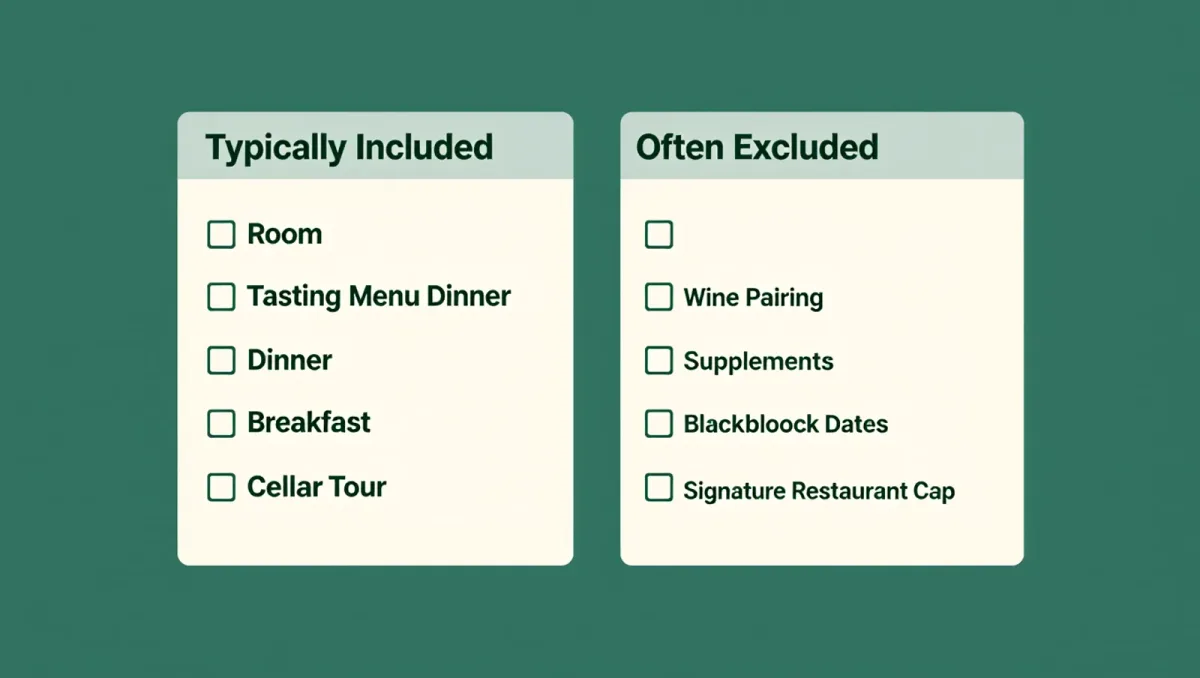
This guide decodes how gastronomic packages are built, what they typically include and exclude, and when the math works for a food traveler.
What are the main package types?
- Dinner-included half-board, upgraded. The classic demi-pension, but dinner means the signature restaurant's tasting menu rather than the buffet — the standard formula at resort hotels with one headline restaurant.
- Dining credit bundles. A per-room or per-person credit — commonly in the range of $100 to $200 per day at the upper tier, per published package terms in 2025 — usable across the property's restaurants. Flexible, but credits rarely cover service charges fully.
- Menu-plus-nights bundles. A fixed number of nights tied to a specific experience: one tasting-menu dinner, a tasting flight, a market tour with a chef, a cellar tasting. Common at wine-region and vineyard hotels.
- Festival and season packages. Built around truffle weeks, harvest, or a visiting-chef residency, with the event seat bundled into the rate. The most time-sensitive and often the best value.
What the fine print usually hides
Five exclusions decide most package outcomes, per the pattern across published hotel package terms in 2025. First, which restaurant: packages that “dinner at the hotel's restaurants” often exclude the signature venue, or cap it at one meal during the stay. Second, drinks: the word “menu” without “pairing” means water and tea; the pairing flight is the most common upsell, frequently adding 40 to 80 percent to the meal's cost. Third, supplements: caviar, wagyu upgrades and tasting-menu surcharges usually sit outside the package. Fourth, blackout dates: festival weeks, public holidays and visiting-chef nights are frequently excluded. Fifth, who dines: some packages price per person, not per room, and single travelers pay the full dinner minimum anyway.
When does the math actually work?
Run one comparison before booking: the package rate minus the room-only rate for the same dates versus the à la carte cost of what you would genuinely order. The package wins in three common situations. When the hotel's signature restaurant is the reason for the trip — a tasting menu that retails at $200-plus per person effectively halves inside a bundle, per typical published rates. When dinner service is the only game in town — rural estate hotels, island resorts, alpine lodges where the alternative is a drive on mountain roads. And when the package carries benefits that cannot be bought separately: a guaranteed seat in a small dining room, a cellar access, a market walk with the chef.
It loses when the traveler eats one significant meal out per day anyway — food travelers usually will — or when the package forces its dinners on every night of the stay, turning a highlight into an obligation by night three.
Do packages guarantee the tables you want?
Not automatically. A package typically includes the right to book, not the booking itself, per the booking terms most hotels publish; the table still needs reserving, and at small signature rooms — twenty seats and a single seating — package guests who reserve on arrival day can find the week full. Book the specific tables at the moment the reservation is confirmed, and keep the confirmation references: they are the document a front desk can act on.
How flexible are the terms?
More than their reputation, if asked. Reasonable requests that hotels grant routinely, per guest-report patterns in 2025: shifting a dinner credit from one night to another, converting an unused dinner into lunch, substituting the pairing for a bottle from the list at a capped price. What they rarely waive is the prepayment structure — most gastronomic packages are prepaid and carry stricter cancellation than room-only rates, sometimes non-refundable within 30 days of arrival.
The practical details
Before paying for any gastronomic package, confirm in writing: exactly which restaurants and menus are covered; whether beverages or only non-alcoholic drinks are included; per-person or per-room pricing; blackout dates; supplement policy; how far ahead package guests may reserve signature tables; and the cancellation ladder. Package structures summarized here reflect published hotel terms as of 2025 and early 2026; they change by season and property, so reconfirm directly.