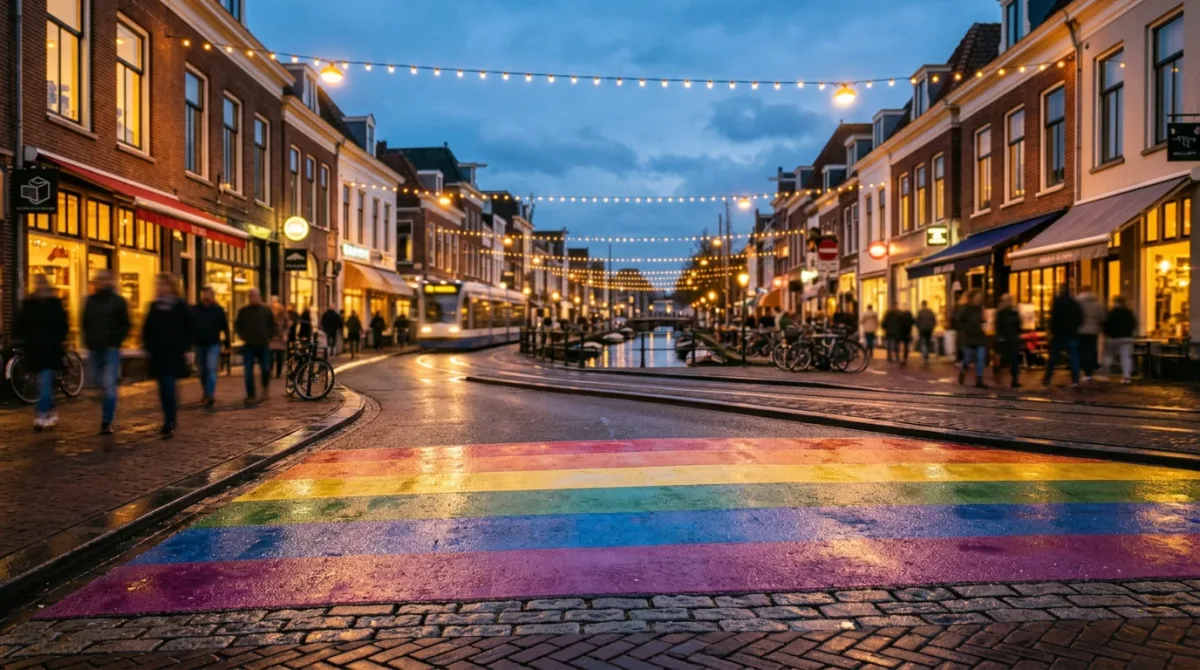
Wilton Manors, the small Broward County city just north of Fort Lauderdale, is known to South Florida's LGBTQ+ community and its allies as the "Island City" — a nickname the city's own government traces to geography, since the city's waterways surround it, not to LGBTQ+ identity. The City of Wilton Manors' website also notes the city received a "Best Gayborhood" honor in the Best of Gay Cities Awards, though the city does not list a year for that recognition.
The two facts sit next to each other on the city's own site for a reason: a place named for its shape became, over decades, a place known for its people. Wilton Drive, the commercial spine of the city, is home to LGBTQ+-owned bars, restaurants, and shops, and the city sits inside a wider Broward County corridor that includes some of the region's oldest LGBTQ+ institutions. Two of the best-known are a short drive from each other, and both are open to the public year-round.
Where can I learn Wilton Manors-area LGBTQ+ history?
The Stonewall National Museum, Archives & Library sits at 1300 East Sunrise Boulevard in neighboring Fort Lauderdale. The organization describes itself as a "safe, welcoming place that inspires and promotes understanding" built around a collecting mission to preserve LGBTQ+ community history. Its own materials cite more than 50 years of operation, with copyright markings on its site dating to 1973, and the organization describes its holdings as one of the country's leading LGBTQ+ archive and library collections — a claim made by the institution about its own collection, not independently verified here.
The museum is open Monday, Wednesday, and Friday from 11 a.m. to 5 p.m., Thursday from 11 a.m. to 8 p.m., and weekends from 11 a.m. to 3 p.m., according to its website. Scheduled tours run Saturdays at 2 p.m. or by appointment, at $10 per person. The organization says it is also in the process of building a permanent expanded home, a project it frames as securing its archive for the long term.
What does the Pride Center at Equality Park actually do?
A few minutes away, inside Wilton Manors proper, the Pride Center at Equality Park operates from 2040 North Dixie Highway. The nonprofit — registered as a 501(c)(3) — describes its mission as providing "a welcoming, safe space" that serves South Florida's LGBTQ+ communities, their friends, and their neighbors.
Its published services go beyond a community meeting space. The center lists HIV and STI testing, PrEP and PEP clinics, and transgender-specific services among its health programs, alongside active-aging initiatives, wellness programming, and a cyber center. It also hosts recurring community events named on its own site, including the Florida AIDS Walk, Wicked Manors, Wilton Women's Week, and a recurring Hard Rock Drag Brunch, and it offers subsidized long-term housing through what it calls the Residences at Equality Park. As with any health or social service, readers should confirm current hours, eligibility, and appointment requirements directly with the center before visiting — organization-run programs can change without notice, and this is informational, not medical guidance.
How do outside groups measure an LGBTQ+-friendly city?
Wilton Manors' reputation is not just local branding. The Human Rights Campaign, the national LGBTQ+ advocacy organization, runs an annual Municipal Equality Index that rates hundreds of U.S. cities on how inclusive their local laws, policies, and services are toward LGBTQ+ residents. According to HRC's own description of the program, the index scores cities on a 0-to-100 scale across categories including non-discrimination laws, the municipality's practices as an employer, municipal services, law enforcement, and public leadership on LGBTQ+ equality, and it currently rates more than 500 cities nationwide using dozens of criteria. HRC selects cities for rating through several paths, including state capitals, the largest U.S. cities, and municipalities with notably high concentrations of same-sex couples. The tool is designed to isolate city-level policy from state law, so a city can score well even in a state without broad LGBTQ+ protections. HRC's index does not by itself explain why any one city, including Wilton Manors, developed its reputation — it is one standardized measure among the informal ones, like nicknames and travel-award lists, that also shape how a place is known.
Why does this matter beyond one city?
None of this makes Wilton Manors a stand-in for Miami-Dade's own LGBTQ+ community, which has its own neighborhoods, history, and institutions. But the Broward corridor around Wilton Drive functions as a regional hub — for archives, for health services, for nightlife — that Miami-Dade residents and visitors use alongside their own. Knowing the difference between a geography joke that stuck and a genuinely built network of nonprofits and archives is useful for anyone trying to find real services, not just a rainbow flag on a welcome sign.
For a related history perspective, read How Wilton Manors Became South Florida's LGBTQ+ Hub.
For more context, read Mexico City: Where the Mercado Still Sets the Table.